
Think about the last thing you bought online. There’s a good chance you did it from the couch, with your thumb. Mobile commerce (“m-commerce”) is any transaction — a purchase, a payment, a bank transfer — completed on a mobile device such as a smartphone or tablet. It’s a subset of e-commerce, and it’s massive: eMarketer’s July 2024 forecast projected that 67.4% of the US population would make a purchase on a mobile device in 2024, spending $534.88 billion along the way.
That means if you’re a business owner with an online store, improving the experience for mobile consumers is essential. When you provide a positive mobile User Experience (UX), you’ll be able to tap into a massive and continuously growing market.
In this article, we’re going to take a look at the different types of m-commerce and how they’ve grown in recent years. Then, we’ll show you four ways you can use m-commerce to expand your reach. Let’s get to it!
What Are the Different Types of M-Commerce?
When we talk about mobile commerce, it’s important to understand that we’re not just referring to e-commerce or online retail. Instead, m-commerce is a broad term that encompasses multiple types of industries and operations.
Any type of operation that involves transacting money over a mobile device (smartphones, tablets, etc.) falls under the umbrella of m-commerce. Now, let’s talk about the most common types of mobile commerce.
Mobile Banking
Usually, banks enable you to operate through mobile devices using standalone apps on top of their existing websites or online banking platforms. For a large share of US households, that app is now the main way they interact with their bank.
In the FDIC’s 2023 National Survey of Unbanked and Underbanked Households, 48.3% of banked households used mobile banking as their primary method of accessing their accounts — and the FDIC reports that use of mobile banking as the primary means of account access increased almost ninefold over the past decade.
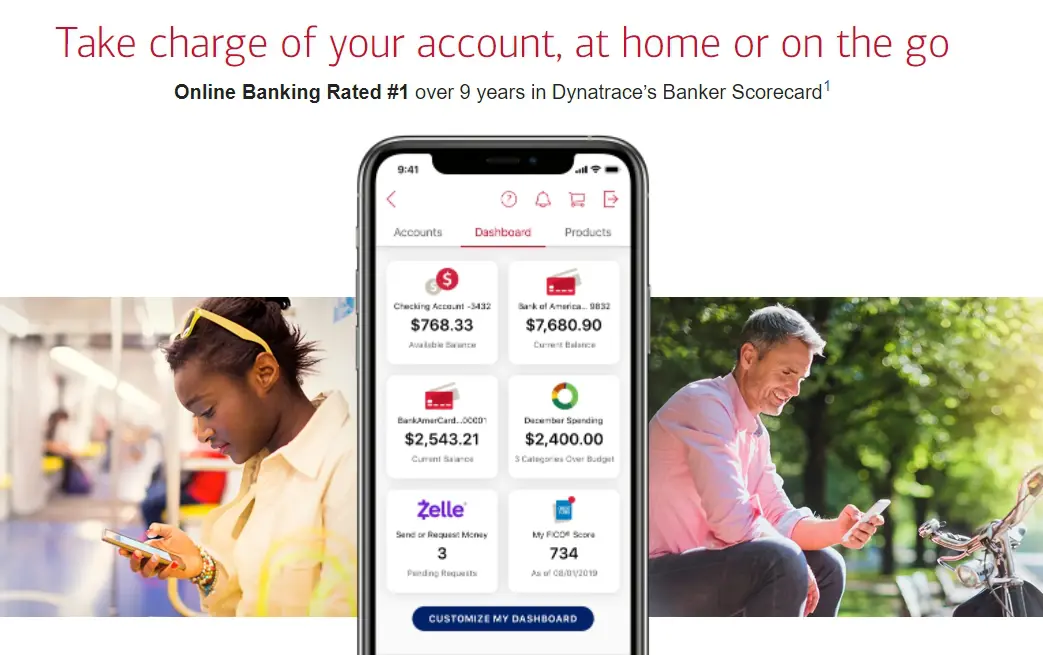
Some banks and standalone service providers also enable you to invest using mobile applications. That means users can manage both their standard accounts as well as their portfolios through mobile devices — at any time.
Mobile Payments
There is a lot of overlap between mobile payments and mobile e-commerce apps. When we talk about mobile payments, we’re referring to platforms and services that enable you to send and receive money and process sales transactions.
One great example of a mobile payment service is Venmo. According to Business of Apps (updated June 2026), Venmo’s annual revenue grew from $160 million in 2017 to an estimated $1.1 billion in 2023, and an estimated 83 million people used Venmo in 2023.
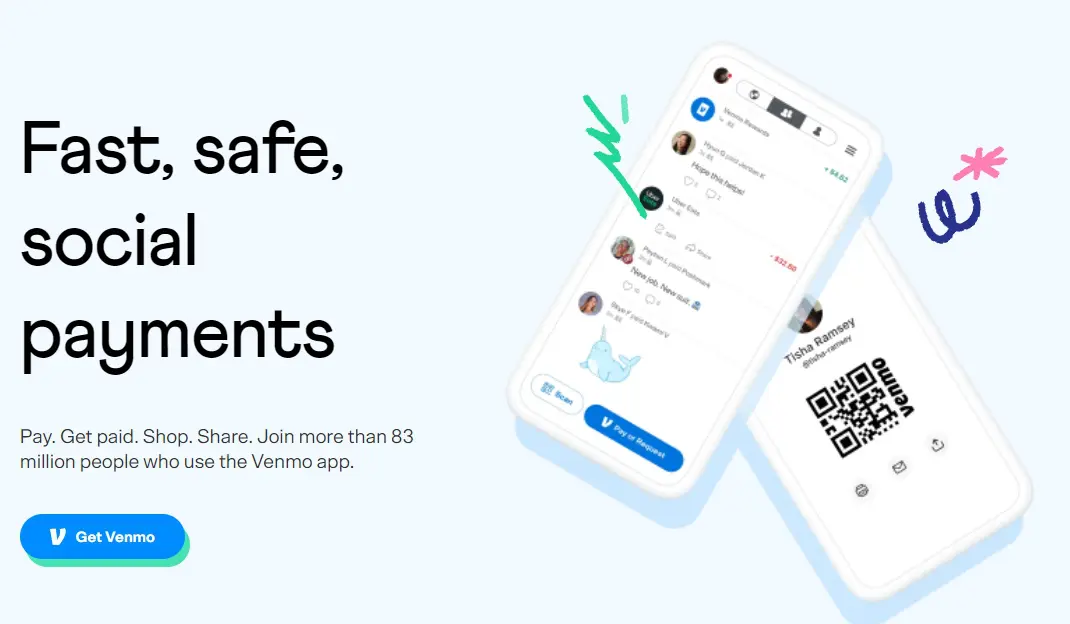
With Venmo, users can send payments to each other using a simple mobile app. Other similar mobile payment apps enable customers to store money, request loans, and keep comprehensive transaction logs.
Mobile E-Commerce
Mobile devices accounted for 52.57% of worldwide web traffic in July 2026, according to Statcounter. With that number in mind, it’s only logical that many consumers also make online purchases through mobile phones.
The dollars back that up. Adobe Analytics data reported by eMarketer found that US shoppers spent a record $280.4 billion through mobile devices from January to July 2024 — 49.3% of all online sales in that period, and 10.2% growth year over year. These mobile operations include:
- Online purchases through online stores and social media (‘social commerce’)
- Microtransactions
The rise of mobile shopping is a boon for online stores that offer a great mobile experience. But, on the other hand, if your online store is a pain to use on smartphones and other mobile devices, you’re likely to lose tons of potential sales.
How to Boost Your Online Business with M-Commerce (4 Ways)
Adapting to new markets is always a challenge. That’s why many online stores are stuck in the past, not interested in offering a better experience for their mobile users. However, adapting your online store to m-commerce trends can greatly expand your audience.
Here are four ways to use mobile commerce to boost your online business.
1. Prioritize the Mobile Shopping Experience
An online store should offer an amazing user experience on mobile and desktop devices. One mistake that many stores make is that they design pages with large screens in mind. In today’s world, you need to adopt a mobile-first design approach to maximize your potential audience.
There’s a real trust gap to close here, too. In an August 2024 Quantum Metric report cited by eMarketer, 59% of consumers said they only feel confident making a purchase of $50 or less on mobile, and 69% research high-value items on mobile but buy on desktop. The smoother your mobile experience, the fewer reasons shoppers have to switch devices — or stores.
If you use WordPress, one easy first step is to use the Block Editor’s Preview option, which lets you see how any page will look on smaller screens before you publish it.
Ideally, you’ll test how every page looks on mobile before publishing it. That means testing your shop, product, and checkout pages on your own devices. During those tests, you want to keep an eye out for:
- How the design looks on mobile
- Whether pages are easy to navigate and interact with
- If you can see images and read the text without zooming in
- How the checkout process works on mobile
Ideally, you’ll let other people test your shop as well to avoid any bias. Third-party users are much more likely to spot problems with your store’s UX as they’re not familiar with how it works. To make your life easier, you might want to work with a mobile-responsive WordPress theme.
2. Integrate Your Online Store With Mobile Payment Options
One of the best parts of shopping online using a mobile device is that making payments tends to be a lot easier. Take Google Pay or Apple Pay, for example. If you shop at a store that supports either service, you can simply select what card to charge, confirm the transaction, and that’s it.
Plus, if you have the corresponding mobile payment app on your phone, the store will simply redirect you to it. This ease of use may make customers spend more freely, as they have fewer opportunities to change their minds about a purchase.
If you use WooCommerce, you have a large range of payment gateway options to pick from — including its own WooPayments, plus extensions for processors like Stripe and PayPal. Many of these gateways offer “express” payment buttons so customers can check out with Apple Pay or Google Pay.
A quick word of caution before you install every gateway you can find: WooCommerce’s own guidance is that a carefully selected choice of payment options makes it more likely customers can always complete a purchase, while offering too many can overwhelm shoppers and complicate your site administration. Pick a few that match how your customers actually pay.
However, when running an online store, there are few things more important than your customers’ safety and security. With that in mind, it’s a smart idea to only work with trusted payment gateways and make sure you are taking the proper cybersecurity measures to protect your customers’ data.
3. Launch a Mobile E-Commerce App
A significant share of mobile shopping happens inside apps rather than browsers. Instead of visiting your website through a browser, the entire customer journey occurs within an application.
Creating a mobile application for your store offers a broad range of benefits. For starters, once customers install your store’s app, you can send push notifications about sales, restocks, and abandoned carts straight to their home screens.
Moreover, having an app on customers’ phones means they’re more likely to return to you for further purchases. The app serves as a constant reminder of your store’s existence, which is invaluable in terms of marketing and branding.
To be fair, developing an e-commerce app is no small feat. Building one from scratch means paying for design, development, testing, and ongoing maintenance — often across both iOS and Android. That’s a considerable investment that a modest online store may not be able to justify.
However, there are plenty of services that enable you to create e-commerce apps using pre-built systems, such as AppyPie:
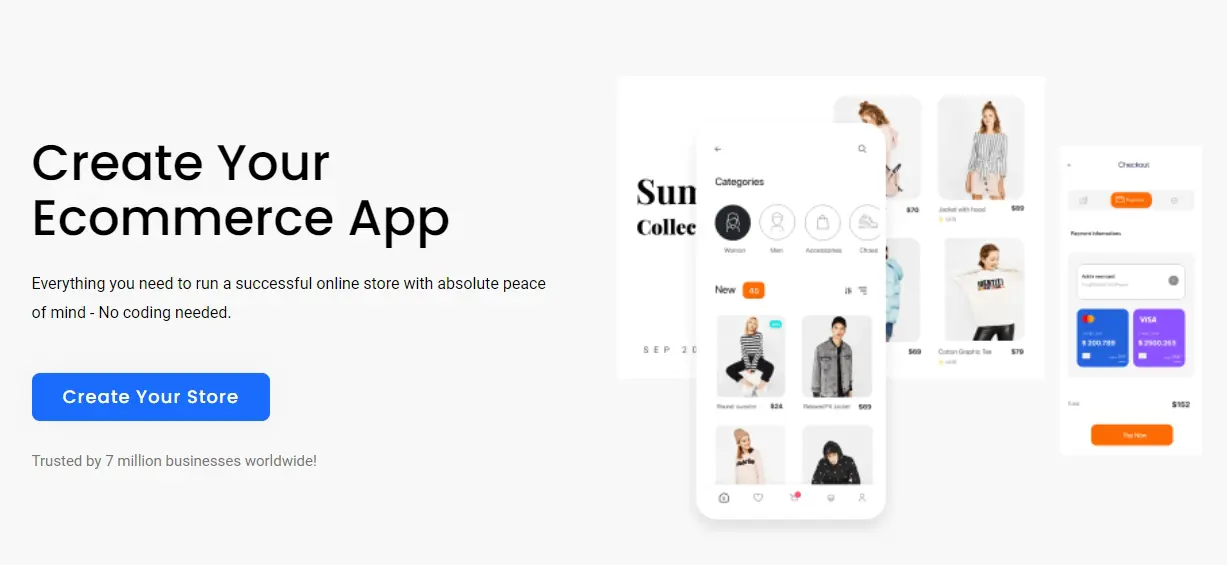
Compare custom and pre-built options based on your budget, required features, maintenance capacity, and customers’ needs. An app is not automatically a better investment than improving your mobile website.
4. Break Into Social Commerce
Social commerce — buying directly through social media platforms — is one of the most significant m-commerce trends. Consumers can now purchase a large portion of what they see in their social feeds without ever leaving the app.

For instance, on Instagram, mobile users can tap through from a post to a brand’s shop and browse its products:
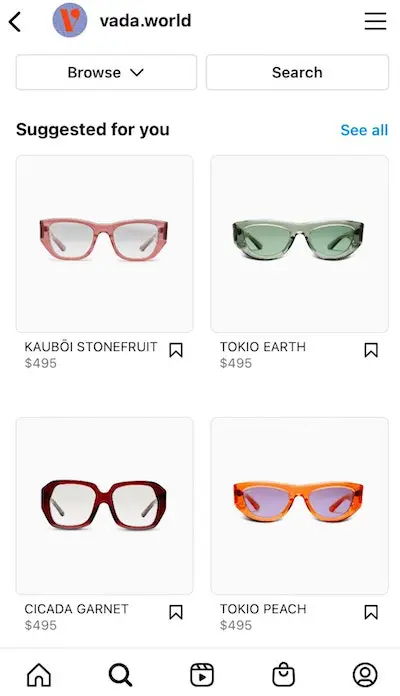
And shoppers aren’t just browsing. In eMarketer’s March 2024 “US Social Commerce” survey, 53.7% of US social shoppers said short-form video influenced them to purchase something on a social media platform, and 75.7% said they stay on the social platform to complete their purchases.
Whether you’re offering luxury sunglasses or piano lessons, it’s relatively simple to get started with social commerce. Depending on your target audience, that could mean setting up a shop on Instagram, TikTok, or Facebook — each platform walks business accounts through the process.
However, we’d recommend choosing just one or two social channels to focus on. It’s best not to spread yourself too thin, especially since your target demographic probably doesn’t use every social platform. A clear social media strategy helps here.
Once you’ve established any social stores, you can further boost your sales by collaborating with influencers or hosting live shopping events. On the whole, breaking into the social commerce market may be a good idea if you want to reach more mobile customers but don’t have the means to create your own app.
M-Commerce FAQs
What Is the Difference Between E-Commerce and Mobile Commerce?
E-commerce broadly covers commercial transactions conducted electronically. Mobile commerce (m-commerce) covers purchases, payments, banking, and other commercial activity conducted through mobile devices such as smartphones and tablets.
What Are the Main Types of Mobile Commerce?
The three main types of mobile commerce are mobile e-commerce (shopping through mobile sites, apps, and social platforms), mobile banking (managing accounts and investments through banking apps), and mobile payments (sending and receiving money through services like Venmo, Apple Pay, and Google Pay).
What Are the Disadvantages of Mobile Commerce?
The main drawbacks of mobile commerce are small screens that make complex checkouts frustrating, shopper hesitation on expensive purchases (in an August 2024 Quantum Metric report cited by eMarketer, 59% of consumers said they only feel confident making a purchase of $50 or less on mobile), and the cost of building and maintaining a dedicated app. Sellers also need to meet high expectations for payment security on mobile.
Do I Need a Mobile App to Sell to Mobile Shoppers?
No. You can start with a responsive website and mobile-friendly checkout, then consider an app if it would serve a clear need among your repeat customers.
What Is the First Step to Make an Online Store Mobile-Friendly?
Start by testing your store on an actual phone: browse your shop, open a product page, and complete a checkout. Fix whatever felt slow or fiddly, and switch to a mobile-responsive theme if your current one doesn’t adapt to small screens. Then add at least one mobile-friendly payment option, such as Apple Pay or Google Pay.
Use M-Commerce to Grow Your Online Shop
If you have an online shop, but you’re not working on optimizing the customer journey for mobile users, you’re likely missing out on massive growth opportunities. Roughly half of US online sales now happen on mobile devices. So, if customers don’t enjoy the mobile experience your shop offers, they might look for alternatives.
If you’re not sure how to optimize your store’s mobile shopping experience, here are four ways to do it:
- Prioritize the mobile shopping experience.
- Integrate your store with mobile payment options.
- Launch a mobile e-commerce app.
- Break into social commerce.
If you’re ready to launch an online store, explore DreamHost’s Online Store hosting options.

Ready to Sell to Mobile Shoppers?
DreamHost’s Online Store hosting pairs Ecwid or WooCommerce with fast, reliable hosting — backed by 24/7 expert support and a money-back guarantee.
Explore Online Store Hosting