
So, you want a website. You may be wondering — now what?
If you’ve spent any time researching so far, you’ve probably already realized you have a ton of options. One you’ve probably come across once or twice (probably more) is WordPress.
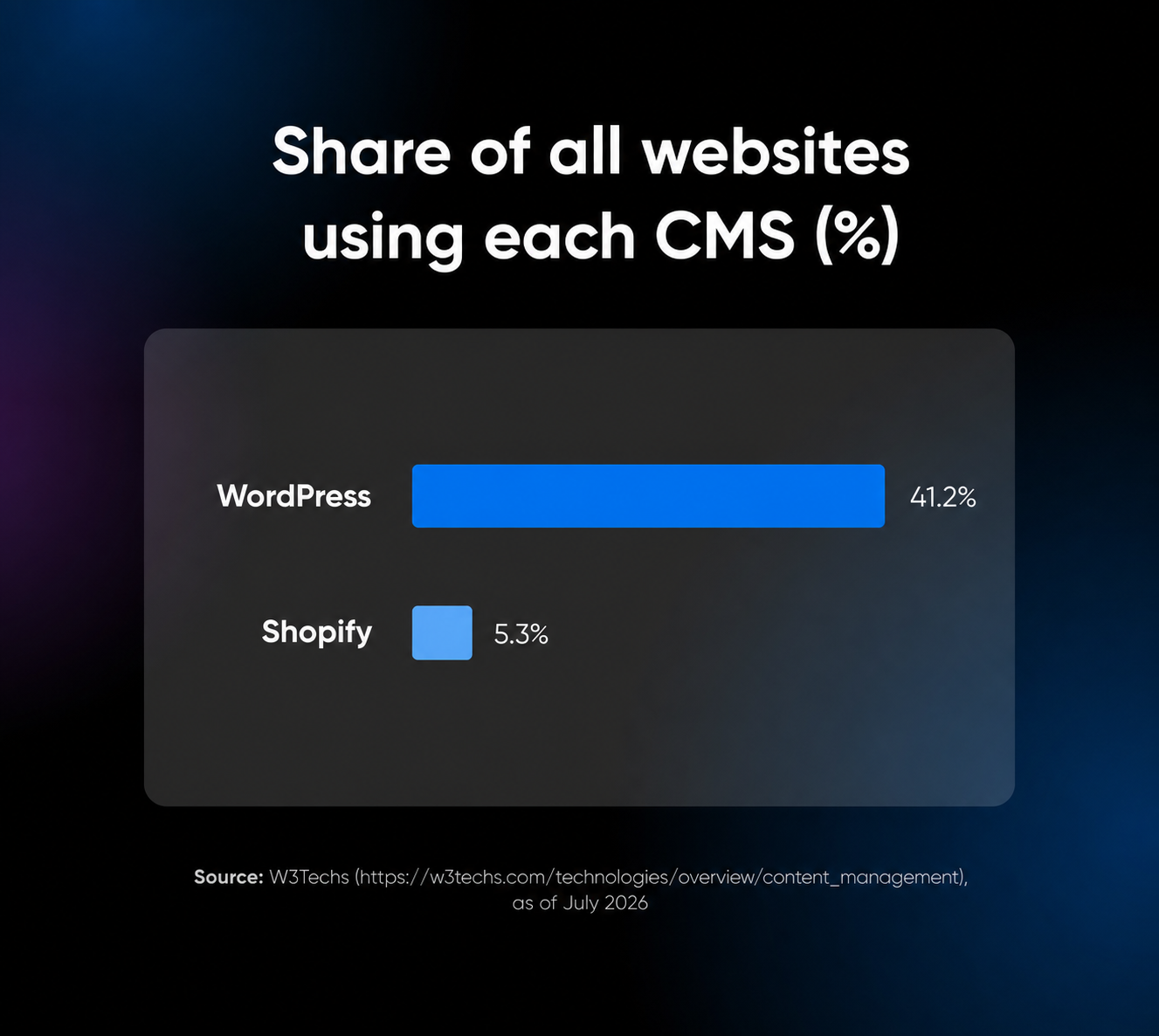
WordPress currently powers just over 41% of all websites, per W3Techs (July 2026). Why? Because it can be tailored to fit just about any site need. Basically, it’s not just for blogs anymore.
First, know which WordPress you’re learning. There are two flavors: WordPress.org, the free, open source software you install with your own hosting (self-hosted WordPress), and WordPress.com, a hosted service built on the same software. This beginner’s guide breaks down the differences. The resources in this post center on self-hosted WordPress.org sites — editor and community resources apply to both, but theme, plugin, and hosting tutorials assume the self-hosted version.
Plus, it offers tons of themes to choose from to make your website look unique and virtually unlimited plugins to add features and functionality to your site.
WordPress also offers a Block Editor, and the content management system (CMS) has pivoted to Full Site Editing (FSE). This consists of a suite of features that include Block themes, global styles, a site editor, and much more to improve the extensibility and experience of creating your site.
In other words, no matter what you need from your website, WordPress can make it happen.
There’s just one tiny problem, though. If you don’t have any experience building a website, WordPress — like any other new software — can come with a learning curve. In fact, even if you do have experience, WordPress can still be challenging.
How do you learn WordPress?
Start free and official: work through the Beginner WordPress User course on Learn WordPress, practice each lesson in a browser sandbox like WordPress Playground, then build a real site of your own. Expect a few hours for the basics, a weekend for a first site, and a few weeks to feel truly confident.
Luckily, the internet is loaded with resources. From blog posts to video tutorials to full courses — designed for every WordPress user, from beginner to expert — there’s something geared toward every feature and functionality. (And when a tutorial loses you, an AI assistant like ChatGPT or Claude makes a handy on-demand tutor for quick “how do I…?” questions while you work.)
Whether you’re just getting started, setting up your first site, or coding custom themes and plugins, there’s a resource for you.
In the list below, we’ve compiled 25 of the best of them so you can learn WordPress starting today. Right this minute, in fact.
How to learn WordPress: A step-by-step path
Twenty-five options can be its own kind of overwhelming, so here’s the order we’d follow. Each step points to the numbered resources below.
- Open a free sandbox. Spin up a throwaway site in WordPress Playground (#20). It runs a complete WordPress site in your browser, no hosting or installation required, so you can click around without breaking anything real.
- Learn the dashboard and content basics. Work through the free Beginner WordPress User course on Learn WordPress (#1), or the beginner videos at WP101 (#16) and WPBeginner (#14). The official course is about 4 hours of lessons (per learn.wordpress.org, July 2026); budget double that to practice along in your sandbox: posts, pages, media, menus.
- Get comfortable with themes and the Site Editor. Full Site Editing (#23) and the Block Editor Handbook (#3) cover Block themes, global styles, and templates: how modern WordPress sites are built.
- Add functionality with plugins. WPBeginner (#14) and WPKube (#24) for recommendations and reviews, and LearnWoo (#5) if your site is a store.
- Build a real practice project. Follow a full site build with Tyler Moore (#12) or Darrel Wilson (#13) on real hosting, then launch a first site of your own — the DreamHost Knowledge Base (#9) covers the hosting side.
- Go deeper (optional developer track). WordPress Developer Resources (#2), Smashing Magazine (#4), and WPSessions (#21) take you into theme, plugin, and block development.
And when you hit a wall, don’t grind alone: the live workshops, meetups, and support forums in #18 exist precisely for getting unstuck.
How long does it take to learn WordPress?
Honest answer: it depends on where you want to end up, so here are milestones instead of one number. These are our estimates based on the courses above — your mileage will vary with the time you put in. “Fast,” for this post’s purposes, means the first two rows: publishing something real within days, not mastering everything by Friday.
| Milestone | What it looks like | Realistic time |
|---|---|---|
| The basics | Navigate the dashboard; create posts and pages | A few hours (the official beginner course is about 4 hours of lessons; WP101 pitches its basics series at about 2) |
| First working site | A simple site, live on real hosting | A weekend of focused work |
| Confident site manager | Themes, plugins, updates, and backups without sweating | A few weeks of regular practice |
| Developer-level skills | Custom themes, plugins, and blocks | Several months of steady building — the official beginner developer course is 9 hours of lessons, and that’s just the on-ramp |
Cost-wise, you can get all the way to a working site for free: WordPress Playground (#20), Learn WordPress (#1), WordPress.tv (#10), and the YouTube channels (#11–13) don’t cost a dime. Paid options like WP101 (#16), Udemy (#17), and LinkedIn Learning (#15) buy you structure and certificates, not secret knowledge.
25 of the best resources to learn WordPress
Here’s the full list, grouped by format: written tutorials and articles (#1–9), video tutorials and courses (#10–19), and comprehensive guides and tools (#20–25). Use the path above to pick a starting point, then choose whichever format matches how you learn.
Written tutorials and articles
1. Learn WordPress
You’re getting it straight from the source.
Learn WordPress offers official tutorials and structured courses for current WordPress users and developers. For reference, today’s release is the WordPress 7.0 line, with 7.0.2 shipped July 17, 2026.
Learn WordPress is hosted on WordPress.org and was relaunched in August 2024 around Learning Pathways: structured courses that take users, developers, and designers from beginner to advanced in a set order. Alongside the pathways you’ll find individual lessons, written guides, and live Online Workshops.
Whether you’re a beginner learning the ropes, or an intermediate user looking to expand your knowledge, Learn WordPress provides clear, step-by-step instructions that make complex tasks manageable.
Key features:
- Official source: Content provided directly by WordPress.org, so you know it’s accurate and relevant.
- Comprehensive coverage: From basic setups to advanced configurations, it covers a broad spectrum of WordPress topics.
- Actively maintained: Courses, lessons, and workshops come from the WordPress Training team, the group behind the official education content.
- Step-by-step instructions: Clear, detailed instructions that guide users through each process, making learning easy and effective.
- Searchable database: Easily find tutorials that match your specific needs or issues.
Best for: Beginners and intermediate users looking for reliable, text-based guides.
Learning style: Tutorial-driven with a hands-on approach, allowing users to follow along step by step. Ideal for those who prefer to learn at their own pace through detailed, text-based guides.
2. WordPress Documentation and Developer Resources
The encyclopedia of WordPress.
These are the platform’s two official manuals: WordPress Documentation (also called HelpHub) for everyday users, and Developer Resources (DevHub) for people writing code. Longtime WordPress folks may remember the Codex — it was retired, and the WordPress documentation team migrated its content into these two sites.
WordPress Documentation covers the practical side: installing and updating WordPress, working with the editor, managing users, and troubleshooting common problems. Developer Resources goes deeper, with a code reference for WordPress functions, hooks, and classes, plus handbooks on theme, plugin, and block development.
Together, they’re the reference of record: when you need to know how WordPress actually works under the hood, this is where you look.
Key features:
- Official documentation: Maintained by the WordPress documentation team at WordPress.org, so it stays accurate and current.
- In-depth content: Covers everything from basic usage to complex development topics, including theme and plugin development.
- Extensive references: The code reference documents WordPress functions, template tags, and hooks, a core tool for developers.
- Searchable index: Easily navigate through a vast amount of information to find exactly what you need.
- Community contributions: Content is expanded and refined by the WordPress community, offering a wide range of perspectives and tips.
Best for: Intermediate to advanced users, especially developers who are looking to deepen their technical understanding of WordPress.
Learning style: Theory-based and reference-driven, with detailed explanations and technical documentation.
3. WordPress Block Editor Handbook
Master the Gutenberg editor.
This is the definitive guide to WordPress’s Block Editor, offering in-depth tutorials and documentation for building custom blocks and creating content with precision.
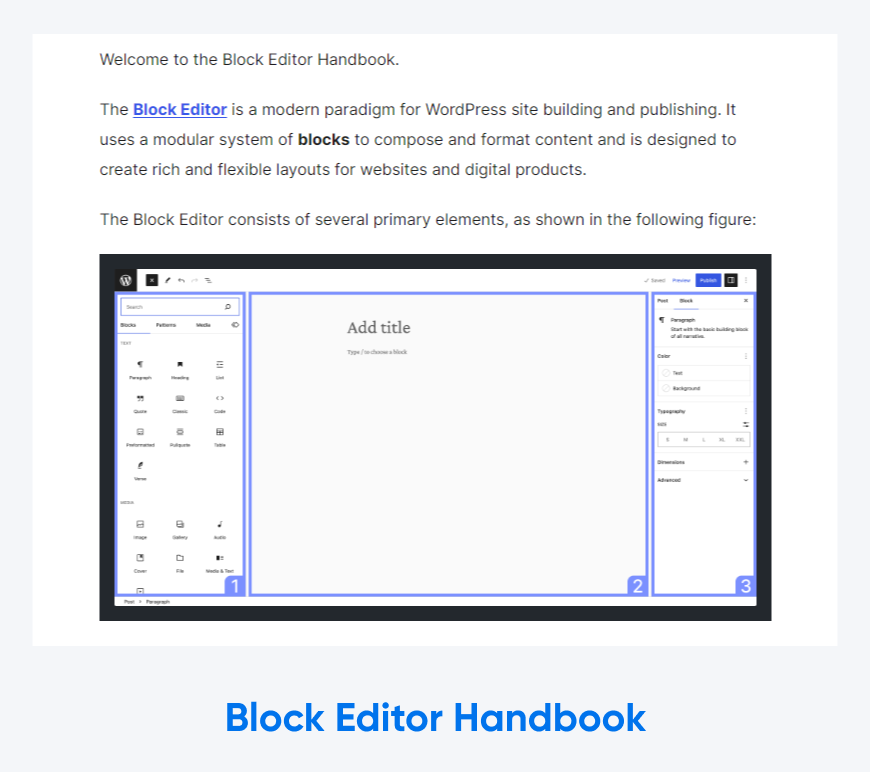
The WordPress Block Editor Handbook explains how to use and extend the Gutenberg Block Editor. This handbook dives deep into the Block Editor, with comprehensive tutorials and documentation that guide users through creating and customizing blocks, using advanced features, and developing for the editor.
Whether you’re a content creator looking to refine your block editing skills or a developer interested in extending the editor’s capabilities, this resource offers all the tools and knowledge you need to become a Block Editor expert.
Key features:
- All about Gutenberg: Dedicated entirely to the Block Editor, so users get the most relevant and specialized information.
- Detailed documentation: Provides thorough explanations of block creation, customization, and usage within WordPress.
- Developer resources: Includes guides on building custom blocks, working with block patterns, and extending editor functionality.
- Practical tutorials: Step-by-step tutorials that walk you through real-world applications and advanced editing techniques.
- Regular updates: Continuously updated to reflect the latest changes and features in the Block Editor.
Best for: Intermediate to advanced users, including developers and content creators, who want to master the Block Editor.
Learning style: Hands-on and tutorial-driven, with a strong focus on practical applications and in-depth technical guidance.
4. Smashing Magazine
WordPress coverage inside a serious web design and development magazine.
Smashing Magazine covers WordPress within a much broader web design and development remit, and that context is its value: you learn WordPress alongside the craft around it. It’s written for working designers and developers, though — beginners should start with #1 or #14 and come back later.
Smashing Magazine is a highly respected publication in the web design and development community, known for its in-depth articles, tutorials, and resources on a wide range of topics, including WordPress.
With contributions from industry experts, Smashing Magazine covers everything from WordPress theme development to advanced customization techniques, offering valuable insight into web development trends while helping WordPress developers enhance their skills.
Key features:
- Expert contributions: Articles and tutorials written by industry leaders who create high-quality, authoritative content.
- Wide range of topics: Covers WordPress, web design, UX, performance optimization, and more.
- In-depth guides: Comprehensive articles that go beyond the basics, offering detailed explanations and practical advice.
- Regular updates: Frequently updated with new content, keeping readers informed about the latest trends and best practices.
- Community engagement: Encourages discussions and contributions from readers, fostering a vibrant community of web professionals.
Best for: Intermediate to advanced users, particularly web designers and developers, who want to deepen their WordPress knowledge within the broader context of web development practices.
Learning style: Theory-based with practical tutorials, focusing on detailed explanations and advanced concepts.
5. LearnWoo
LearnWoo offers specialized WooCommerce tutorials, guides, and insights that bridge the gap between WordPress and e-commerce.
If you’re using WordPress to build or manage an online store, this is the specialist pick; skip it if e-commerce isn’t in your plans.
WooCommerce
WooCommerce is a WordPress plugin designed for e-commerce needs. This tool can enable website owners to start selling products in a flexible, customizable online store.
LearnWoo is a dedicated platform that provides in-depth tutorials and resources focused on WooCommerce, the popular e-commerce plugin for WordPress. Whether you’re a beginner looking to set up your first online store or an experienced developer looking for advanced customization techniques, LearnWoo covers a wide range of topics catering to all levels of expertise.
In addition to WooCommerce, LearnWoo also provides valuable insights into broader WordPress topics, making it a versatile resource for those integrating e-commerce features into their WordPress sites.
Key features:
- E-commerce focus: Specialized content covering WooCommerce and its integration with WordPress.
- Diverse tutorials: Offers guides for all skill levels, from setting up a basic store to advanced customization and optimization.
- Regular content updates: Frequently updated with new tutorials and articles to keep up with the latest WooCommerce and WordPress developments.
- Practical advice: Includes tips and best practices that help users optimize their online stores for better performance and sales.
- Community engagement: Encourages interaction with readers, offering a platform for discussion and knowledge sharing.
Best for: Beginners to advanced users, particularly those interested in e-commerce and WooCommerce within WordPress.
Learning style: Tutorial-driven with a mix of hands-on guides and theoretical insights, focusing on practical application.
6. Hongkiat
Creative inspiration meets practical guides.
Hongkiat stands out by blending WordPress tutorials with innovative design tips, offering a unique resource for both creatives and developers.
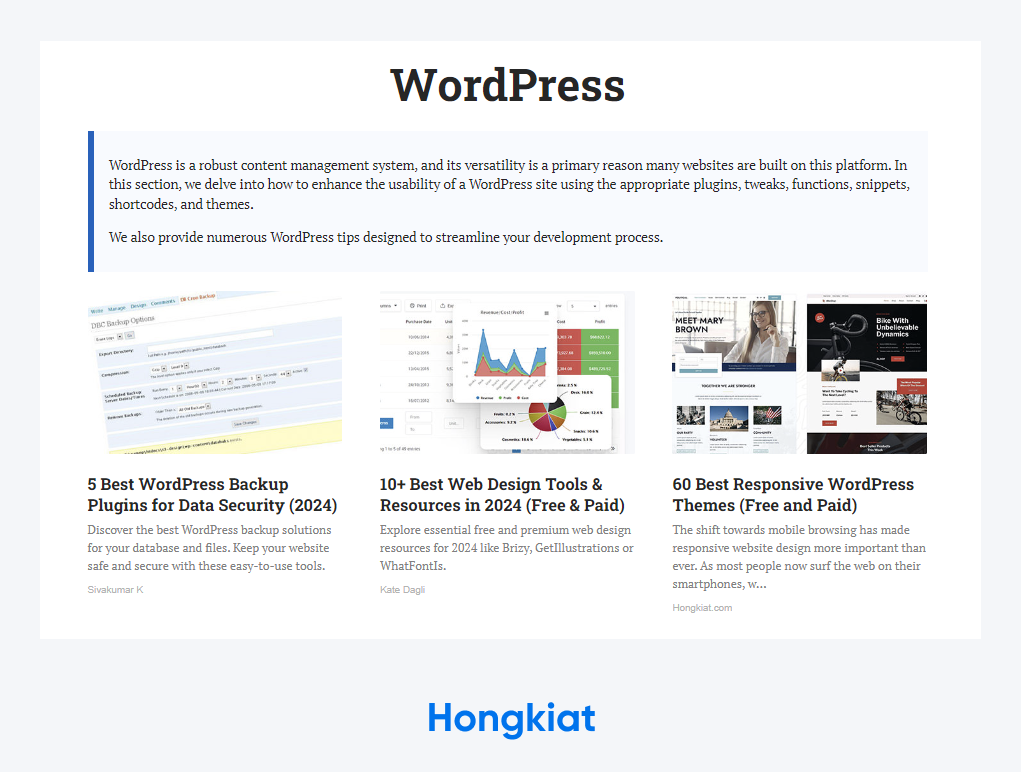
Hongkiat is a popular online magazine that caters to designers, developers, and creative professionals, offering a wide array of articles that cover everything from WordPress tutorials to the latest design trends and tech tools.
What sets Hongkiat apart is its ability to combine practical, step-by-step WordPress guides with creative inspiration. Reach for it when you want design ideas alongside the how-to. Whether you’re looking for a specific WordPress tutorial or need inspiration for your next design project, Hongkiat provides a well-rounded resource that appeals to both your technical and creative sides.
Key features:
- Creative and technical blend: Combines practical WordPress tutorials with design inspiration, making it ideal for those who value both form and function.
- Diverse content: Covers a broad range of topics, including web design, development, and creative tools, providing a well-rounded learning experience.
- Beginner-friendly: Many tutorials are accessible to beginners, with clear instructions and helpful visuals to guide users through each step.
- Resource-rich: Offers downloadable resources like templates and tools that can be used to enhance your WordPress projects.
Best for: Beginners to intermediate users, especially those with a creative focus looking to blend design with WordPress functionality.
Learning style: Tutorial-driven with an emphasis on practical application, supplemented by creative inspiration and design trends.
7. WebsiteSetup.org
Step-by-step guidance for beginners.
WebsiteSetup.org offers a clear and straightforward path to building a WordPress site, making it an ideal resource for first-time website creators.
WebsiteSetup.org is designed with beginners in mind, providing easy-to-follow, step-by-step tutorials that guide users through the process of setting up their first WordPress site. The platform breaks down complex concepts into simple, actionable steps so that even those with no prior experience can confidently build and launch their own website.
With a focus on practical advice and real-world applications, WebsiteSetup.org is a great starting point for anyone new to WordPress who wants to get a site up and running quickly without getting bogged down by technical jargon.
Key features:
- Beginner-friendly guides: Tutorials are specifically crafted for beginners with clear, jargon-free instructions.
- Comprehensive coverage: Covers all the basics of setting up a WordPress site, from choosing a domain and hosting to customizing themes and installing plugins.
- Visual aids: Includes screenshots and visuals that help illustrate each step of the process, making it easier to follow along.
- Practical tips: Offers actionable advice that can be immediately applied, helping users avoid common pitfalls.
- Free tools and resources: Provides access to free tools and resources to assist in the website setup process.
Best for: Beginners with little to no prior experience who want a straightforward guide to building a WordPress website.
Learning style: Hands-on and tutorial-driven, focusing on practical, step-by-step guidance.
8. Make A Website Hub
An all-in-one resource for website creation.
Make A Website Hub is a versatile resource designed to guide users through the entire process of building and optimizing a WordPress website. It offers a wide range of tutorials that cater to beginners — covering everything from choosing the right hosting provider to customizing your site’s design and functionality.
In addition to its step-by-step guides, Make A Website Hub provides comparisons of different hosting services, themes, and plugins, helping users make informed decisions that best suit their needs. The platform also offers a variety of free tools, such as website builders and search engine optimization (SEO) analyzers, making it a one-stop shop for anyone looking to create and strengthen their online presence.
Key features:
- Comprehensive tutorials: Offers detailed guides that cover all aspects of website creation, from setup to optimization.
- Comparative guides: Provides side-by-side comparisons of hosting providers, themes, and plugins to help users choose the best options.
- Free tools: Includes useful tools like website builders, domain name generators, and SEO analyzers that aid in the website creation process.
- Beginner-friendly: Content is written in a clear, accessible style, making it easy for beginners to follow along and apply the information.
Best for: Beginners and small business owners who want a comprehensive resource for building and optimizing their WordPress websites.
Learning style: Tutorial-driven with a mix of practical guides, comparisons, and tools to support the website creation process.
9. DreamHost Knowledge Base and DreamHost Blog
Expert advice from a leading web hosting platform.
DreamHost’s Knowledge Base and blog offer authoritative WordPress tutorials, troubleshooting guides, and industry insights directly from hosting experts.
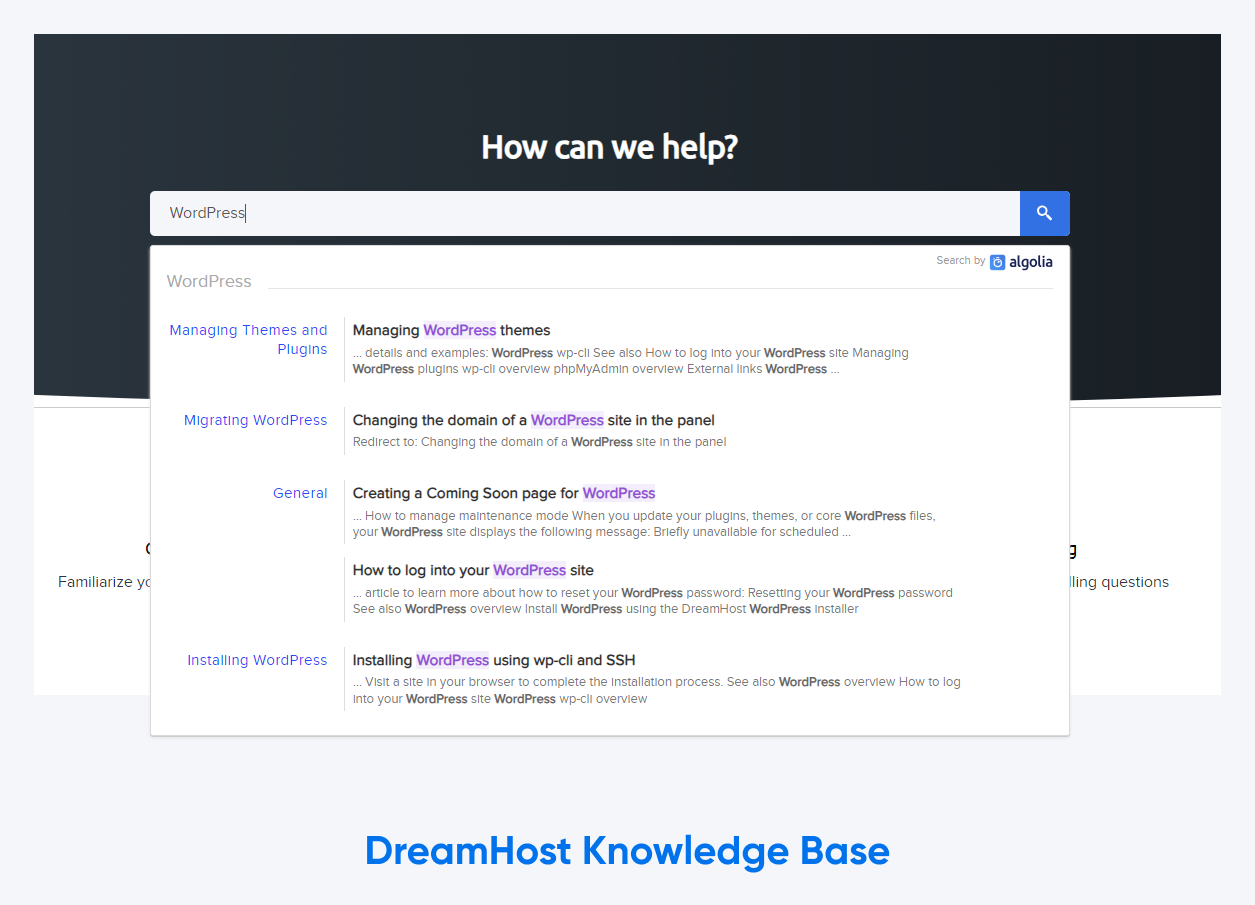
DreamHost’s Knowledge Base and blog provide a wealth of information for WordPress users of all levels, backed by the expertise of one of the most trusted names in web hosting.
The Knowledge Base features an extensive collection of step-by-step tutorials, troubleshooting guides, and best practices, covering everything from basic WordPress setup to advanced customization.
Meanwhile, the blog offers deeper insights into the latest industry trends, WordPress updates, and practical tips for optimizing your website. With content written by hosting experts, DreamHost’s resources are particularly valuable for those who want reliable, accurate information that’s closely aligned with real-world hosting environments.
Key features:
- Expert-backed content: Tutorials and guides created by hosting experts, so it’s accurate and relevant.
- Comprehensive coverage: Includes a wide range of topics, from basic WordPress setup to advanced performance optimization and security.
- Regular updates: Frequently updated to reflect the latest WordPress features, industry trends, and best practices.
- Practical insights: The blog offers actionable tips and industry insights that go beyond just tutorials, helping users stay informed and ahead of the curve.
- Searchable database: Easy to navigate, with a searchable database that allows users to quickly find the information they need.
Best for: WordPress users of all levels, especially those who are hosting their sites with DreamHost or want hosting-specific advice.
Learning style: Tutorial-driven with a focus on practical, real-world applications, complemented by industry insights and best practices.
Video tutorials and courses
10. WordPress.tv
Learn from the WordPress community.
WordPress.tv offers a diverse collection of video content from WordPress events, tutorials, and expert talks, making it a unique resource for staying connected with the global WordPress community.
As the official video platform of the WordPress community, it features an extensive library of recorded talks, tutorials, and workshops from WordCamps and other WordPress events around the world.
It serves as a valuable resource for WordPress users of all levels, offering insights directly from experts, developers, and community leaders. The content ranges from basic tutorials to advanced technical sessions, making it a useful platform for anyone looking to deepen their WordPress knowledge or stay updated on the latest trends and developments.
Whether you’re interested in learning new skills, discovering best practices, or hearing from the experts who shape WordPress, WordPress.tv provides plenty of video content for you to explore.
Key features:
- Community-driven content: Videos feature talks and tutorials from WordPress experts, developers, and community leaders, offering diverse perspectives and insights.
- Access to WordCamps: Provides access to recorded sessions from WordCamps and other WordPress events, allowing users to learn from presentations and keynote speeches they might have missed.
- Free and accessible: All content is freely available, making it an accessible resource for anyone interested in WordPress.
- Searchable library: Users can easily search for specific topics or speakers, making it simple to find relevant content.
Best for: WordPress users of all levels who want to learn from community experts, keep up with the latest trends, and stay connected with the global WordPress community.
Learning style: Visual learning through video content, with a mix of tutorial-driven and presentation-based sessions.
11. WPCrafter.com on YouTube
Learn WordPress visually with hands-on video tutorials.
WPCrafter.com offers beginner-friendly, step-by-step video guides that make mastering WordPress accessible and fun.
WPCrafter is a popular YouTube channel run by Adam Preiser, dedicated to helping beginners and “non-techies” learn WordPress through easy-to-follow video tutorials. The channel covers a wide range of topics, from setting up a WordPress site to using specific plugins, customizing themes, and even creating entire websites from scratch.
Adam’s approachable teaching style and clear explanations make it easy for viewers to follow along, even if they have no prior experience. With a focus on practical, hands-on learning, WPCrafter.com is an excellent resource for those who prefer visual learning and want to see real-world examples in action.
Key features:
- Tons of videos: Provides a large library of step-by-step video guides that walk users through various WordPress tasks.
- Beginner-friendly content: Designed specifically for beginners and “non-techies,” with a focus on clear, jargon-free explanations.
- Wide range of topics: Covers everything from basic setup and customization to advanced tools and plugins.
- Searchable archive: A large back catalog of step-by-step tutorials covers most common WordPress tasks, from setup to specific plugins.
- Interactive learning: Viewers can engage with Adam directly through comments, gaining further insights and personalized advice.
Best for: Beginners and visual learners who prefer video tutorials to written guides, especially those with little to no technical expertise.
Learning style: Hands-on, visual learning through video tutorials, with a strong emphasis on practical, real-world applications.
12. Tyler Moore on YouTube
Build beautiful WordPress websites from scratch.
Tyler Moore’s YouTube channel offers comprehensive, beginner-friendly video tutorials that empower you to create professional websites without any coding skills.
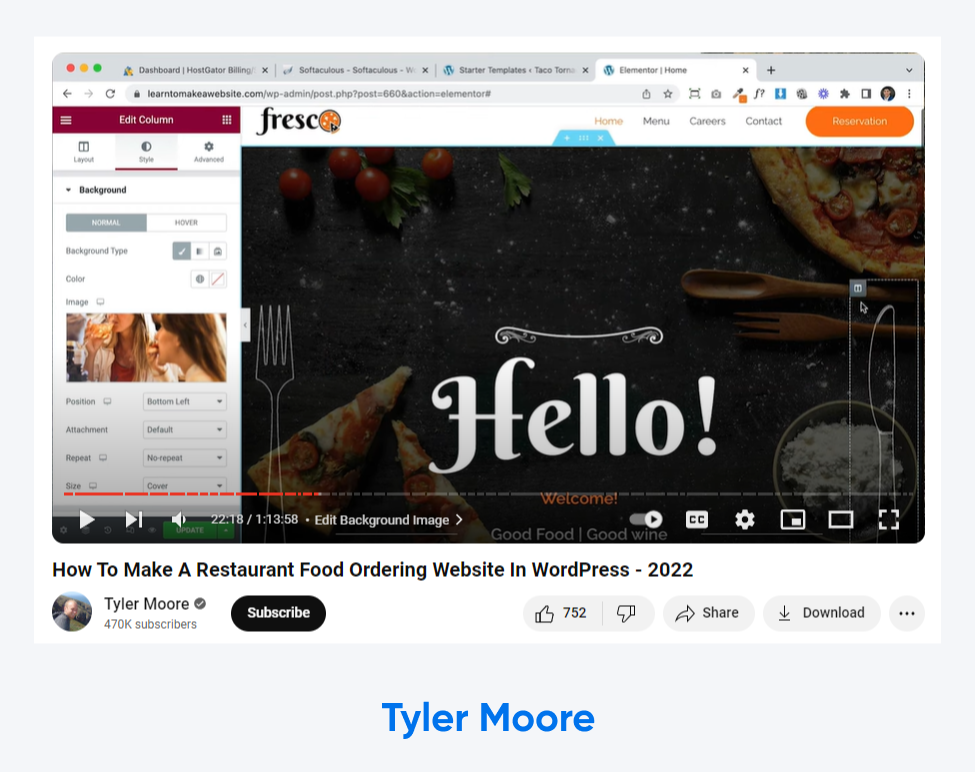
Tyler Moore’s YouTube channel walks you through building a WordPress website from the ground up, no prior web development experience needed. Tyler’s tutorials are detailed and beginner-friendly, often walking viewers through the entire process of creating a website, from choosing a domain and hosting to designing pages, installing plugins, and customizing themes.
His step-by-step approach and clear explanations make complex tasks manageable, allowing even complete beginners to achieve professional-looking results. With a focus on practical, real-world applications, Tyler’s videos are ideal for those who want to see the website-building process in action.
Plus, they come highly recommended by the Reddit community.
Key features:
- Comprehensive video tutorials: Offers full-length tutorials that guide users through the entire process of building a WordPress site.
- Beginner-friendly content: Content is tailored for beginners, with no prior coding or web development experience required.
- Hands-on learning: Focuses on practical, step-by-step instructions, allowing users to build and customize their websites as they watch.
- Detailed explanations: Breaks down complex processes into simple, easy-to-follow steps, ensuring that viewers can achieve professional results.
- Project-based learning: Tutorials often revolve around creating specific types of websites, providing clear examples and goals.
Best for: Beginners and non-techies who want to build a complete WordPress website from scratch using detailed, step-by-step video tutorials.
Learning style: Hands-on, visual learning through comprehensive video tutorials that cover every aspect of website creation.
13. Darrel Wilson on YouTube
For beginners and pros.
Darrel Wilson’s YouTube channel offers a wide range of WordPress tutorials, from basic site-building to advanced design and optimization techniques, catering to users of all skill levels.
Darrel’s YouTube channel is a comprehensive resource for WordPress enthusiasts at all levels. Known for his clear and engaging teaching style, Darrel covers everything from basic website creation to more advanced topics like SEO, e-commerce integration, and website optimization.
His tutorials are designed to be practical and easy to follow, with step-by-step instructions that guide viewers through each process. The videos provide valuable insights and hands-on guidance that make the process straightforward and accessible.
Key features:
- Diverse range of content: Offers tutorials that cater to both beginners and advanced users, covering a wide spectrum of WordPress-related topics.
- Focus on practical applications: Each tutorial is designed to help viewers achieve specific, real-world results, such as creating a fully functional e-commerce store or optimizing site performance.
- Step-by-step instructions: Videos provide clear, detailed guidance, making it easy to follow along and implement the techniques discussed.
- One-on-one engagement: Darrel actively engages with his audience through comments and live sessions, offering personalized advice and support.
Best for: WordPress users at all levels, from beginners looking to build their first site to advanced users seeking to refine their skills and optimize their websites.
Learning style: Hands-on, visual learning through detailed video tutorials, with a focus on achieving practical, real-world outcomes.
14. WPBeginner
The biggest beginner-focused WordPress site.
WPBeginner offers simple, no-nonsense tutorials and guides to help new users build, customize, and grow their WordPress websites with ease.
WPBeginner is one of the most popular WordPress resources on the web, specifically tailored for beginners. It provides a vast array of easy-to-follow tutorials, tips, and tricks that simplify the WordPress learning curve.
The site covers everything from the basics of setting up a WordPress site to more advanced topics like SEO optimization and plugin recommendations. With a user-friendly approach and a focus on practical, actionable advice, WPBeginner is a sensible first stop for anyone starting out. Its limitation is the flip side of its strength: content stays deliberately beginner-level, so developers will outgrow it.
Key features:
- Beginner-focused content: All tutorials and guides are written with beginners in mind, making complex concepts accessible.
- Comprehensive topic set: Covers a wide range of topics, from setup and customization to SEO, security, and beyond.
- Video content: Offers video tutorials alongside written guides, catering to different learning preferences.
- Tool recommendations: Regularly updated lists of recommended plugins, themes, and tools to enhance your WordPress experience.
Best for: Absolute beginners to intermediate users who want straightforward, easy-to-understand guidance on using WordPress.
Learning style: Tutorial-driven with a mix of written guides and video content, focusing on practical, hands-on learning.
15. LinkedIn Learning
Professional-grade WordPress training.
LinkedIn Learning offers structured, expert-led courses that help users master WordPress skills, from basic setup to advanced development — with the added benefit of certification.
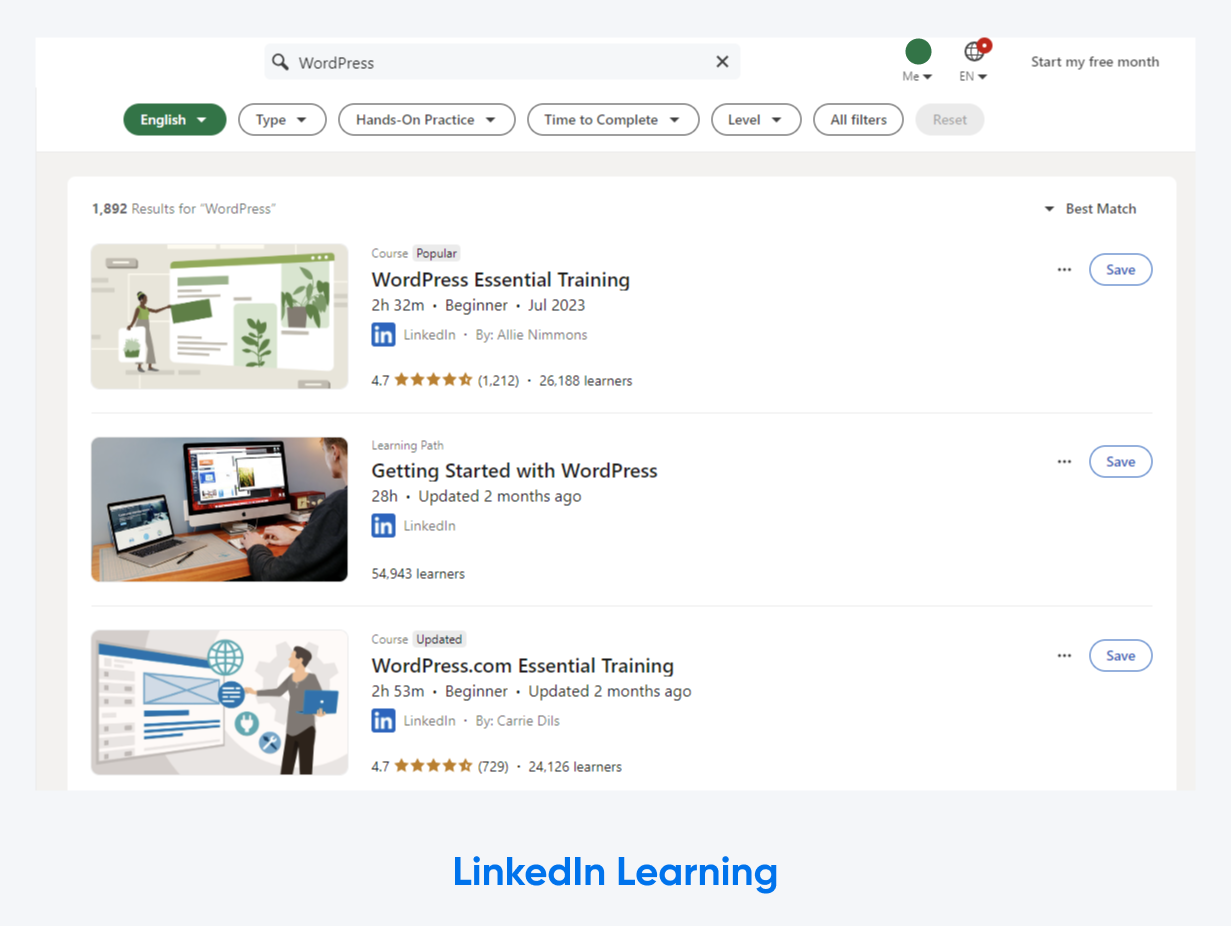
LinkedIn Learning, formerly known as Lynda.com, is a leading online learning platform that offers a wide range of professional courses, including an extensive selection of WordPress tutorials.
The platform provides structured, high-quality video courses led by industry experts, covering everything from getting started with WordPress to more advanced topics like theme development, plugin creation, and site optimization. Each course is designed to be comprehensive, guiding learners through detailed lessons that build on one another.
LinkedIn Learning is subscription-based, and its certificates of completion make it most valuable for professionals who want proof of skills on their profile.
Key features:
- Expert-led courses: All courses are taught by experienced professionals, ensuring high-quality content and practical insights.
- Structured learning path: Courses are organized into clear, sequential lessons that build on each other, making it easy to progress from beginner to advanced topics.
- Certification: Upon completion of courses, users can earn certificates that can be added to their LinkedIn profiles, adding to their professional credibility.
- Wide range of topics: Covers a broad spectrum of WordPress-related subjects, from basic setup and customization to advanced development and security.
- Downloadable resources: Many courses offer downloadable exercise files and resources to enrich the learning experience.
Best for: Beginners to advanced users, particularly professionals who want structured, certification-based learning to enhance their WordPress skills and career prospects.
Learning style: Structured, video-based courses with a focus on comprehensive, step-by-step instructions.
16. WP101
The beginner’s gateway to WordPress mastery.
WP101 offers easy-to-follow, professional video tutorials that simplify the WordPress learning curve for absolute beginners.
WP101 is a highly regarded video tutorial platform specifically designed to help beginners quickly get up to speed with WordPress. Created in 2008 by Shawn Hesketh and now part of Awesome Motive (the company behind WPBeginner), WP101 is known for its high-quality, concise video tutorials that break down complex WordPress concepts into easy-to-understand lessons.
The platform offers a series of courses that cover everything from the basics of WordPress installation and setup to more advanced topics like SEO, security, and e-commerce. With a focus on clarity and simplicity, WP101 is an ideal starting point for anyone new to WordPress who wants to build a strong foundation without feeling overwhelmed.
Key features:
- Professional video tutorials: High-quality videos led by WordPress experts, offering clear and accurate instruction.
- Beginner-friendly: Content is specifically tailored for beginners, with a focus on making WordPress accessible to non-technical users.
- Structured courses: Tutorials are organized into structured courses that guide learners through each aspect of WordPress, building on previous lessons.
Best for: Absolute beginners who want a clear, structured introduction to WordPress through high-quality video tutorials.
Learning style: Video-based learning with a focus on step-by-step instruction, making complex topics easy to grasp.
17. Udemy
Learn at your own pace with diverse WordPress courses.
Udemy offers a vast selection of WordPress courses tailored to all skill levels, with options ranging from beginner tutorials to advanced development and design.
Udemy is a popular online learning platform that hosts a wide array of WordPress courses created by instructors from around the world. Whether you’re just starting out or looking to dive into advanced WordPress development, Udemy has a course to fit your needs.
The platform allows users to learn at their own pace. Individually purchased courses generally include lifetime access, provided Udemy continues to carry the course and your account stays in good standing. Quality varies by instructor, so check ratings and recent reviews before you buy. Courses on Udemy cover everything from setting up a basic WordPress site to mastering complex themes, plugins, and custom development. With its diverse offerings, Udemy is an excellent resource for anyone looking to expand their WordPress knowledge on their own schedule.
Key features:
- Vast course selection: Offers a wide range of WordPress courses, catering to beginners, intermediate users, and advanced developers alike.
- Learn at your own pace: Courses are self-paced, and purchased courses generally stay in your library for repeat viewing.
- Expert instructors: Courses are taught by a diverse group of instructors, many of whom are industry professionals with extensive experience in WordPress.
- Affordable options: Udemy frequently offers discounts and promotions, making many courses available at an affordable cost.
- Interactive learning: Many courses include quizzes, exercises, and Q&A sections to enhance the learning experience.
Best for: WordPress users at all levels, especially those who want the flexibility to learn at their own pace and choose from a wide variety of course topics.
Learning style: Video-based learning with a mix of lecture-style instruction, hands-on projects, and interactive exercises.
18. WordPress Online Workshops, meetups, and WordCamps
Learn WordPress live, from real humans.
Self-paced content is great — until you have a question. WordPress’s community channels fill that gap: free live Online Workshops on Learn WordPress, local meetup groups, WordCamp conferences around the world, and the official support forums where volunteers answer questions every day.
Online Workshops are scheduled live sessions led by experienced WordPress professionals, so you can follow along and ask questions in real time. Meetups and WordCamps add the in-person dimension: talks, workshops, and hallway conversations with people who have already solved the problem you’re stuck on.
Key features:
- Live, interactive learning: Ask questions and get answers in real time instead of piecing things together alone.
- Free to join: Online Workshops and the support forums cost nothing.
- A place to get unstuck: The support forums are the official channel for troubleshooting help from experienced volunteers.
- Community connections: Meetups and WordCamps connect you with local developers, designers, and site owners.
Best for: Learners at any level who want live instruction, a community to lean on, and somewhere to ask questions when tutorials aren’t enough.
Learning style: Live and social — interactive workshops, events, and forum Q&A rather than self-paced content.
19. Joy of WP
Learn WordPress with a smile. 🙂
Joy of WP offers engaging, beginner-friendly video courses that make mastering WordPress fun and accessible for everyone.
Joy of WP is an educational platform created by WordPress enthusiast Bud Kraus, designed to help beginners learn WordPress in a fun and engaging way. The platform features a series of free and premium video courses that cover everything from the basics of WordPress installation to more advanced topics like site customization and plugin usage.
What sets Joy of WP apart is its lighthearted approach to teaching, making the learning process enjoyable without sacrificing depth or quality. Whether you’re completely new to WordPress or looking to improve your existing skills, Joy of WP provides clear, step-by-step instructions in a format that’s easy to follow and enjoyable to watch.
Key features:
- Beginner-friendly content: Designed specifically for beginners, with a focus on making WordPress accessible to everyone, regardless of technical background.
- Engaging teaching style: A lighthearted, fun approach that makes learning WordPress enjoyable without sacrificing depth or quality.
- Free and premium content: Offers a mix of free courses and premium content, allowing users to start learning without any upfront cost.
- Step-by-step videos: Each course is broken down into manageable lessons, with clear, easy-to-follow instructions.
Best for: Beginners and casual users who want to learn WordPress in a fun and engaging way, without feeling overwhelmed by technical jargon.
Learning style: Video-based learning with a focus on clear, step-by-step instructions, delivered in a lighthearted and engaging manner.
Comprehensive guides and tools
20. WordPress Playground
A full WordPress site in your browser — no hosting, no installation.
WordPress Playground isn’t a course; it’s the practice room. This official WordPress.org project runs a complete WordPress site instantly on any device, without a host, so you can experiment with the dashboard, themes, plugins, and the Site Editor before you’ve bought hosting or installed anything.
That makes it a natural companion to every other resource on this list: read or watch a lesson, then try it immediately in a sandbox where nothing can break. Developers get extra mileage, too — Playground can test plugins and themes against different WordPress and PHP versions.
Key features:
- Instant sandbox: A complete WordPress site loads in one click, right in the browser.
- Nothing to set up: No hosting account, database, or installation required.
- Safe to break: Experiment freely with themes, plugins, and settings — a fresh site is a click away.
- Free and official: Playground is an open source WordPress.org project, free to use.
Best for: Beginners who want hands-on practice before committing to hosting, and anyone testing themes or plugins risk-free.
Learning style: Pure hands-on experimentation — a sandbox to practice in while you learn from the other resources here.
21. WPSessions
Expert-level WordPress training.
WPSessions offers in-depth webinars and courses led by top WordPress professionals, perfect for developers and advanced users looking to deepen their skills.
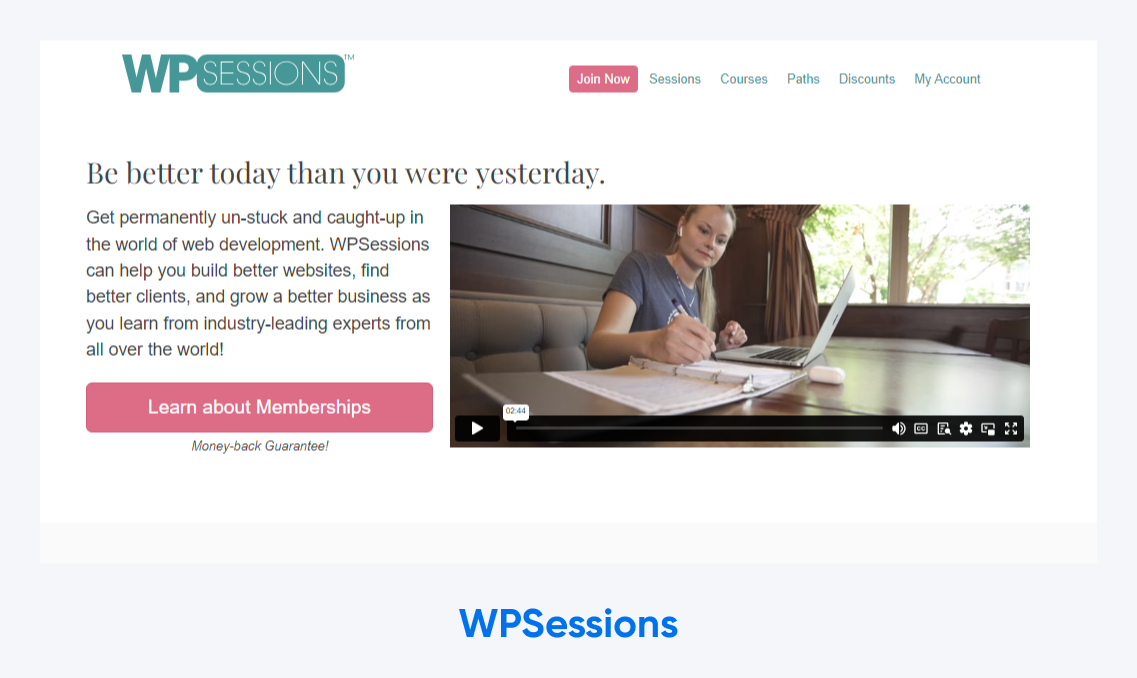
WPSessions is a premium training platform that provides advanced WordPress education through live webinars, on-demand courses, and masterclasses. The platform is known for bringing together top WordPress experts to share their knowledge on a wide range of topics, including development, security, performance optimization, and more.
Each session is designed to offer deep insights and practical skills that can be directly applied to real-world projects. WPSessions is particularly valuable for developers, designers, and advanced users who want to stay at the forefront of WordPress best practices and emerging trends.
The platform’s content is highly technical, making it an ideal resource for those who are already familiar with the basics and are looking to advance their expertise.
Key features:
- Expert-led content: All courses and webinars are taught by leading WordPress professionals, so you’re guaranteed high-quality, up-to-date content.
- Advanced sessions: Focuses on deep, technical topics that are perfect for developers and advanced users looking to upgrade their skills.
- On-demand access: Offers the flexibility to watch sessions live, or access them later on demand, making it convenient to fit learning into a busy schedule.
- Active community: Provides opportunities to interact with instructors and other learners through Q&A sessions and community forums.
Best for: Developers, designers, and advanced WordPress users who want to deepen their technical knowledge and stay current with the latest WordPress trends and practices.
Learning style: Webinar and video-based learning with a strong focus on advanced, technical instruction delivered by industry experts.
22. The Tao of WordPress
A philosophical and practical guide to WordPress mastery.
The Tao of WordPress is a book by Jeff Starr that serves as both a philosophical and practical guide to mastering WordPress. (It’s actively maintained, too — the current edition is updated for WordPress 7.0, with free lifetime updates.)
It offers a unique blend of insights, best practices, and practical tips for building and managing WordPress sites — with purpose and clarity.
Unlike typical technical manuals, this book takes a holistic approach, combining deep insights into the principles behind WordPress with actionable advice on how to build and maintain WordPress websites effectively.
Jeff Starr is a well-known WordPress developer and author — the developer behind Perishable Press and co-author of Digging Into WordPress — and his book covers a wide range of topics, from setting up a site and choosing the right plugins to more advanced topics like custom theme development and site optimization. The book’s unique perspective helps readers learn the mechanics of WordPress while understanding the underlying philosophy that makes WordPress a powerful platform for creators.
Key features:
- Holistic approach: Combines practical WordPress advice with deeper insights into the philosophy and principles behind the platform.
- Real-world examples: Provides examples and case studies that illustrate key concepts, making the lessons more tangible and applicable.
- Written by an expert: Authored by Jeff Starr, a respected WordPress developer and author, providing high-quality, authoritative content.
- Focuses on best practices: Emphasizes best practices for building and managing WordPress sites, helping readers avoid common pitfalls and build with purpose.
Best for: WordPress users of all levels who want to gain both practical skills and a deeper understanding of the principles that guide effective WordPress development and management.
Learning style: Book-based learning with a mix of philosophical insights and practical, step-by-step guidance, enriched by real-world examples.
23. Full Site Editing
Block themes and the Site Editor, explained by a core contributor.
Full Site Editing offers in-depth tutorials, news, and insights focused exclusively on WordPress’s Full Site Editing (FSE) capabilities, helping users stay ahead of the curve.
The website is a specialized resource dedicated to the Full Site Editing (FSE) feature within WordPress, which is now the platform’s standard customization model. Created by Carolina Nymark, a WordPress core contributor, this site offers tutorials, guides, and articles that help users, developers, and designers understand and use FSE.
The resource provides clear, step-by-step instructions, best practices, and the latest updates from the WordPress community. It’s a practical way to stay current on how modern WordPress themes are built.
Key features:
- Exclusive focus on FSE: Dedicated entirely to Full Site Editing, offering targeted content that helps users master this powerful feature.
- Comprehensive tutorials: Step-by-step guides and tutorials that cover all aspects of FSE, from basic concepts to advanced customization techniques.
- Expert-led content: Created by Carolina Nymark, a respected WordPress core contributor, offering authoritative and up-to-date content.
Best for: WordPress users, developers, and designers who want to master FSE and stay ahead of emerging trends in WordPress customization.
Learning style: Tutorial-driven with a focus on practical, hands-on learning, and the latest news and updates about FSE.
24. WPKube
Your trusted guide to WordPress tools and services.
WPKube pairs tutorials with detailed reviews of themes, plugins, and hosting services, which makes it useful when you’re deciding what to install, not just learning how.
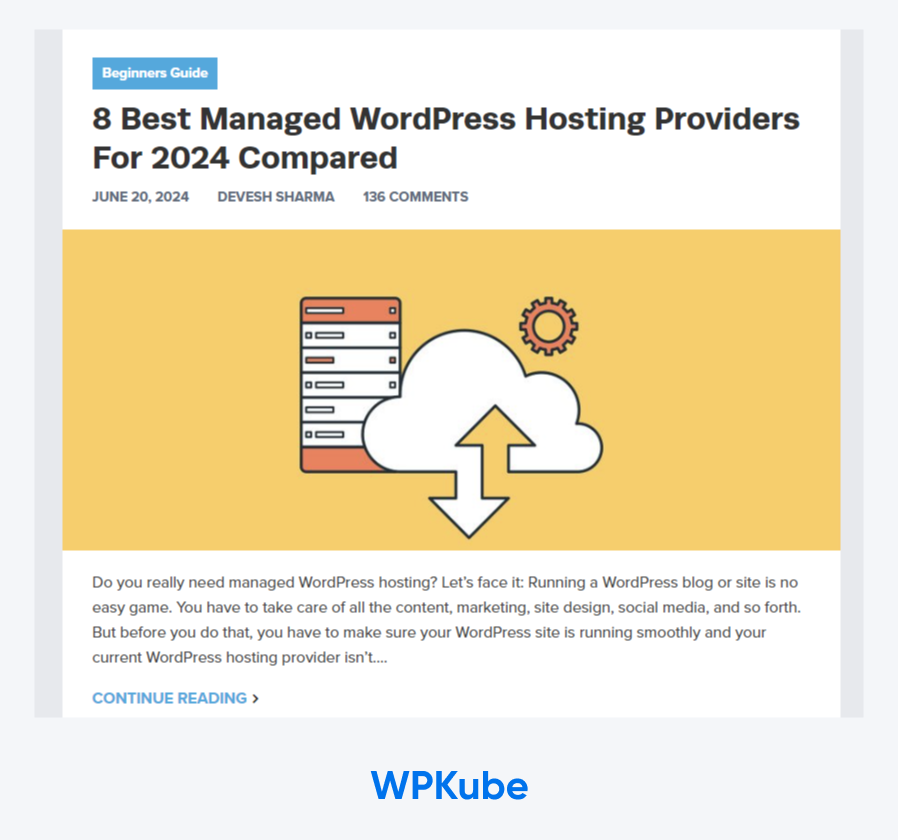
WPKube is a well-rounded WordPress resource site that provides tutorials, reviews, and guides aimed at helping users build, manage, and optimize their WordPress websites. From beginner-friendly articles that walk you through the basics of setting up a WordPress site to advanced tutorials on customizing themes and plugins, WPKube covers it all.
In addition to its tutorials, WPKube is known for its honest and detailed reviews of WordPress themes, plugins, and hosting services, helping users make informed decisions about the tools they use.
Key features:
- Comprehensive tutorials: Covers a wide range of topics, from basic WordPress setup and configuration to advanced customization and site development.
- In-depth reviews: Provides detailed reviews of WordPress themes, plugins, and hosting services, helping users choose the best tools for their needs.
- Beginner to advanced content: Offers content that caters to both beginners and more experienced users, appealing to a wide audience.
Best for: WordPress users of all levels, from beginners looking to get started with WordPress to advanced users seeking detailed reviews and advanced tutorials.
Learning style: Article-based learning with a mix of tutorials, guides, and reviews, focusing on practical applications for more informed decision making.
25. ZipWP
AI-built WordPress sites in minutes.
ZipWP uses AI to generate a working WordPress site in minutes, based on a short description of your business or project.
Having a hard time learning WordPress? Here’s a no-code shortcut, with the honest caveat that it builds the site for you, so you’ll still want the resources above to run it day to day. As of July 2026, generating a site is free, but keeping it live requires hosting: either ZipWP’s own managed plans or your own WordPress host after migration (see ZipWP’s pricing page for current rates). DreamHost’s own AI website builder, Remixer, scratches the same itch.
ZipWP is a modern platform that uses artificial intelligence to speed up the process of building WordPress websites. Designed for users who need a fully functional site quickly and without hassle, ZipWP allows you to create a complete WordPress site by simply answering a few questions about your business or project.
The AI-powered system then generates a site that’s customized to your preferences, including the design, layout, and essential features. Whether you’re a small business owner, freelancer, or someone with minimal technical skills, ZipWP gets a presentable site up quickly, with the flexibility to customize it afterward.
Key features:
- AI-powered site creation: Uses AI to quickly generate a fully functional WordPress site based on user input.
- Customizable templates: Provides a range of templates that can be easily customized to fit your brand and needs.
- Time-saving solution: Ideal for users who need a website quickly, without going through the usual long setup process.
- User-friendly interface: Designed to be accessible even to those with little to no WordPress experience, with intuitive controls and options.
Best for: Small business owners, freelancers, and non-technical users who need a professional WordPress site quickly and with minimal effort.
FAQs about learning WordPress
Is WordPress hard to learn?
Not for everyday use. If you can work a web browser, you can learn to publish posts and pages in a few hours. The learning curve shows up in customization and development — those take longer, but you don’t need them to run a typical site.
How long does it take to learn WordPress?
Plan on a few hours for the basics, a weekend for a first working site, a few weeks of practice to manage a site confidently, and several months for developer-level skills. The milestone table earlier in this post breaks each stage down.
Can I learn WordPress for free?
Yes. Learn WordPress (learn.wordpress.org), WordPress Documentation, WordPress.tv, and the YouTube channels in this list are all free, and WordPress Playground gives you a free practice site right in your browser. Paid courses mainly add structure and certificates.
Do I need to know how to code to use WordPress?
No. You can build and run a complete WordPress site with themes, the Site Editor, and plugins — no code required. HTML, CSS, PHP, and JavaScript only become necessary when you want to build custom themes, plugins, or blocks.
Should I learn WordPress.com or WordPress.org?
Learn self-hosted WordPress.org if you want full control, plugins, and portable skills — it’s what most tutorials, including most in this list, teach. WordPress.com is a hosted service built on the same software, so the editor basics carry over either way.
Taking the time to learn WordPress
WordPress has grown far beyond a blogging platform; it’s a powerful engine that drives some of the best websites on the internet, and with it, you can create the website your business needs.
So, whether you’re a visual learner or a keen reader, the 25 resources in this post can help you learn WordPress skills to build the site of your dreams.
Ready to create your WordPress website? Check out affordable WordPress hosting plans to start your journey today!