
“Brand strategy” sounds like something that belongs to companies with a bustling marketing department (and money to burn). It isn’t. A brand strategy is a roadmap for how you’ll use your brand — who it’s for, what it stands for, how it looks and sounds — to reach your business goals.
Truly, it’s just the planning you should do up front when defining your small business, so you’re not scrapping your logo, rewriting all the content on your website, and starting over six months from now. That rework costs far more time and money than getting it right the first time.
Do this early in your brand building to custom craft how customers feel about your company, instead of leaving it to chance.
All you really need at this point is time, honesty, and seven good questions to point you in the right direction.
What Is a Brand Strategy?
A brand strategy is a roadmap for how to use your brand to achieve your business goals.
A solid brand strategy looks at everything: shoppers, what you’re selling, how customers experience your business, your company culture, and what your competitors are doing. From there, building your strategy is all about nailing down the positioning that will help you attract the right people and grow.
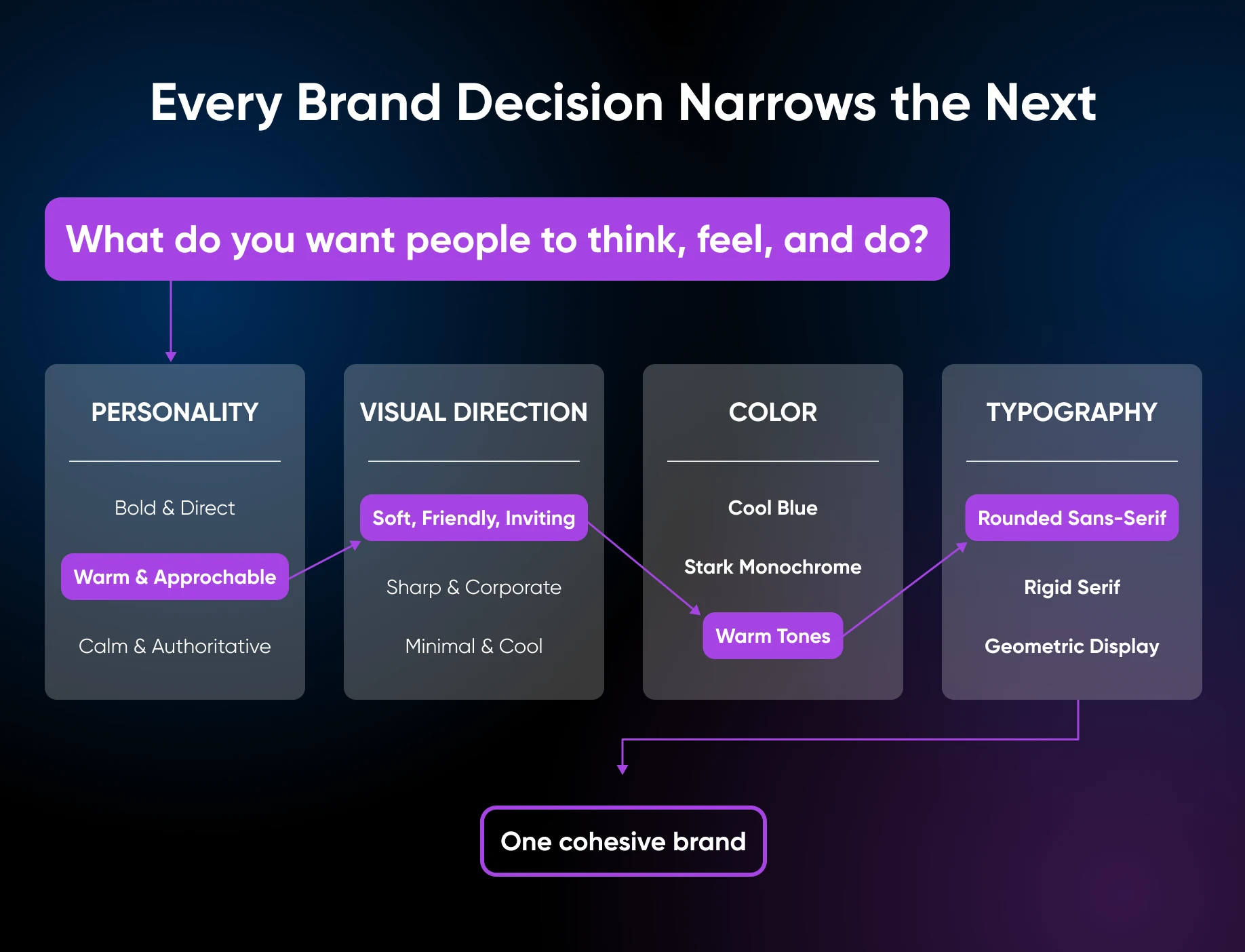
Your brand strategy answers the question: What do I want people to think, feel, and do when they encounter my business?
Define Your Brand Strategy With These 7 Questions
Work through each of the following questions, and you’ll have the building blocks of a brand strategy that’s uniquely yours.
1. Who Is Your Target Audience?
Before you can build a brand that resonates, you need to know who you’re trying to reach.
Think about your ideal customer’s age, lifestyle, values, problems, and what they care about. The more clearly you can picture this person, the more effectively you’ll be able to communicate with them.
2. What Are Your Company Values?
Your values are the principles that guide how your business operates — how you make decisions, treat customers, and show up day to day.
Naming these clearly helps you build a brand that feels authentic and consistent, rather than manufactured.
Take, for example, Ben & Jerry’s, a once-small company that became as famous for its social mission as for its flavors.
Values that stick and stand out like this have a few things in common:
- They’re specific, not generic. Ben & Jerry’s didn’t settle for a vague “we give back.” The company picked concrete causes and campaigned for them by name, including same-sex marriage campaigns in the U.S., Ireland, Australia, and France.
- They cost something. A value only means something when you honor it under pressure. When Ben & Jerry’s started its same-sex marriage campaign in Australia, “not a single political party there supported same-sex marriage,” then-CEO Jostein Solheim said in a 2016 Knowledge at Wharton interview. The company ran the campaign anyway.
- They’re built into how the business runs. Real values show up in structure, not slogans. When the founders sold to Unilever in 2000, the deal set up an independent board of directors responsible for the social mission and the integrity of the brand. Per Solheim’s account in that same interview, Unilever appointed just 2 of its 11 seats.
3. What’s Your Competitive Differentiation?
What do you offer that your competitors don’t? Answering this honestly requires looking at your business from the outside in.
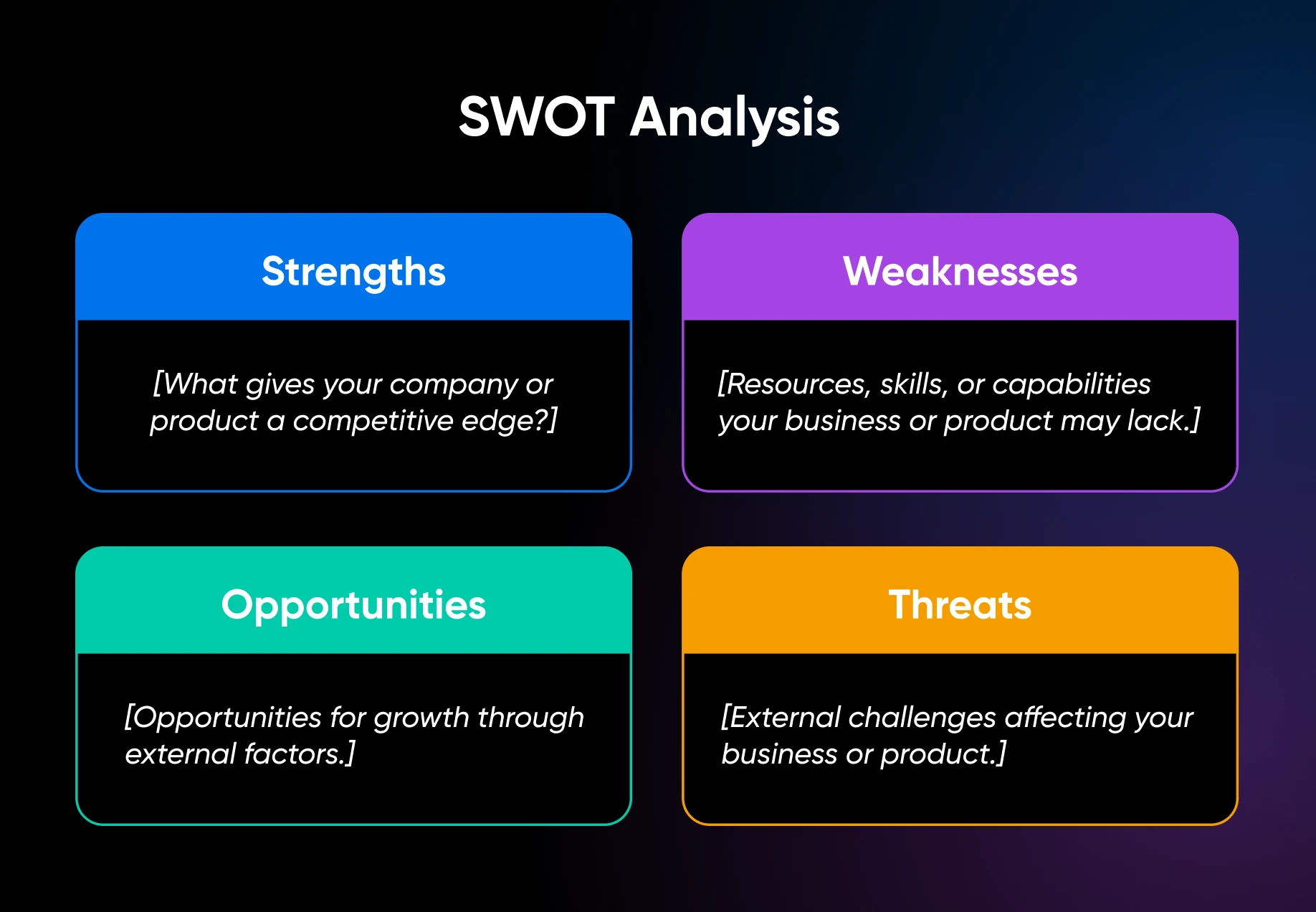
A useful tool here is a SWOT analysis, which is an assessment of your business’s strengths, weaknesses, opportunities, and threats. It gives you a clear picture of where you stand in the market and where you have room to differentiate.
To run one, grab a piece of paper and work through each quadrant:
- Strengths (you control): What do you do well? What do customers compliment you on? What advantages do you have over competitors (price, expertise, location, relationships)?
- Weaknesses (you control): Where do you fall short? What do you lack? This could include time, skills, resources, reviews, and so on. Try to be brutally honest here. This is where the most useful insights live.
- Opportunities (external): What’s changing in your market that you could take advantage of? New platforms, underserved audiences, gaps a competitor isn’t filling?
- Threats (external): What could hurt your business? New competitors, shifting customer behavior, rising costs, platform algorithm changes?
Once you’ve filled it out, think about how you can use those strengths to capture opportunities, and how to shore up weaknesses before threats become problems.
👉 Quick Note: The Weakness quadrant is where most business owners go vague. Resist that urge. The less comfortable it is to fill out, the more useful it will be.
4. What Personality Do You Want to Portray?
Your brand already has a personality, whether you’ve thought about it or not.
Every email you send, every post you publish, every conversation with a customer is projecting something. The question is whether it’s projecting what you want.
Warm and approachable?
Bold and direct?
Calm and authoritative?
Nail this down early. It keeps everything feeling cohesive, and you’ll refer back to it every time you write a page, an email, or a post.
For a structured starting point, use the five dimensions of brand personality that Jennifer L. Aaker published in the Journal of Marketing Research in 1997: sincerity, excitement, competence, sophistication, and ruggedness. Pick the one or two dimensions that fit your business, then choose 3 to 5 adjectives that sharpen them. The model has been around for almost 30 years, which means either it’s timeless or brand personalities haven’t changed much. Either way, use it.
5. How Do You Want to Come Across, Visually?
Colors, fonts, and logos aren’t the brand; they’re the outfit the brand wears. Get the personality right first, and the design decisions get easier. Get the design decisions first, and you’ll be redesigning in two years.
Before you invest in design work, get clear on the mood and aesthetic you’re going for. Gather reference images and real-life examples, describe the vibe in words, and think about brands you admire and why.
What does this phase actually look like in real life? Take a peek behind the scenes at how the DreamHost team created its new logo, bringing together various inspirations — including old logos, new website designs, and possibly too many cooks in the kitchen.
Later, when you dive into making specific design decisions with your brand, the guidelines you solidify here will help you avoid fatigue and overwhelm.
6. What Are Your Goals for Your Brand?
Brand strategy ultimately exists to serve business objectives. Your goals shape what you prioritize and how you measure success.
Setting goals for the first time can feel so open-ended, and that can be paralyzing. So let us share with you how we think of goals, and some examples to get you started.
Short-term goals cover the next year or so. Think launching a new product, growing your customer base by a specific percentage, or hitting a sales milestone.
Long-term goals zoom out to three to five years and beyond. Things like expanding into new markets, diversifying your offerings, or becoming the go-to name in your niche.
Whichever timeframe you’re working in, your goals should follow the SMART method, meaning they’re Specific, Measurable, Achievable, Relevant, and Time-Bound.
That means attaching real numbers to your goals, grounding them in your business’s actual values and capacity, and resisting the urge to set targets that sound impressive but aren’t realistic.
After all, vague or inflated goals don’t motivate; they demoralize. A goal like “grow revenue by 20% before Q4” gives you something to work toward. “Become a bigger brand” doesn’t.
Finally, to paraphrase 38 Special, hold on to those goals, but somewhat loosely. Markets shift, circumstances change, and a good goal today might need adjusting in six months.
7. What Can Your Existing Offerings and Customers Tell You?
If you’ve been in business for any length of time, you already have data to work with.
What do your best customers say about why they chose you? What do your reviews highlight? What products or services get the most engagement?
Your existing business is full of clues about what your brand is already doing well — and where you could use some improvement.
A note here: Seeing a direction you actually don’t want to keep going in with your products or services? Catching on to a customer type that isn’t working well for your goals as you build out your small business?
That’s OK! Good, even.
This step is all about getting introspective and pivoting if where you are doesn’t align with where you want to go.
As a Small Business, Should I Really Bother with Brand Strategy?
Yes. Your brand strategy is the backbone of everything your audience sees, hears, and feels when they encounter your business. Get it right, and you create a unified identity that is easier for customers to recognize and remember.
The payoff is measurable.
A Gartner survey of 426 senior marketing leaders, conducted in September and October 2025, found that companies with a strong brand strategy are 2x more likely to exceed their growth goals. The same survey found 84% of companies stuck in what Gartner calls a “brand doom loop”: they underinvest in measuring their brand, lose confidence in the results, and then invest even less.
For small businesses in particular, brand strategy also levels the playing field.
You may not have the ad budget of a national brand, but a clearer, more consistent identity can help you compete in a focused niche.
Customers can tell the difference between a business that knows and cares about who it is and who it’s for, compared to one that doesn’t.
Next Step: Put It into Action with a Brand Strategy Template
Especially if this is your first time putting together a well-planned brand, a template can make it much easier to move from reflection to action, and keep everything in one place as your business grows.
Smartsheet provides more than 20 free brand strategy templates in formats like Word, PDF, PowerPoint, and Google Docs, all of which you can download and edit to implement all the pieces you’ve been thinking through above and see how they work together.
DreamHost customers can use the Business Planner, which walks you through guided, interview-style questions and compiles your answers into a standardized plan covering your objectives, positioning, audience insights, and value proposition. It’s free with any DreamHost plan.
Some tips to help you “put pen to paper,” so to speak:
- Block out a few hours to work through your chosen template without interruption: This isn’t a form to fill out quickly; it’s a thinking exercise.
- Answer every section honestly, not aspirationally: Where is your brand right now, and where do you want it to go?
- Revisit it: Your brand strategy is a living document: Plan to review and update it at least once a year, or any time your business goes through a significant change.
Making Your Brand, Yours
That’s it, that’s the whole exercise!
Figure out who you’re for, what you stand for, what sets you apart, how you want to look and sound, and where you’re headed.
Can you tell we’re obsessed with making this as simple and achievable as possible, right now?
Answer these prompts honestly and you’ve got a brand strategy that’s genuinely yours — not a copy of a competitor and no icky feeling you’re trying to emulate some behemoth brand that just isn’t you.
You actually already got the hard part out of the way: deciding you were going to commit the time and effort to slow down and think strategically about your brand. Now it’s just a matter of getting it out of your head and onto the page.
Small Business Brand Strategy FAQs
What Are the Key Elements of a Small Business Brand Strategy?
A complete small business brand strategy covers six elements: your target audience, your company values, your competitive differentiation, your brand personality, your visual direction, and your goals. Nail those down first. Deliverables like logos, color palettes, and taglines all follow from them, not the other way around.
What’s the Difference Between Branding and Marketing?
Branding defines who your business is: its audience, values, personality, and look. Marketing is how you promote that business through channels like ads, email, social media, and content. Your brand strategy tells your marketing what to say; your marketing plan decides where and how often to say it.
How Much Does Branding Cost for a Small Business?
The strategy itself can cost you nothing but time: the seven questions above plus a free template are enough to produce a working brand strategy document. The spending starts at execution — logo design, photography, website design — and depends on whether you do it yourself, hire a freelancer, or bring in an agency. Do the free strategy work first either way. It’s the best insurance that whatever you spend on design won’t get thrown out in a year.
Should I Design My Logo Before My Brand Strategy?
No. Decide your audience, values, and personality first, because those decisions tell a designer what the logo needs to communicate. A logo chosen before the strategy is a guess, and usually a redesign waiting to happen.
How Often Should I Update My Brand Strategy?
Review your brand strategy at least once a year, and any time your business changes significantly — a new product line, a new audience, or a pivot. Treat it as a living document rather than a one-time exercise, and update the parts your reviews and customers prove wrong.

Your Brand Is Working Before You Say a Word
Half of all consumers have chosen one brand over another based on color alone, and one-third of brands saw substantial revenue growth thanks to consistent branding. This 40-page DIY playbook gives small business owners the strategy, voice, color palette, logo, typography, and style guide blueprint to build a pro-level brand with free tools, no designer required.
Get the eBook