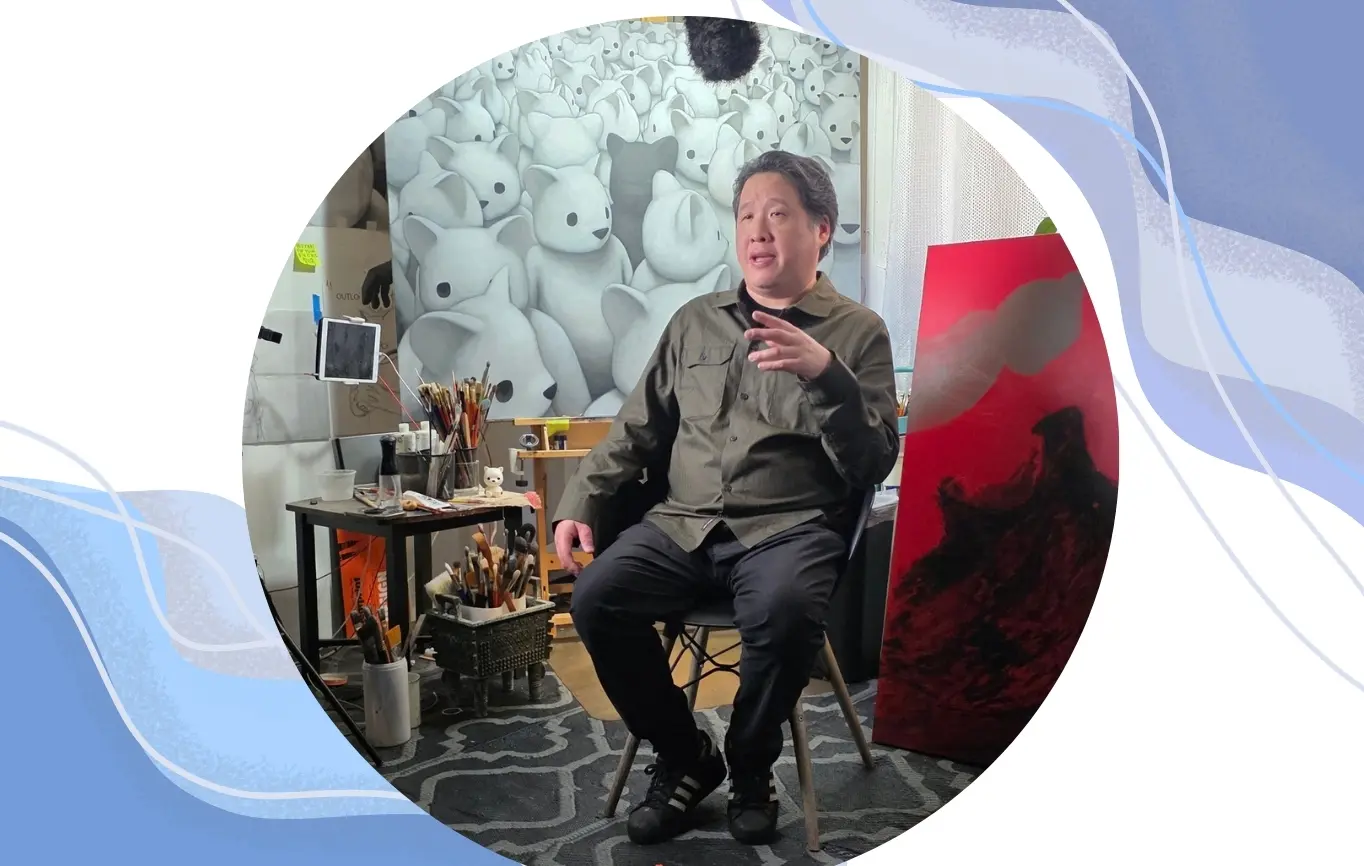





In the early 2000s, Luke Chueh spent his nights bouncing between underground warehouse art shows in downtown Los Angeles and long hours at a computer trying not to accidentally break his website.
The art scene he stepped into after moving to LA in 2003 was chaotic in the best possible way. There were one-night exhibitions inside warehouses, DJs echoing through concrete rooms, and paintings taped directly onto walls while people wandered around holding drinks and arguing about art.
“Being an artist is a constant gamble,” Chueh says. “You could spend half a year working on something and it just sits there.”
The internet offered artists something different. Social media barely existed, so if you wanted people to find your work online, you needed a website.
Chueh had learned HTML at Cal Poly San Luis Obispo, building pages in BBEdit one line at a time.
“There were no templates,” he says. “You just figured it out.”
Around that time, a friend recommended DreamHost, which was within his price range, and it worked.
More than 20 years later, he’s still here.
The bear that changed everything
Chueh’s work eventually became known for a recurring character: a white bear with a blank expression and deceptively simple design.
“If you want something to last,” he says, “you’ve got to go simple.”
The bear gave Chueh a way to explore anxiety, shame, addiction, loneliness, and other heavier themes without tying those emotions to a specific person.
“I can be the bear,” he says.
One painting in particular changed the direction of his career. Soundtrack to My Life, a 2004 piece, shows the bear holding a cracked record in front of a turntable.
The image took off during the MySpace era, spreading across forums, blogs and repost sites. That kind of visibility mattered, especially for an artist trying to get the attention of galleries and other places that could show his work.
“If I wanted attention, I had to be seen,” he says. “And the easiest way to be seen was the internet.”
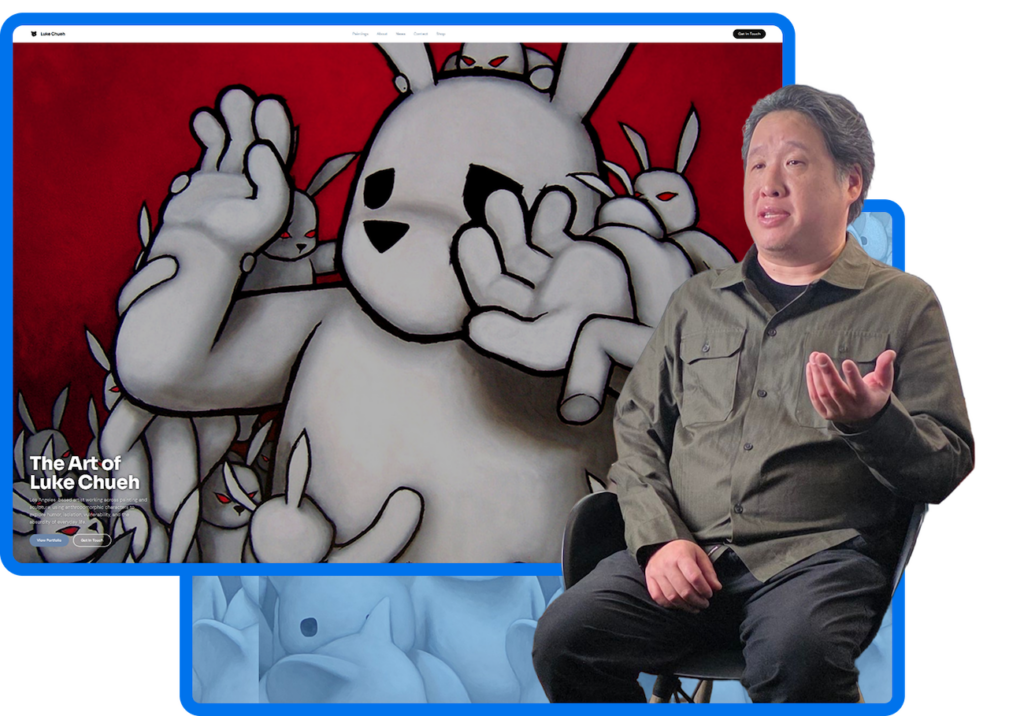
The internet moved on. His website didn’t.
A lot changed over the next two decades. MySpace faded away, Instagram became part of the job, and TikTok turned self-promotion into something close to performance art.
Chueh’s website stayed online through all of it, even when he stopped giving it much attention.
“I haven’t updated my website in like 14 years,” he admits.
He still believes having one matters. He’s just realistic about how people use the internet now.
“I find myself just gravitating to three or four different social media platforms,” he says. “It’s almost kind of a pain in the ass to have to drift outside of them.”
Still, he sees a website as a more consistent place for people to experience his work, especially when social platforms decide what gets seen.
“You can’t depend on them to be a place to keep eyes drawn toward you,” he says.
For an artist, he says, a website can serve as “an anchor and a place to consolidate that brand.”
He knew a website had value, but figuring out how to build one again was the problem.
“I remember in the late ’90s when I was still in college, I took an HTML class and I was designing websites with an old app called BBEdit where I was literally hand-typing all my code,” he says.
Then web design kept evolving. “Once JavaScript started becoming a thing, I was just like, ‘I have no idea how to do this.’”
He tried WordPress. “I got lost.”
Time didn’t help. Chueh handles nearly everything himself, from painting and promotion to collectibles, online sales, social media, shipping, and events.
“I’ve been grinding for 20-plus years now,” he says. “And I’m f****** exhausted.”
So the website waited.
Fourteen years later, it was time for a rebuild
When Chueh finally decided to update his website, he was coming back to web design after more than a decade away from it.
A lot has changed since his BBEdit days. “I haven’t thought in terms of website design in a long, long time,” he says.
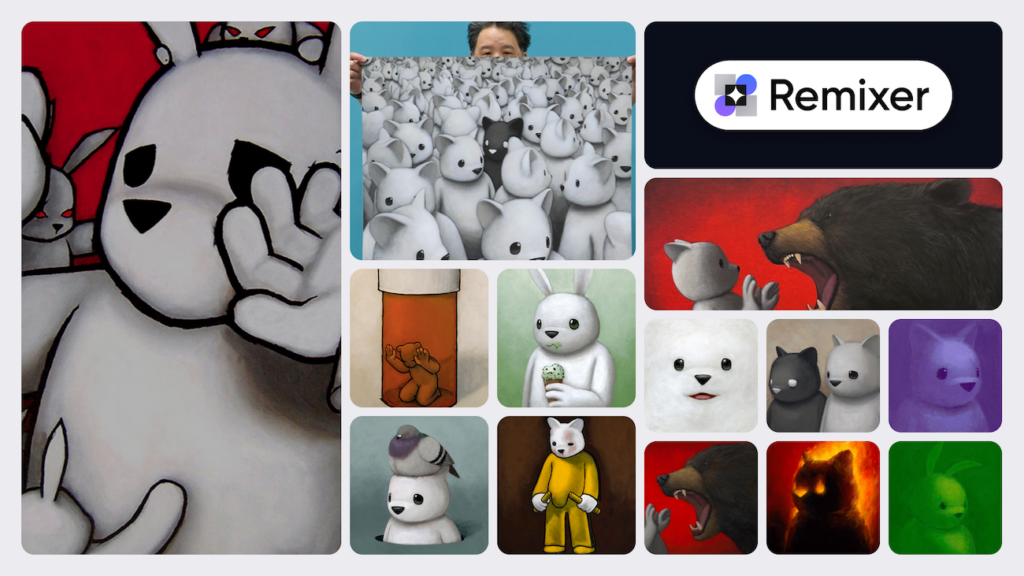
Instead of relearning everything that had changed, Chueh used DreamHost’s Remixer, a conversational AI-powered website and app builder. He could describe what he wanted, see what Remixer built, and keep adjusting it from there.
Even figuring out what to ask for took a little getting used to.
“This is not AI slop,” he joked early in the process. “I just don’t know what to ask for anymore.”
If he were rebuilding the site manually, Chueh estimated it would probably take “weeks, if not months.”
With Remixer, he started talking through what he wanted instead. He worked on the homepage, reorganized his portfolio, added ways to highlight current and upcoming shows, experimented with social integrations, replaced placeholder images with work from his own archive, and worked through how everything should look on mobile.
It wasn’t all smooth sailing. A homepage slideshow kept coming back after he removed it. One edit zoomed the entire site into oblivion. At another point, mysterious AI-generated bear art appeared and prompted Chueh to wonder out loud whether his own work had become “cringe.”
“There were definitely moments where I was like, ‘What is happening right now?’” he says, laughing.
But he didn’t have to go back to hand-coding HTML every time he wanted to change something. He could tell Remixer what wasn’t working, see what it did, and keep going.
“I like the fact that you could talk to it,” he says. “You could just say, ‘This is what I’m looking for.’”
The process also reminded him just how much web design had changed while he wasn’t paying attention. Terms like “hero image,” “dynamic content,” and “integrations” were a long way from the internet he learned on.
“I need Clippy more than ever now,” he joked.
As he worked, Chueh kept coming back to a fairly simple idea for what the new site needed to do: bring the different pieces of his online life together.
“I would want a website that consolidates my online presence into a singular place,” he says.
The new lukechueh.com brings together his paintings and other work, news and exhibitions, links to his store and social accounts, contact information, and a way for people to keep up with what he’s doing. Instead of sending people across different platforms to find his work, shows, store, and updates, he now has one place to point them.
For someone who hadn’t seriously designed a website in more than a decade, getting there took some adjustment.
“I think that Remixer is a great tool to help get me started,” he says.
The value of not having to think about web hosting
The reason Chueh has stayed with the same web host for more than 20 years is rather simple.
A friend recommended DreamHost, it was within his price range, and it worked.
“If it works, and they’re not fleecing me, why not?” he says.
That lack of drama is part of what he likes about it.
“I like the silent partner,” he says. “I like the idea that I’ve been collaborating with DreamHost for all these years and I haven’t had to think about it.”
There are already enough things competing for Chueh’s attention, and his hosting doesn’t need to become another one.
For years, his website didn’t need much attention either. It stayed online while he focused on making art, building his career, and keeping up with all the other places artists are now expected to show up online.
Then, after 14 years without a major update, he decided it was time.
“I’m excited to finally update my website,” he said when he started working with Remixer. “It hasn’t been updated in 14 years.”
Now, the new lukechueh.com is live, and it only took him 14 years to get around to it.
New to DreamHost? Start with Remixer and build a site that gives your work a place of its own.
Already a DreamHost customer? Try Remixer and give that website update you’ve been putting off a shot.