





Christopher Pedron learned one of his first lessons in computer networking by making his friend’s computer nearly unusable.
In high school, he signed up for a computer class with one assignment for the year: build a working computer. Pedron and most of his classmates finished within the first week. Naturally, they spent the extra time playing video games like Doom and Unreal Tournament.
Pedron figured out how to play a game installed on a friend’s computer over the school network, using his friend’s computer resources in the process.
“I could hear him scream from across the room every time his computer started lagging,” Pedron remembers.
Looking back, Pedron realized they had stumbled into an early lesson in networking.
“That’s networking,” he says. “That’s what we do with our servers.”
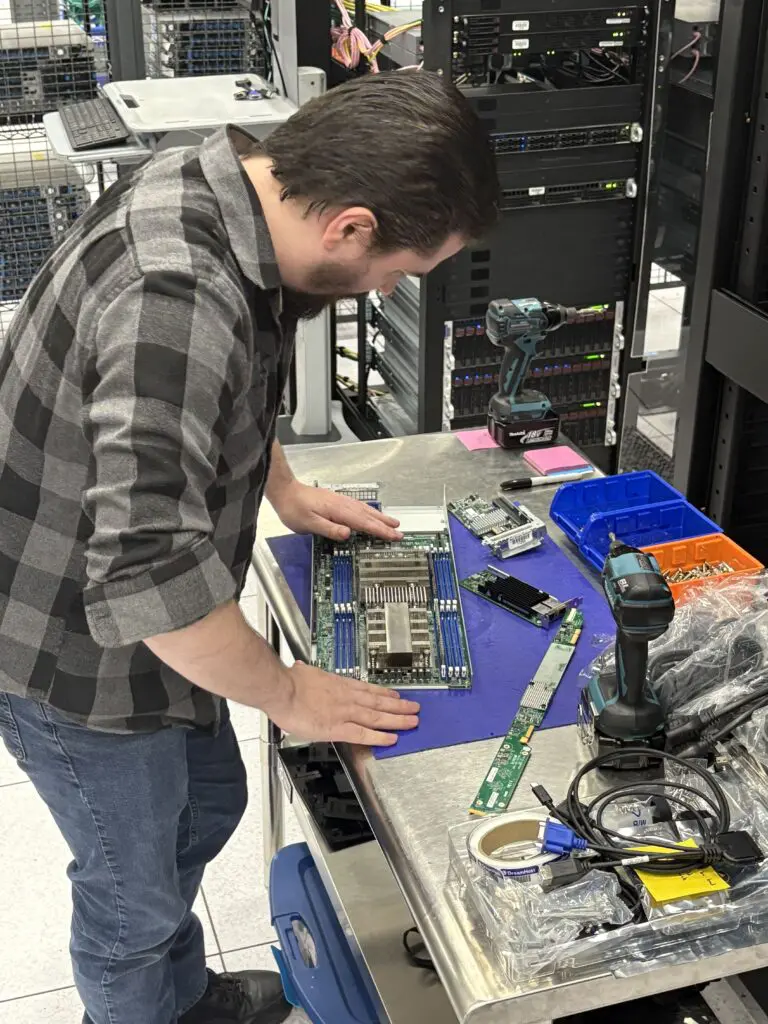
Today, as a Systems Administrator on DreamHost’s Data Center Operations team, Pedron is often the person figuring out why a machine is having problems.
“That was me,” he says of those high school days. “I caused that problem.”
The tech career he tried to avoid
Pedron had been building computers for most of his life but wasn’t convinced he wanted to do it for a living.
“For most of my youth, I tried to actually avoid getting into it,” he says. “I figured when I was younger that if I had to do it as work, I wouldn’t like it.”
A partner, a child, and a mortgage eventually made him reconsider. That led him to a data center job at the same facility where DreamHost operates infrastructure.
A few years later, while looking for a new job, Pedron accidentally applied to DreamHost. He was reading a job posting on his phone when the button to expand the listing overlapped the button to apply. He tapped the wrong one.
DreamHost contacted him a week later, and nearly four years later, he’s still here.
Learning to read The Matrix
Pedron’s team handles the physical side of DreamHost’s infrastructure, such as replacing failed drives and memory, deploying and cabling servers, installing Linux, and troubleshooting hardware.
Before joining DreamHost, Pedron had never worked with Linux.
“When you hear people talking about Linux, you’re probably imagining like the green letters in The Matrix just kind of trickling down,” he says. “And you’re like, ‘How do people read that?’”
Pedron now knows how to read it. Much of his work happens through commands and lines of text that tell him whether a server powered on correctly, connected to the network, found its storage, or ran into trouble.
Pedron describes working in Data Center Operations as a horror movie. “Everything’s fine until it’s not,” he says. “And if there’s any survivors, they’re going to be in the sequel.”
He’s gotten the 3 a.m. calls, and being the person someone calls when something breaks has become a point of pride. Pedron also likes having a plan, so much that he says he’ll “pre-plan” for situations where he might have to go with the flow.
That extends beyond DreamHost. Pedron’s sister took over his old data center job and quickly became a supervisor, but she still calls him when she runs into something.
Pedron likes being a source of knowledge, although “not getting paid for it kind of sucks.”
Coffee, computers, and staying close to home
“You cannot get enough caffeine in me,” Pedron says.
His usual order is a cold, blended espresso drink from Dutch Bros that he nurses from around 9 a.m. until mid-afternoon, even when there’s snow on the ground.
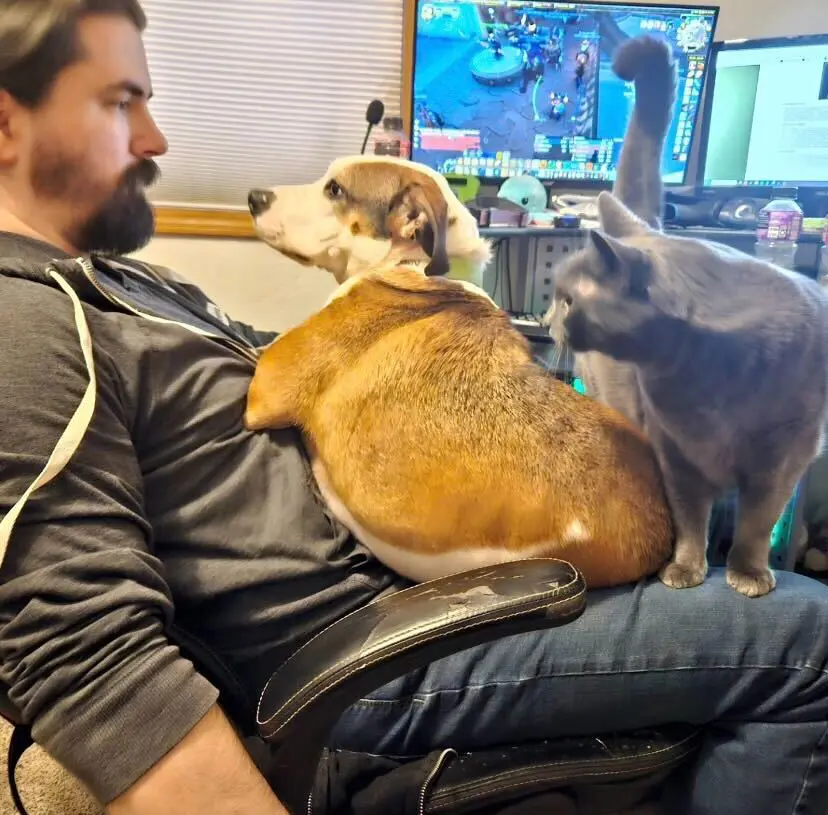
Away from work, Pedron is usually at home, spending time with his partner and daughter or back in front of his computer. He’s spent thousands of hours playing Fallout and Baldur’s Gate, and about 20 years playing World of Warcraft.
His preference for staying close to home may have something to do with a trip to the Oregon coast when he was around 19 or 20.
Pedron and his best friend drove a car on a highway along the ocean. They eventually ran out of beach to drive on, tried to turn around, and got stuck in the sand. Then the tide came in as they scrambled up a bluff and watched the car float away.
Wearing jeans and skate shoes, the two walked for six hours before Pedron called his mom to come get them.
“I don’t like really going that much further than I can walk home,” he says.
Reluctant is fine. Avoidance isn’t.
Pedron has a rule he follows at work and at home.
“You can be reluctant, but you can’t be avoidant,” he says. “If something needs to be done, you have to take care of it.”
He knows the difference. A 3 a.m. call isn’t something he looks forward to. A broken dishwasher once sat for a few days before he pulled it out, found a seized motor, and smacked it with a screwdriver.
It worked.
Pedron spent years resisting the idea of turning computers into a career. These days, when something breaks, he’s often the person people call.
Want to learn more about what makes working here special? Check out our careers page to see what makes DreamHost’s culture unique. From framing houses and packing at Amazon to building custom AI tools and MCP servers, stay tuned for next month’s spotlight on how our AI Technician found his true calling in tech.