From Side Hustle to Full-Time Business
How to turn your dream into reality — covering financial readiness, legal setup, online presence, time management, marketing, and hiring.
Get the Free eBook
Instant PDF download. No strings attached.
Stop Wondering If You're Ready. Find Out.
Most side hustlers wait too long — or jump too soon. This guide gives you the exact financial, market, operational, and personal signals to look for before going full time, plus the step-by-step playbook for what comes next.
- The four-quadrant readiness check: financial, market, operational, and personal
- How to set up the right business structure — sole prop, LLC, or S corp — and separate finances
- A complete digital footprint blueprint: website, Google Business Profile, social, and email
- Time-management systems that actually scale: Eisenhower Matrix, theme days, energy mapping, SOPs
69% of consumers believe a website is critical in establishing credibility for local businesses.
Over half (58%) of shoppers go looking for a business website to confirm information about a brand. If your business doesn't show up in search results, social media, or on Google Maps, you're invisible to a huge segment of your market.
The Numbers Behind the Leap
Who Should Read This eBook?
Is it time to turn your side hustle into a full-time business? You could be closer than you think. Your money situation doesn’t need to be perfect (when is it ever, really?) to go full time, but ideally it’s solid enough to take this thing full time.
A side hustle is ready for the main stage when you’ve identified ways to hit revenue goals all while sustainably scaling. That means consistent revenue, demand beyond your inner circle, repeatable processes — and a clear-eyed look at your own readiness.
This guide walks through the financial, market, operational, and personal signals to look for, plus the step-by-step setup for everything that comes after — legal, online presence, time, marketing, and hiring.
Your revenue is consistent and trending up
Revenue is relatively steady or increasing — not spiking randomly — and you have repeat customers and referrals.
Your growth depends entirely on you putting in more hours
If your side gig's growth depends entirely on you putting in more and more hours, that's not going to work for long.
Logic, meet reality
Even if you're financially ready, are you personally ready? Risk threshold, motivation, and a strong support system all matter.
The Full-Time Business Playbook
Financial & Legal Steps to Setting Up a New Business
If your business faces a lawsuit or gets into debt it can't get out of, your savings, car, or even home could be at risk. This may not be the most exciting part of going full-time, but it's critical that all your legal and financial structures are in tip-top shape.
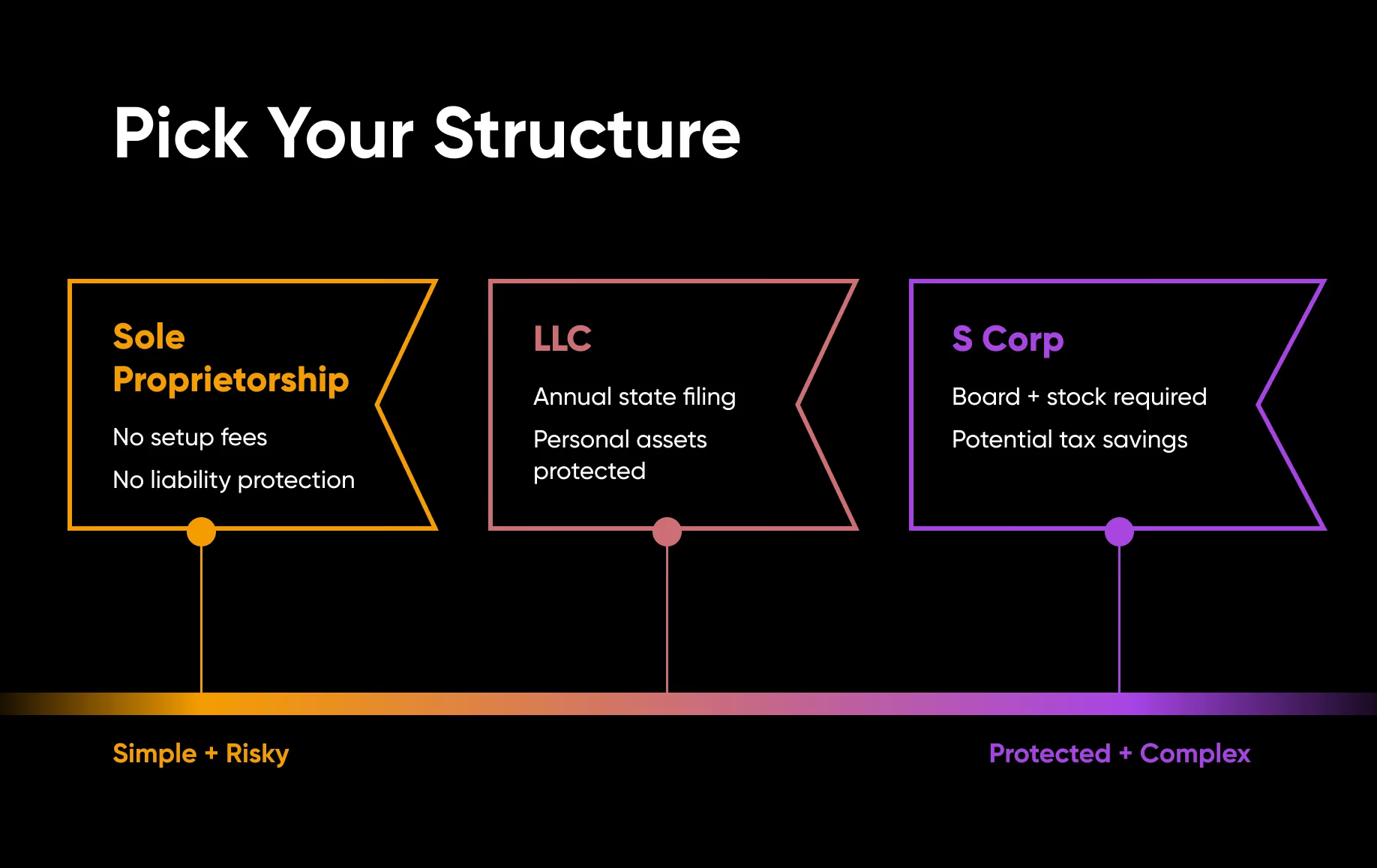
- Choosing the right business structure — sole proprietorship, LLC, or S corp — and what each protects
- Separating personal and business finances: dedicated bank account, business credit card, DUNS number
- Insurance to consider: general liability, professional liability, workers’ compensation, business property
- Tax planning: track income and expenses in real time, set aside money for taxes, maximize deductions
How To Set Up Your Business Presence Online
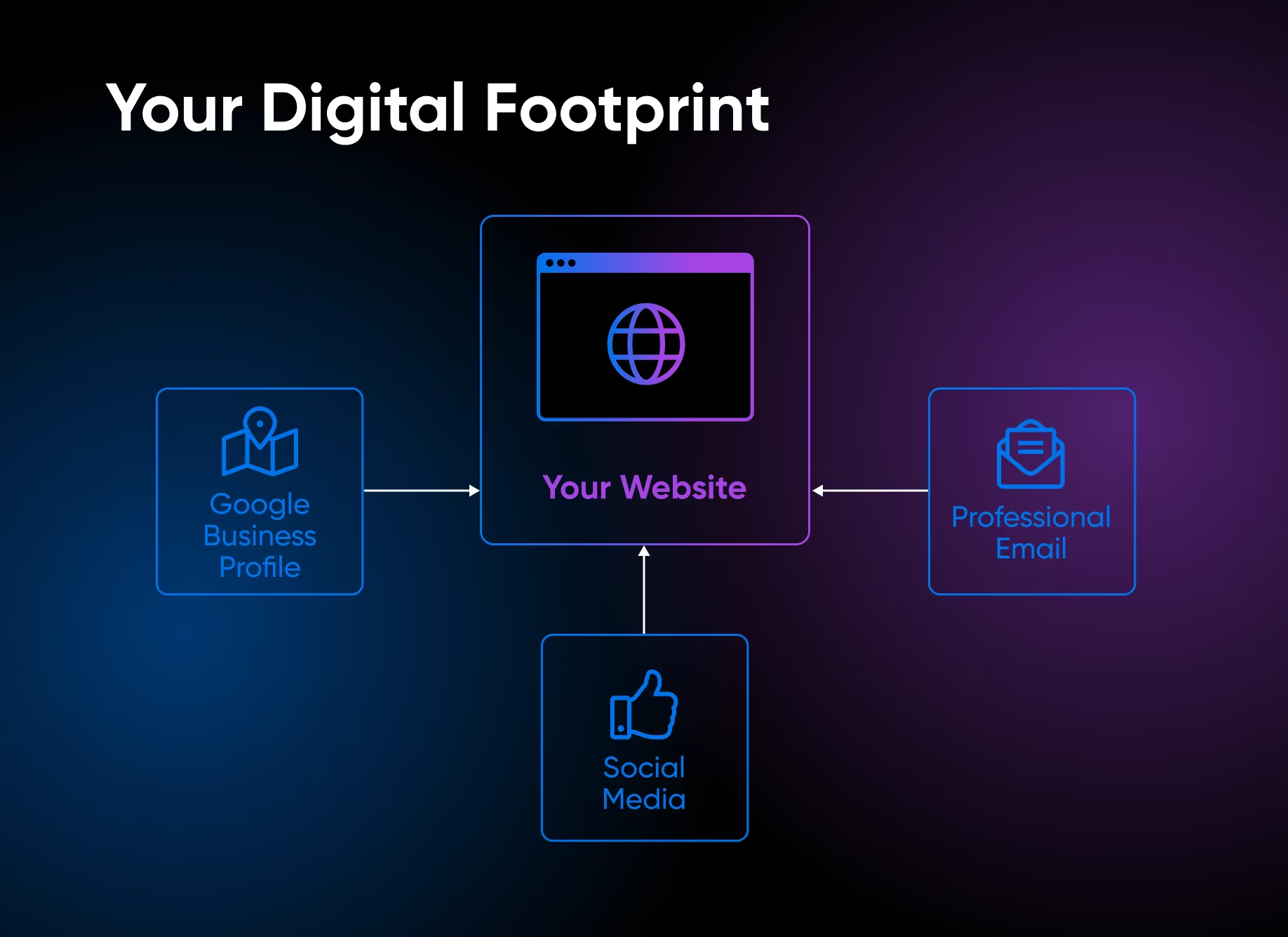
Shoppers typically research products ahead of 61% of their purchases, and over half (58%) go looking for a business website to confirm information about a brand. If your business doesn't show up in search results, social media, or on Google Maps, you're invisible to a huge segment of your market.
- Build a professional website: domain name, platform, essential pages, and clear calls to action
- Set up your Google Business Profile: claim, complete every detail, add photos, collect and respond to reviews
- Establish a social media presence on the right platforms: Instagram/TikTok, LinkedIn, Facebook, or X
- Get a professional-looking email address that matches your domain (like [email protected])
Time Management and Productivity Tips for Entrepreneurs
On average, entrepreneurs spend more than a third (36%) of every work week on administrative tasks like invoicing, re-upping supplies, and so on. Only about half (56%) of entrepreneurs are able to take a weeklong vacation without checking in on work once.
- Boundaries: define your core work hours, use a dedicated workspace, set digital boundaries, learn to say no
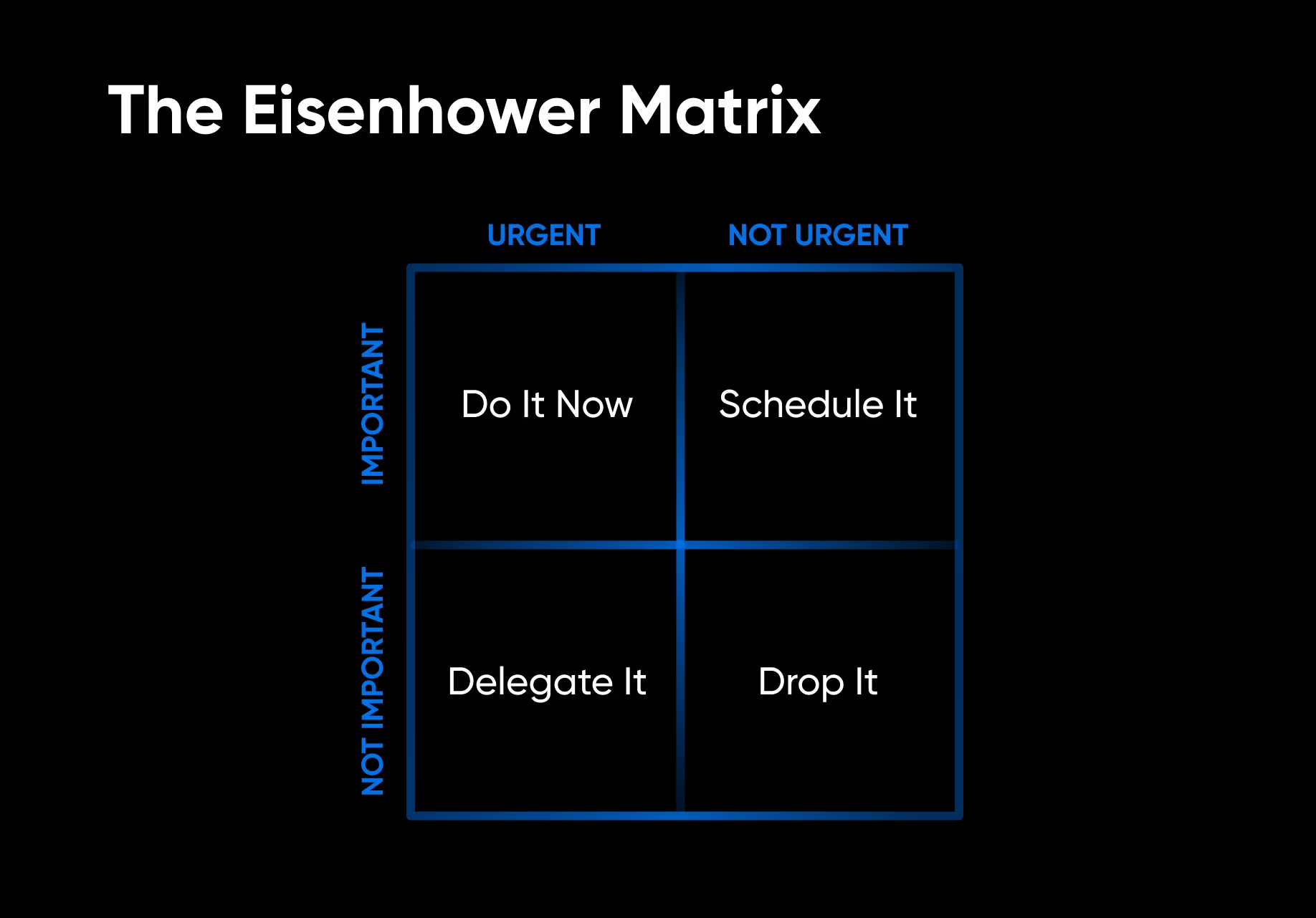
- Prioritize with the Eisenhower Matrix; plan your day in time blocks; practice theme days; adopt a “Top 3” daily rule
- Track your time, reflect weekly, and use energy mapping to match tasks to your natural rhythms
- Build SOPs for consistency and set up project management systems with tools like Trello, ClickUp, or Monday.com
Marketing for Your New(ish) Business
The 2026 State of Marketing Report from HubSpot found that small businesses are 23% more likely than average to see ROI from blog posts. The majority of marketers (63%) told HubSpot that distinctive, human-focused content is more important than ever to stand out.
- Develop a marketing plan: know your target market, define your competitive advantage, set goals and metrics
- Map content to your funnel — top of funnel (awareness), middle (consideration), bottom (conversion)
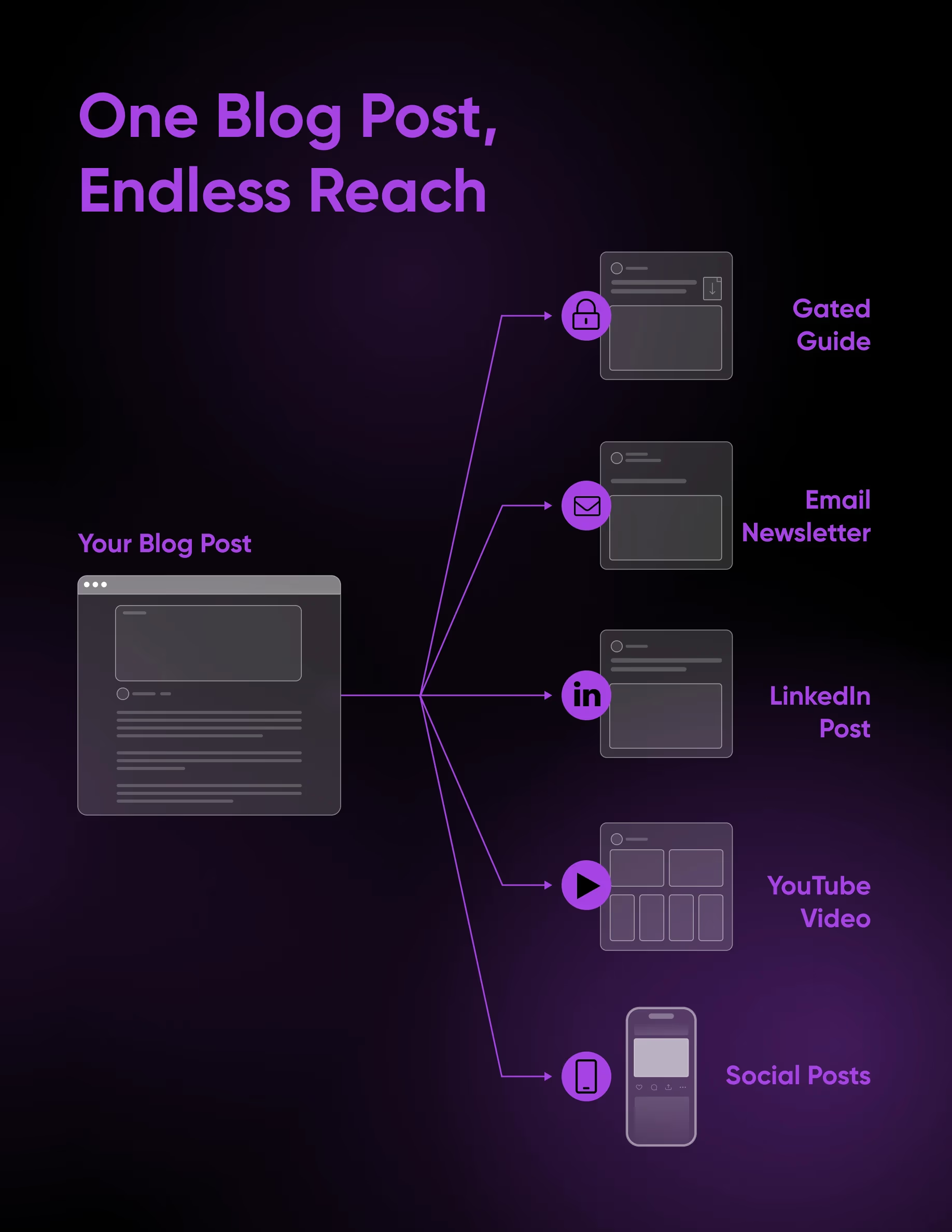
- Repurpose one blog post across email newsletter, LinkedIn, YouTube, social posts, and a gated guide
- Explore paid acquisition (PPC) carefully — start small and track performance before scaling
Are You Ready for Takeoff?
Your money situation doesn’t need to be perfect (when is it ever, really?) to go full time, but ideally it’s solid enough to take this thing full time. Here’s how to make sure you’re well positioned for lift off.
Step 1
Financial Readiness
- Average the last 3–6 months of revenue and confirm it’s steady or trending up
- Calculate income vs. expenses; aim to cover ~70% of essentials before the leap
- Build a runway: 3 months of expenses (high tolerance) or 6 months (safer)
- Identify repeat customers and referrals — ideally ~30% of sales
Step 2
Market Validation
- Confirm ~10 paying customers from outside your inner circle
- Test pricing power: raise rates 10% for new clients and watch demand
- Map where leads come from (social, SEO, referrals) and pour gas on what works
- Validate inbound interest — people coming to you, not just you chasing them
Step 3
Operational Capacity
- Document core processes: onboarding, delivery, support — get it out of your head
- Identify your top bottleneck (admin, comms, delivery) and pick one fix
- Map a clear path to scaling that doesn’t depend on more of your hours
- Address bottlenecks: hire an employee, contract a freelancer, or invest in software for automation
Step 4
Personal Readiness
- Write your “why” to revisit when things get hard
- Get specific about how much stress and instability you can tolerate
- Define your worst-case scenario and think through it — the risk is usually less deadly than you built it up to be
- Identify a few solid people you can lean on — write their names down
Time To Take the Leap
If you keep waiting for the right time to turn your part-time side hustle into your full-time dream job, you might just be waiting forever. When your finances are solid, your market is validated, and your operations and energy are aligned, you can make the jump.