
The internet has a rich tradition of declaring things dead before even checking for a pulse. Email was dead. Blogging was dead. SEO has been dead so many times that it should have a punch card at this point.
The point is, if you’ve spent any time on the internet, you’ve likely encountered a lot of confidently wrong opinions. And now that AI search is here, a lot of people are confidently wrong about that, too.
As a small business owner trying to make sense of this shift, you’re getting hit from all sides with dramatic predictions, contradictory advice, and chest-thumping from people who seem oddly thrilled to spread doom and gloom about this rapidly advancing new technology. Meanwhile, you have invoices to send, customers to answer, and approximately 19 other things to do.
The truth is just less dramatic. AI search is changing how people find information, sure. But it’s not rewriting the laws of online visibility. Small businesses don’t need a brand-new playbook for this era. They just need a clear understanding of what’s happening, what still matters, and what information is actually a myth that’s wasting their time. So let’s filter out the nonsense, one myth at a time.
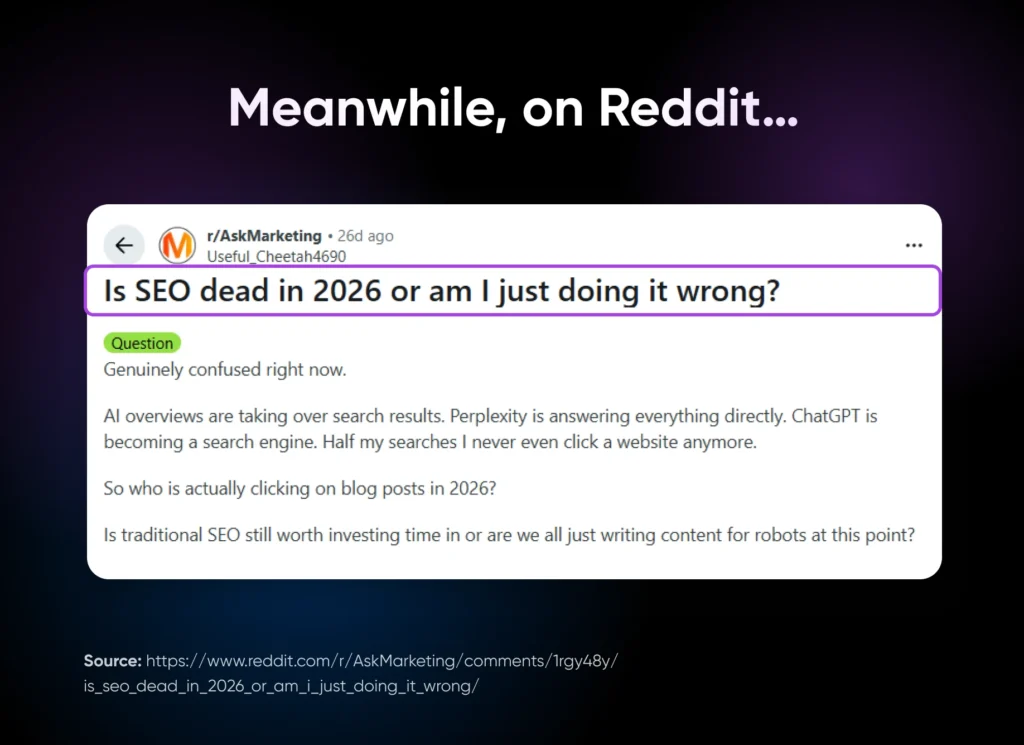
Myth #1: SEO is dead
No — SEO isn’t dead. Google’s own documentation says its SEO best practices still apply to AI features like AI Overviews and AI Mode. We’ve heard this one before, too. It resurfaces every once in a while, usually whenever Google makes a major change or algorithm update. And yes, the rise of AI is a major change. But saying “SEO is dead” misreads the situation entirely.
Google explicitly states that SEO best practices remain relevant for AI features: “There are no additional requirements to appear in AI Overviews or AI Mode, nor other special optimizations necessary.” Google says these features combine Gemini’s capabilities with the Search systems it already uses.
What’s important now is structuring content so AI systems can easily extract and present it. Beyond that, SEO fundamentals still matter — they just need to be applied with AI in mind, focusing on clear structure, direct answers, and content that’s easy for both humans and machines to parse.
Myth #2: I need to optimize for ChatGPT separately
This one is understandable. ChatGPT, Perplexity, and Claude all sound like different platforms with different rules, so it seems logical that each one needs its own optimization strategy.
In practice, though, the platforms reward the same things: authority and content clarity. It comes down to SEO fundamentals rather than secret, platform-specific tricks.
Each platform selects and displays citations a little differently, but none of that changes the foundation.
If you’re a small business with limited time, the most effective move is getting your foundational content right: clear answers backed by strong structure and genuine expertise.
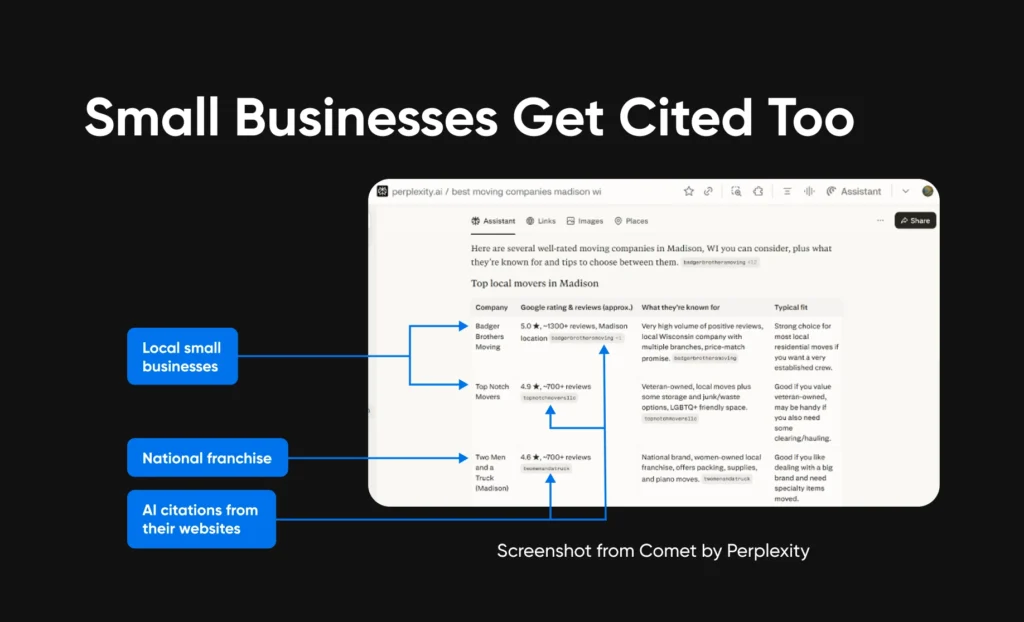
Myth #3: Only big brands get cited
Of course, Google is going to cite WebMD over your local wellness clinic for a broad term like “how to get over a flu.” And sure, ChatGPT might default to referencing Amazon over your Shopify store.
The big brands have more content, more links, and more brand recognition.
But AI search doesn’t work like a single query with a single winner. Google says AI Mode uses a technique it calls “query fan-out” (and AI Overviews may use it too): breaking a question into subtopics and issuing multiple related searches, where the answer engine wants the best source on each.
So a user asking “how do I plan a kitchen remodel” could trigger sub-searches about costs, timelines, permits, materials, and contractor selection. A national brand might own the broad overview, but your detailed, local, experience-driven page about permit requirements in your city could easily be the best answer for that specific subtopic.
Myth #4: AI will just steal my content
Partly true — and this one deserves a more honest answer than most marketers are willing to give, because the concern isn’t baseless. AI engines can surface your content without sending a click, and publishers are suing over it. But sitting out usually costs more than it protects.
There are active antitrust lawsuits alleging real, measurable harm. In February 2025, Chegg sued Google, alleging that AI summaries in search results sent Chegg’s non-subscriber traffic down 49% in January 2025 year-over-year. Penske Media’s September 2025 suit says affiliate revenue across its sites is down by more than a third from its peak. The legal outcomes will shape how AI search evolves over the coming years.
But for a small business owner deciding what to do today, the practical question is competitive.
Think of it this way: if your local competitor’s content shows up in AI Overviews and yours doesn’t, they’re getting the visibility and the trust that used to be yours. The rules are imperfect and may keep changing. Opting out of visibility while you wait for the perfect policy outcome means ceding ground to businesses that didn’t wait.
The biggest mistake: Doing nothing
AI search doesn’t wipe the slate clean; it simply accelerates a lot of the work that already mattered online. Clear answers, useful content, real expertise, and strong structure have always been the backbone of SEO. Now, you just need to be even more strategic; AI systems are pulling out the best answers more directly, and they’re rewarding the sites that make those answers easy to find.
But the most damaging thing you can do is wait and see. If you decide AI search is too uncertain to act on, you risk falling behind. Because every month you wait is a month your competitors can spend restructuring their content, building authority, and establishing AI visibility that compounds over time.
You don’t need to wait for AI search to settle. Improve one useful page at a time, watch whether your visibility changes, and adjust based on what you see. Take what works, apply it more deliberately, and make it easier for both humans and machines to understand what you offer. That’s how you win AI search right now.
AI search FAQs for small businesses
Is SEO dead because of AI search?
No. Google’s documentation states that SEO best practices remain relevant for AI features like AI Overviews and AI Mode, with no special optimizations required. Google says those features combine Gemini with its existing Search systems.
Do I need to optimize separately for ChatGPT, Perplexity, and Claude?
No. Start with one strong content foundation instead of maintaining separate playbooks. Platforms differ, but clear answers, sound structure, and first-hand expertise give you a practical baseline.
Can a small business get cited in AI Overviews?
Yes. Google says AI Mode uses “query fan-out” (and AI Overviews may too), breaking a question into subtopics and running related searches. A detailed, local, expertise-driven page can win a citation for a specific subtopic even when a national brand owns the broad query.
Should I wait until AI search settles down?
No. Waiting is the biggest risk. Every month you sit out is a month competitors spend restructuring content, building authority, and earning AI visibility. Start now, even imperfectly, and adjust as you learn.

Is Your Website Invisible to AI Search?
Nearly 7 in 10 Google searches now end without a click. This 40-page ebook gives small business owners an action-ready GEO plan to show up in Google’s AI Overviews, ChatGPT, and Perplexity — no agency, no dedicated SEO team required.
Get The Playbook