TL;DR:
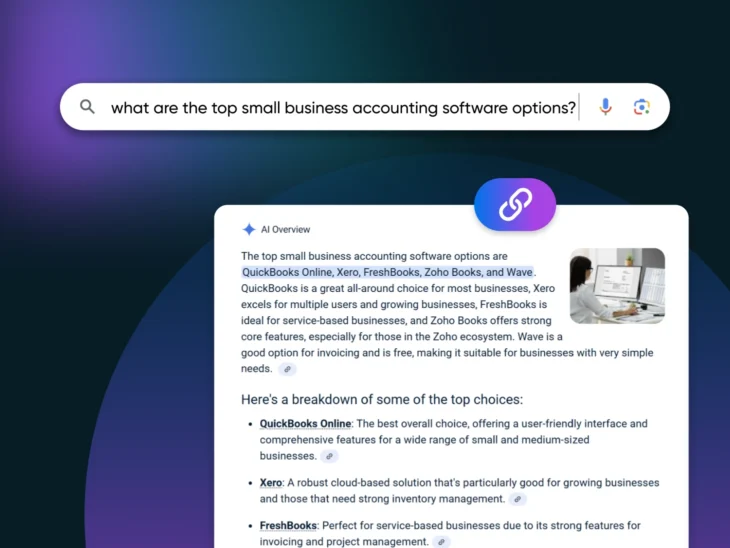
- The new reality: AI search is changing how people find brands. 58.5% of U.S. Google searches now end without a click to another site, per SparkToro’s 2024 study. Instead of scanning links, people get direct answers that name specific companies. If ChatGPT or Google’s AI Overviews don’t name your brand when someone asks for recommendations in your space, you’re invisible to that searcher.
- The fix: Create content worth citing, show up authentically in communities, and pitch journalists with solid data. Your SEO work still matters: in SE Ranking’s November 2024 research, 92% of Google AI Overviews linked to at least one site already ranking in the top 10. But now you’re optimizing for getting mentioned, not just getting clicked.
Bartering.
Beautiful shells.
Physical gold pieces.
Digital crypto coins.
One constant throughout time is that humans have exchanged currency, and those currencies change.
In AI search, the new currency is the brand mention: when an AI tool like ChatGPT, Google’s AI Overviews, Gemini, or Perplexity names your brand, product, or service in its answer — with or without linking to your website. More web mentions are associated with greater visibility in Google AI Overviews, but they don’t guarantee a recommendation. Earn none, and you don’t exist in the answer at all.
It’s been quite a while since marketing saw a shift in currency this big. So how lucky are we to be witnessing one right before our very eyes?!
This practical guide will help you understand AI search, brand mentions, and GEO. Plus, how to evolve your marketing to deal in this budding capital without abandoning the SEO strategy you’ve worked so hard to build.
What Are AI Search and Brand Mentions?
AI search is when someone asks an AI tool (usually a large language model, or LLM, like ChatGPT) for information, products, or services, and gets a direct, synthesized answer instead of a ranked list of links.
That context-aware answer is the major difference between AI search and traditional search driven by search engines and AI browsers.
Users tell search engines what they’re looking for using keywords, and the search engine provides links to pages that contain those words and phrases. From there, it’s up to the person to visit those links and further suss out their desired information.
With AI search, you just ask a question, and it does its best to understand the context vs. only the keywords.
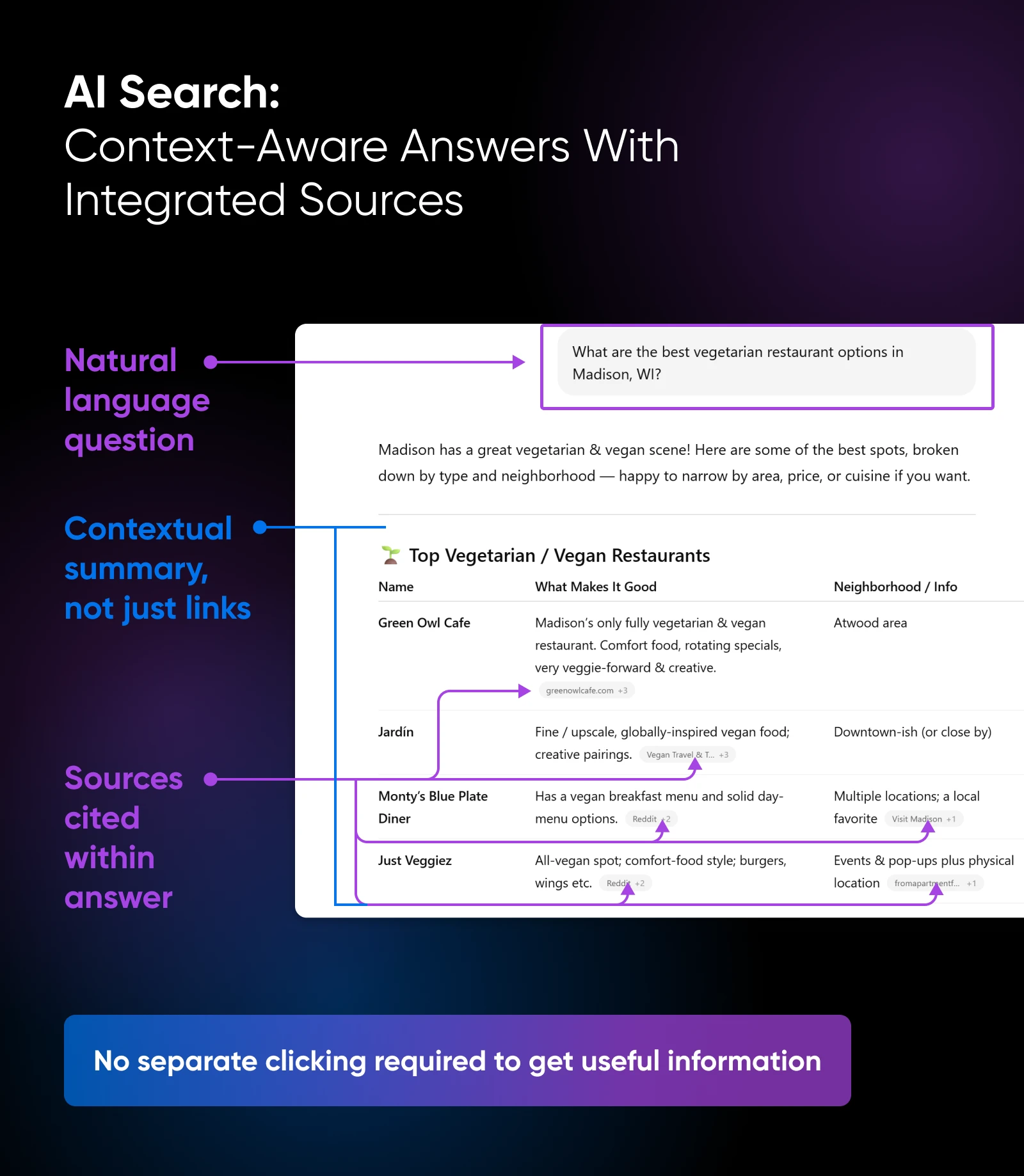
With this information, it finds sources using a variety of qualifications and summarizes them into a tidy, direct response. Plus, with AI, you can often ask follow-up questions to find more answers.
When the answer lands right on the results page and nobody clicks through, that’s a zero-click search. And today, the majority of Google searches end that way: 58.5% in the U.S., according to a 2024 study by SparkToro’s Rand Fishkin based on Datos clickstream data. The study does not isolate how many of those searches ended without a click because of Google’s AI Overviews.
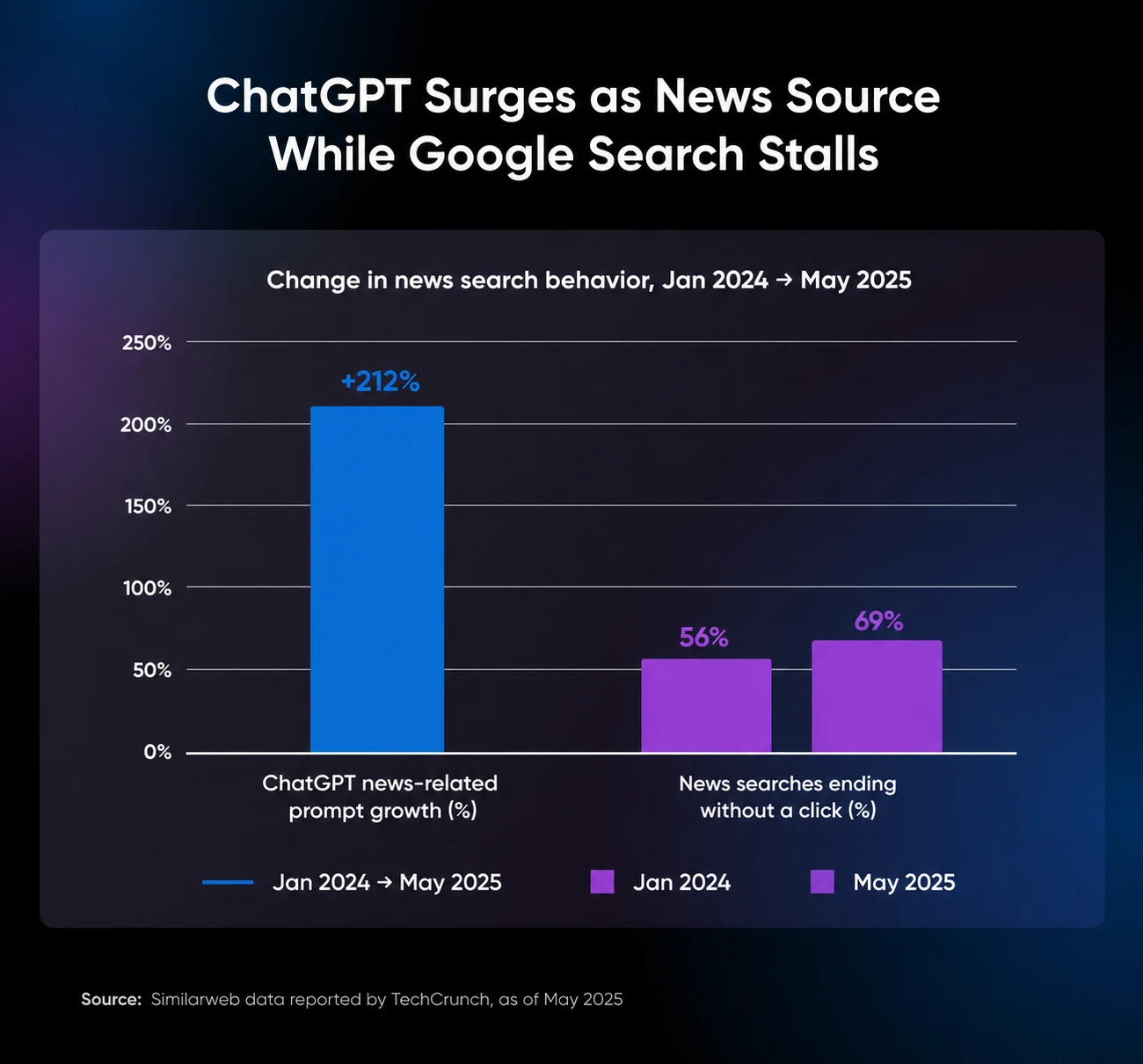
News is a clear example. Similarweb data reported by TechCrunch shows news-related prompts in ChatGPT grew 212% between January 2024 and May 2025, while the share of news searches ending without a click to a news site climbed from 56% to nearly 69% over the same stretch. That’s user preference shifting toward AI for everyday information retrieval, in real time.
So if it isn’t high-ranking Google and other search engine links, what’s the new currency for brands looking to get in front of consumers?
Brand mentions.
In the world of AI search, a brand mention is what happens when an AI’s response calls out a specific brand (or product, or service) by name — even when it doesn’t actually link to the brand’s website. A response that does link to your site as a source is called a citation — and unlinked name-drops are far more common. BrightEdge’s August 2025 analysis of thousands of ChatGPT prompts found that ChatGPT mentions brands 3.2x more often than it cites them.
For instance, if someone asks an LLM about the best SEO tools for small businesses, it might respond with a list of brand names, including Moz, Ahrefs, Yoast, and more.
Someone could do this to find recommendations for anything — including what you sell.
Comment
from this Reddit discussion
in ChatGPT
So, why does all this matter?
You’re asking the right questions. Let’s go.
What Does the Rising Significance of Brand Mentions Mean?
Even without direct links to a brand’s sites, being mentioned in AI search results increases visibility and signals an element of credibility.
In Ahrefs’ May 2025 study of 75,000 brands, branded web mentions showed the strongest correlation with brand visibility in Google’s AI Overviews (0.664 on the Spearman scale), roughly triple the correlation of backlinks (0.218). Correlation isn’t causation, but the gap is stark: brands in the top quartile for web mentions averaged 169 AI Overview mentions, more than 10x the next quartile down.
Do people trust those AI answers? Only partly, and it matters less than you’d hope. In Exploding Topics’ survey of 1,115 U.S. web users, just 8.5% said they always trust AI Overviews and 61% sometimes do. Yet fewer than 1 in 5 always or usually click through to the sources. For many searchers, the AI’s answer is the last word, whether or not your brand made it in.
Yes, AI can absolutely return wrong information, as this scathing article points out. So when factual correctness is critical to your search, always double-check your results!
“I get around this by not valuing the AI for its output, but for its process. Treat it like a brilliant but clumsy assistant that does tasks for you without complaint – but whose work needs to be double checked.” – HackerNews user
The zero-click trend shows up in click-through rates, too, for organic and paid results alike.
When Seer Interactive compared queries with and without AI Overviews across 7,800+ tracked queries in September 2024, organic click-through rate fell from 2.94% to 0.84% when an AI Overview was present, and paid ad click-through rate dropped from 21.27% to 9.87%.
Where’s it all heading? Semrush’s July 2025 study of 500+ digital marketing and SEO topics projects that AI search could drive more visitors to websites than traditional search for those topics by early 2028. The same study found the average AI search visitor is worth 4.4x the average traditional organic search visitor, based on conversion rate. By the time they land on your site, the AI has already helped them compare their options.
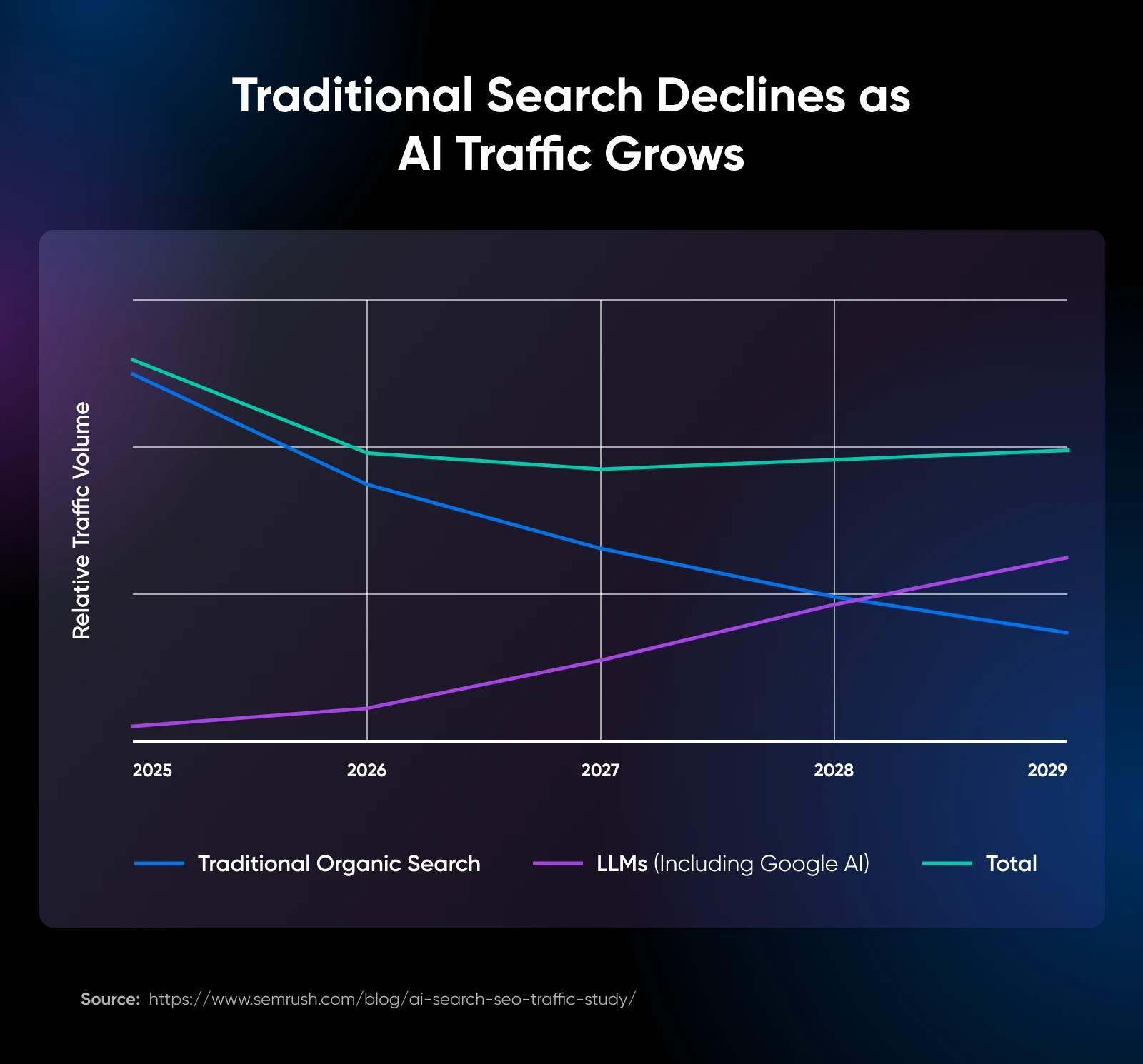
Google AI Overviews and other LLMs are the Model Ts, while the regular ol’ search engines and results pages are the horses they’re widely replacing.
Now, let’s talk about how to earn your spot in those AI answers — and out-gallop your competition on the new AI-powered web.
From SEO to GEO: How Can You Build Your AI Brand Mentions?
OK, we promise to introduce just one more brand-new phrase in this article: GEO.
GEO stands for generative engine optimization. Just like its close relative SEO, it’s a strategy that centers on making your content shine — only through an AI lens this time.
Instead of the focus on rankings on traditional search engines, GEO is all about helping your brand rise to the top and earn a shout-out in AI-generated answers.
With that in mind, here are actionable strategies marketers can implement to generate brand mentions through GEO that works hand in hand with existing SEO efforts.
Fresh Digital PR Approaches
These strategies can turn breaking news, fresh data, and expert insights into material journalists may cover and AI systems may cite.
- Try “newsjacking”: When news breaks, people search. When people search, AI responds. By quickly publishing content that ties your brand to a trending story, you can get cited by journalists and surface in AI results.
- Make your data irresistible: When you produce trustworthy original research (think surveys, benchmark reports, industry analyses, etc.), you create highly quotable assets that can be pitched to journalists, media outlets, and influencers. The more they republish this content, the higher the chances of AI mentioning your brand when it picks up this info.
- Learn the art of journalist outreach: Platforms like Qwoted and Source of Sources (the free query service from HARO founder Peter Shankman) connect journalists with subject matter experts (SMEs) — that’s you. By responding quickly with sharp, quotable insights, you can land brand mentions in respected publications — and AI mentions.
Community-Based Content Creation Tips
Show up authentically in your communities to build authority that leads to lasting mentions in AI-driven search.
- Engage on Reddit: Reddit often ranks high in search and is cited by AI. And its users value authenticity above almost anything else. Instead of just dropping links, contribute to discussions in relevant subreddits. Over time, you’ll build authority and chances to naturally mention your brand. The mentions will follow.
- Get involved with your industry forums: Forums may feel old-school, but they’re still treasure troves of trusted insights in niche spaces. The more your brand name comes up alongside expert tutorials, first-hand case studies, and even think pieces; the more likely your contributions will be referenced in other content and eventually AI responses.
Win More Mentions via Long-Form Content
When it comes to both SEO and GEO, coverage and competency are key to standing out. These can both be achieved with thoughtful, longer-form content.
- Challenge the status quo: An against-the-grain take — that you can back up! — lends your brand a unique voice and may earn mentions on discussion sites, social media, and hopefully AI results.
- Compile original research: Don’t just blog — investigate. Create whitepapers and case studies that lay out clear findings and methodology. These resources become evergreen references that AI tools can pull into answers for years.
- Round up the best: Curate deep, interesting insights that are relevant to your brand. Even better if you can add your own editorial analysis and package it all up into a definitive resource. This elevates your content into something worth mentioning.
- Increase your presence among third parties: In xfunnel.ai’s analysis of 40,000 AI search responses (250,000 citations), earned content on third-party sites made up the largest share of citations on every platform tested. Guest posting and publishing where each AI platform already looks may increase your odds of brand mentions. For user-generated content, the study found:
- Perplexity: Favors YouTube and PeerSpot.
- Google Gemini: Frequently pulls content from Medium, Reddit, and YouTube.
- ChatGPT: Often references LinkedIn, G2, and Gartner Peer Reviews.
We Repeat: Don’t Take Your Eyes off the SEO Prize!
Great news for you SEO nerds…
…AI search still heavily works similarly to traditional search engine ranking.
The proof is in the pudding.
In SE Ranking’s November 2024 research, 92.36% of Google AI Overviews linked to at least one domain already in the top 10 search results. And when a featured snippet appeared alongside an AI Overview, the snippet’s link matched one of the AI Overview’s sources 66% of the time.
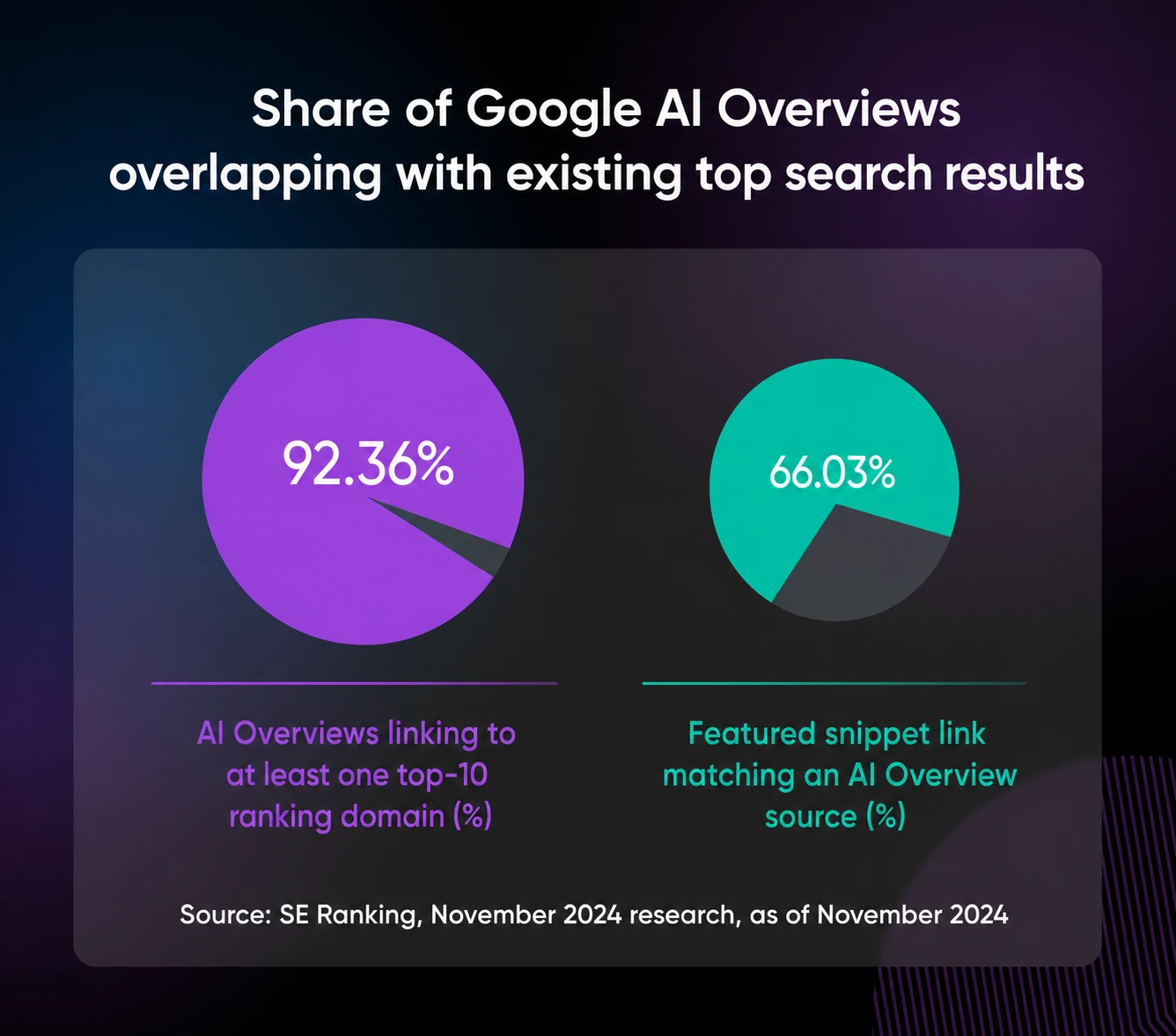
If you’re not still optimizing for search engines, you’re also less likely to earn brand mentions in AI-based searches. So beyond the basics (keyword optimization, improving site speed, etc.), here are a few slightly more advanced plays to improve SEO.
- Refresh evergreen content: Update older content with new statistics, images, and links to remain a relevant, current resource for search engine crawlers.
- Add schema markup: Use structured data to help supported search features understand eligible page content.
- Target conversational queries: AI tools often pull from natural-language phrasing, so focus on long-tail and question-based keywords.
- Build topical authority: Cluster content around core themes so you become the trusted source in that space.
How Do You Track AI Brand Mentions?
The simplest way to track AI brand mentions is to ask the AI tools yourself: run the questions your customers actually ask through ChatGPT, Gemini, and Perplexity, and record whether (and how) your brand comes up. Then layer in analytics and dedicated tools.
- Run monthly prompt audits: Build a list of 10–20 buying-intent prompts (“best [your category] for small businesses,” “alternatives to [market leader]”), run them in fresh sessions each month, and log which brands get named and in what tone. It’s manual, but it’s free, and it mirrors what your customers actually see.
- Watch your referral traffic: AI tools that do send clicks show up in your analytics referral reports. Treat those numbers as a floor, not a total: Semrush notes that some AI-driven visits arrive without referrer data and get lumped into direct traffic. And Google Search Console won’t isolate AI Overviews for you: SE Ranking points out that AI Overview impressions and clicks are blended into your regular metrics with no dedicated filter.
- Use an AI visibility tracker: The big SEO platforms now track AI mentions at scale. Ahrefs’ Brand Radar and Semrush’s AI Visibility Toolkit monitor when LLMs and AI Overviews name your brand, and SE Ranking’s tracker does the same for AI Overviews. Worth the spend once you’re checking more prompts than you can audit by hand.
Brand Mention FAQs
What are brand mentions in AI search?
Brand mentions are when your company, product, or service is named in an answer from an AI platform (like ChatGPT) or Google’s AI Overviews. Typically, these don’t include a direct link to your website.
What is the difference between AI mentions and AI citations?
A mention names your brand in the answer text; a citation links to your website as a source. Mentions are far more common: BrightEdge’s August 2025 analysis found ChatGPT mentions brands 3.2x more often than it cites them. Both build visibility, but only citations send traffic directly.
How do you get your brand mentioned by ChatGPT?
Get your brand covered in places AI systems frequently cite: earn press coverage and third-party write-ups, publish original research others quote, contribute genuinely in communities like Reddit and industry forums, and keep ranking well in traditional search. Focus on earning credible coverage and community discussion rather than expecting a universal submission form.
Does AI pull recommendations from user reviews or just from Google’s top results?
Both. xfunnel.ai’s analysis of 40,000 AI responses found earned third-party content is the largest share of citations, with citations from review sites and forums increasing during comparison-stage questions. Meanwhile, 92.36% of Google AI Overviews link to at least one top-10 ranking domain, per SE Ranking. Reviews, forums, and rankings all feed the answer.
Do brand mentions replace backlinks?
No. Backlinks still support your search rankings, and rankings still feed AI answers. But branded web mentions are more strongly associated with AI Overview visibility in this study: in Ahrefs’ 75,000-brand study, web mentions correlated far more strongly with AI Overview visibility (0.664) than backlinks did (0.218). Build both while treating the study as correlation, not proof that either factor directly causes AI visibility.
Do I still need SEO when brand mentions are so critical?
Simply, heck yeah! AI results are very often based on high-ranking search results — 92.36% of Google AI Overviews link to at least one top-10 domain. Those rankings happen thanks to thoughtful SEO. Without strong SEO, you’ll likely struggle to beat out your competition for mentions.
AI Search Success Belongs to the Mentioned
AI search is rewriting the rules as we speak.
And as it does, brand mentions are quickly becoming the new currency of visibility.
The brand owners and marketers who adapt early — blending SEO with GEO, investing in PR, showing up in their communities, and creating truly citation-worthy content — will be the ones who thrive.
And since strong rankings still feed AI answers, the SEO half of that equation is the place to start. If you want guided help, the DreamHost SEO Toolkit adds a personalized SEO plan to your site (over 100 automated checks with step-by-step instructions), though you do the optimizing yourself. If you’d rather hand it off entirely, DreamHost’s SEO Marketing Pro Services team does the work for you; it asks for a 3-month commitment, because real results typically take that long.