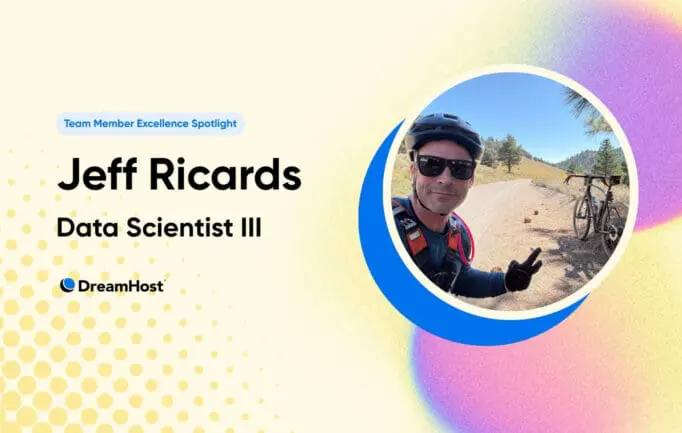
Jeff Ricards has a confession: he wasn’t always good at math.
“In high school, I wasn’t the best math student,” he says, with the easy candor of someone who has since spent nearly a decade wrangling databases and building financial dashboards for a living. “I was probably doing too many things. Clubs, sports, all of that.”
That chaos would actually become a running theme. Ricards, DreamHost’s Data Scientist III, didn’t take a straight line from Point A to Point B. He took the scenic route through a math degree at UCSB, a master’s at Cal State Fullerton, ten years teaching high school math in the LA Unified School District, a brief stint driving for Lyft in the afternoons and doing audio engineering gigs at night, and eventually a data science boot camp in downtown LA before landing here. He’s been at DreamHost since November 2016.
When asked how he made the leap from classroom to codebase, he says “Lots of late nights and coffee. Just kidding. Sort of.”
The Teacher Who Became a Detective
Ricards loved teaching. Genuinely. He especially loved AP Statistics partly because it was hard, partly because the kids could actually see how the math connected to the real world, and partly because it was fun to make something difficult feel approachable rather than terrifying.
The Socratic approach was his favorite teaching method. Ask questions, lead the student toward the answer, and let them own the discovery.
“You’re not giving them answers,” he says. “You’re making them a detective in their own educational journey.”
He didn’t realize it at the time, but that exact instinct would follow him into data science. The job, at its core, is about asking the right questions of a dataset until it tells you something actionable. When DreamHost brought on an intern a few years back, Ricards went full teacher mode and designed an onboarding curriculum for them: lesson plans, a curriculum, a whole summer syllabus. He still hands those onboarding materials to new hires.
When we asked to see the curriculum, Ricards cracked a smile and said, “Sure! I’ll grade you.” We laughed. But he was only half joking.
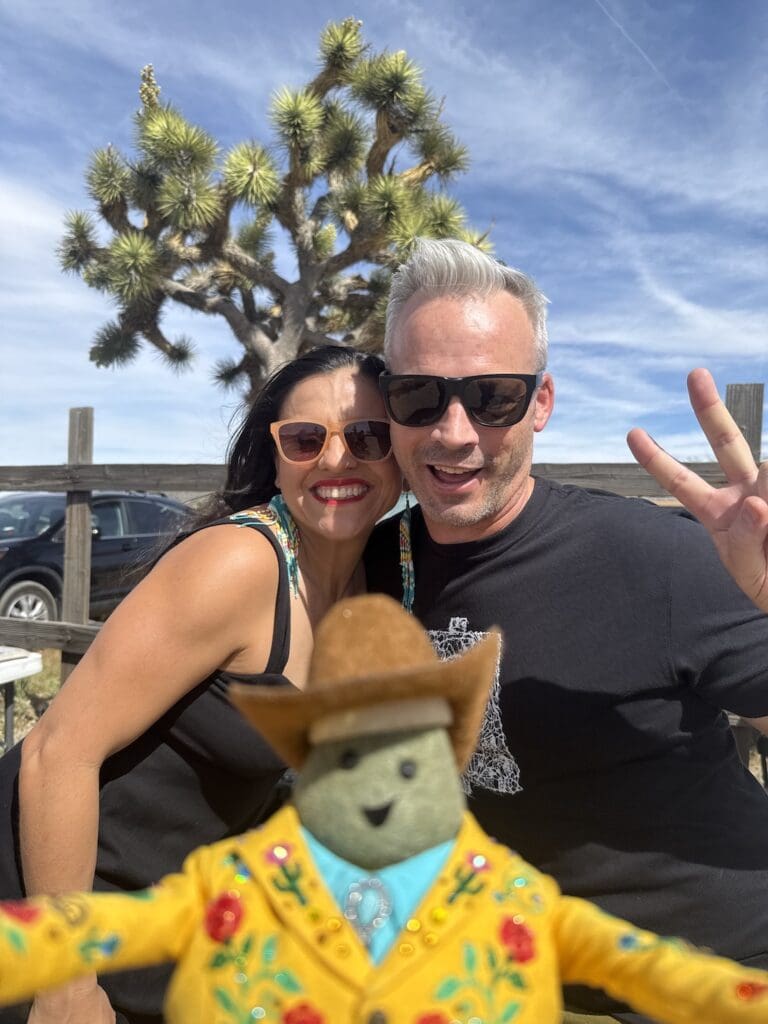
What a Data Scientist Actually Does (It’s Not What You’d Think)
The title “Data Scientist III” sounds like it belongs on a spaceship. Ricards describes the job as being something like a full-service department within a department.
Of course, there’s the expected stuff: pulling data, analyzing it, turning numbers into recommendations that help teams make smarter decisions. However, at DreamHost, the Data team works with everyone from Marketing, Tech Ops, Product, and more. He adds that “flexibility” is practically part of the job description.
“Not only do we do analysis work and help drive direction for the company,” he says, “but we also do things outside the data science description that people don’t realize we can do.”
One of the projects he’s most proud of: a cohort analysis system that used to take two to three weeks of manual, spreadsheet-based calculation, now runs automatically every day. Every month, DreamHost’s product teams wake up to fresh LTV, revenue, MRR, and cost data for every product, down to the account level, sitting in a dashboard.
“We’ve literally been building observability on our business numbers,” he says. “Metrics and analysis that used to take us weeks to put together, now is just there for all our teams to see.””
Going from a massive spreadsheet with a million formulas to an automated, self-updating system over the course of a few years, makes a data scientist’s eyes light up.
“DreamHost: Where Your Dreams Go to Fly”
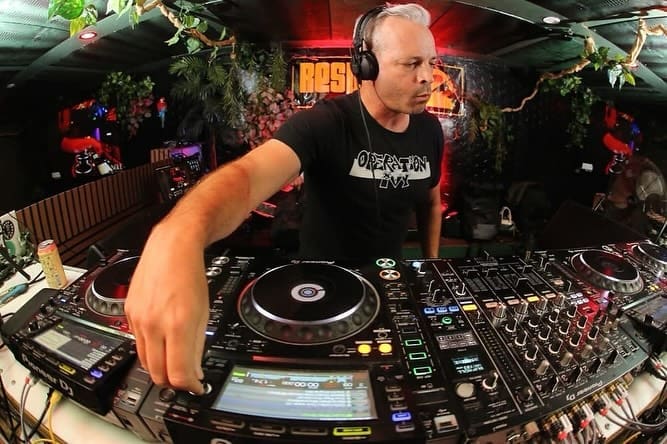
Ricards came to DreamHost through a somewhat unconventional path. He already knew people here. Fellow musicians, actually. When he was DJing around LA and doing drum and bass shows, he kept running into DreamHost employees. When the internship posting came up, a friend pushed him to apply.
He already knew he liked the company as he’d used DreamHost himself for web projects. Once he was inside, something else stood out.
“No matter who you are, your voice is heard,” he says. “I feel like DreamHost gives you room to be you.”
When asked what moment made him proudest to work here, he didn’t hesitate: the 2017 case where DreamHost fought a Justice Department subpoena for customer records rather than just comply.
“The bravery to stand up for our customers… that really made me proud to be connected with this company.”
If he were writing his DreamHost memoir, he already has the title ready: DreamHost: Where Your Dreams Go to Fly. (A riff on the old “where dreams go to die” expression, and a sentiment from someone who made a midlife career pivot and landed on his feet.)
Away from the Data: Bikes, Bass, and Saxophone
Away from the data, Ricards is in motion, literally. He and his wife Brenda bike the LA River Trail regularly, and when he’s feeling ambitious, he heads up to the San Gabriels for trails like Sunset Ridge or the Mount Wilson Toll Road. Big Bear in the summer. A trip to Portugal, Spain and France is already planned for the summer!
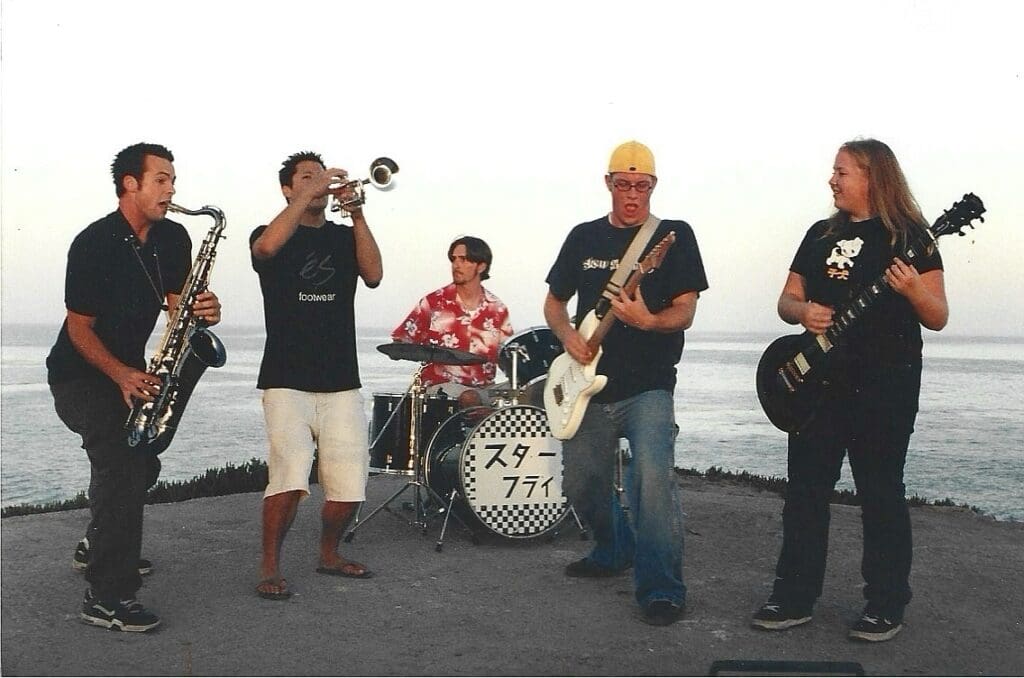
He also DJs (drum and bass and techno) and still produces tracks. Back in the day, he had music out on vinyl through a small record label. He plays saxophone, too, which he started at age nine and credits as his “original instrument.” His college band at UCSB was called Stir Fry, named after the cafeteria stir fry, which, he assures you, was incredible, and played third-wave ska with punk influences.
“We were aiming to be just as good as the food,” he says. “And we got pretty close, haha!”
Currently on his playlist: DJ mixes on Mixcloud and SoundCloud, and a lot of Kamasi Washington, whom he describes as the new John Coltrane, and recently saw him at the Blue Note in Hollywood.
“He even has a DJ in the band,” Ricards says, still a little delighted by this. “And it completely makes sense.”
One Simple Rule
If you ask Jeff Ricards for one rule he lives by, he doesn’t reach for a productivity technique or a leadership framework. He goes somewhere simpler.
“Always be a good person to everyone, no matter who they are. Everybody judges somebody immediately in their head. Don’t listen to your inner dialogue, and always give everyone the benefit of the doubt.”
He pauses.
“That’s served me very well.”
Coming from a guy who taught teenagers, drove Lyft, learned Python from scratch, and worked his way up from intern to one of two data scientists at a company he loves, it tracks.