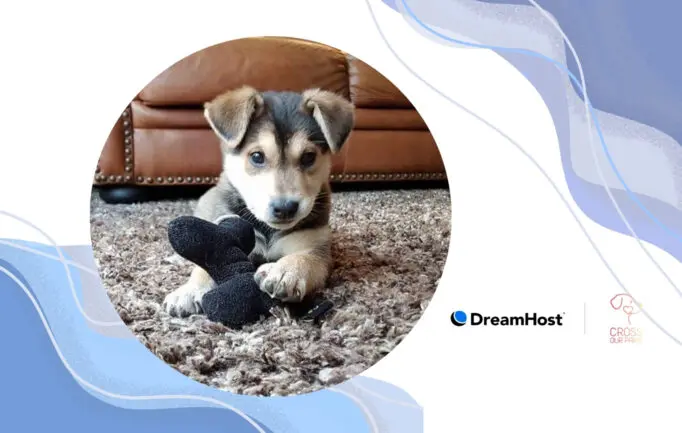
There’s a photo Michelle Jamieson can’t forget.
A dog living in a crate. Not resting. Living.
“I’ll never get that picture out of my head,” she says.
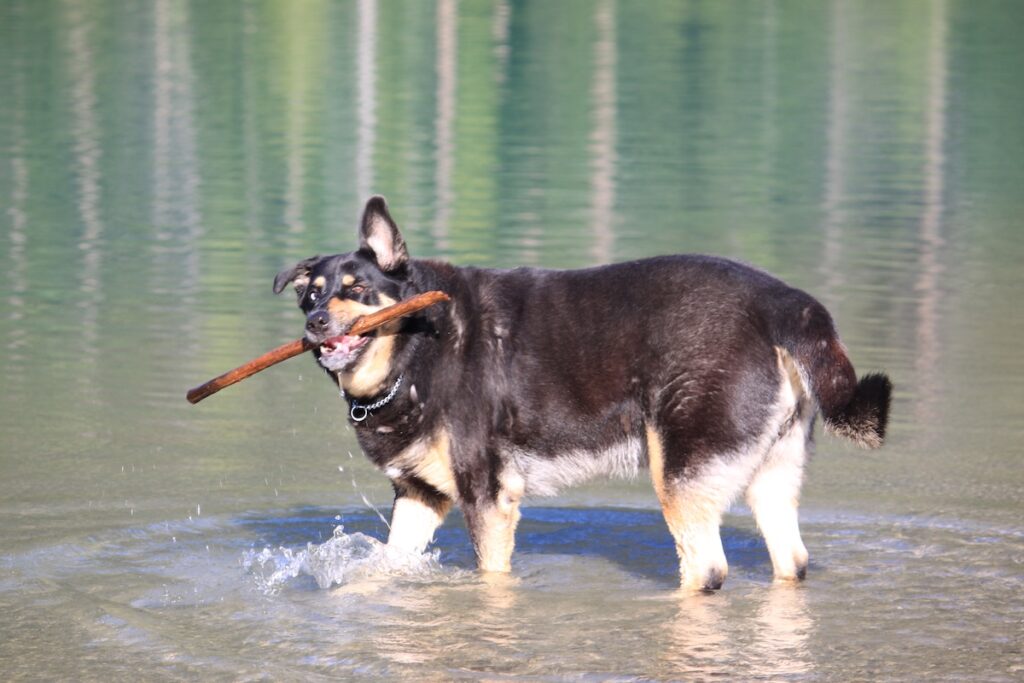
That dog is safe now—out in the woods, nose down, chasing smells—but the image stuck for a different reason. It wasn’t unusual. It was familiar.
That’s the work Cross Our Paws Rescue steps into every day, supporting animals across the Lower Mainland of British Columbia. Not the polished moments people share, but the messy ones in between—when a dog won’t make eye contact, or a cat stays tucked into the back of a carrier, unsure if it’s safe to come out.
And for a long time, telling that story online was the hardest part.
The Work Was There. The Visibility Wasn’t.
Jamieson didn’t plan to run a rescue.
After her dog Iris died, everything felt off. Quiet in the wrong way.
“I was completely lost,” she says.
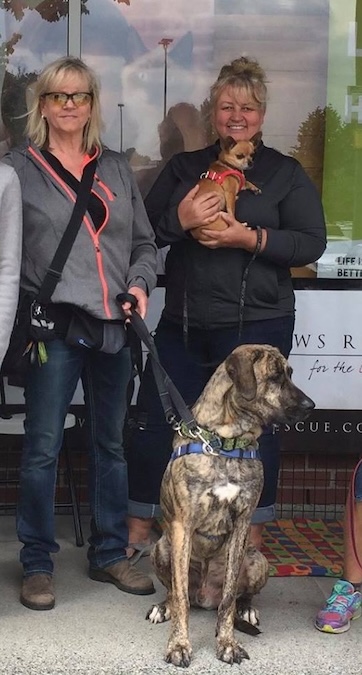
She started fostering, then volunteering, and stayed with it. For years, she worked alongside Bonnie Graham, one of the rescue’s original founders, learning intake, placement, and how to make the kind of calls that don’t come with instructions.
Then Bonnie got sick. And then she was gone.
“I didn’t know what to do, I lost a best friend and a work partner,” Jamieson says.
For a while, things stalled. But the messages didn’t stop, and neither did the need.
Dogs, cats, the occasional “can you help with the one too?” It all kept coming.
So Jamieson stepped in, taking on the executive director role and figuring it out as she went. There is a network of amazing support in the rescue world, she just needed to reach out and they were there.
Rebuilding Without a Blueprint
The next problem showed up fast.
There was no website.
The old was gone. What was left lived across Facebook posts, Instagram updates, and email threads that never quite lined up. Everything landed in her inbox.
“People would ask, ‘Where’s your website? How do I apply?”
She was answering the same things over and over, trying to keep up while animals still needed placement.
“I was emailing constantly,” she says. “It’s just me right now. I thought, I can’t keep working like this.”
A website, to her, wasn’t about looking official. It was about trust and accessibility, and finally having a place to show what Cross Our Paws stands for.
From “I Can’t” to “I Can Actually Do This”
Hiring someone to build the site was unrealistic and daunting.
“I would have to pay somebody thousands of dollars,” she says. “Every penny we get goes to the animals.”
She tried building something herself on another platform. It didn’t stick.
Then she came back to WordPress through DreamHost (and because her friend Bonnie liked WordPress)—and found Remixer, DreamHost’s conversational AI website builder.
“It was so easy, and everything I did came out looking so professional,” she says. “I was talking to it like a human.”
She could describe what she wanted in plain language: changing layouts, swapping images, and adjusting structure.
Somewhere along the way, something shifted. She started picking up a whole new vocabulary—headers, layouts, structure—things she’d never needed before.
“I was thinking… wow, I can actually do this.”
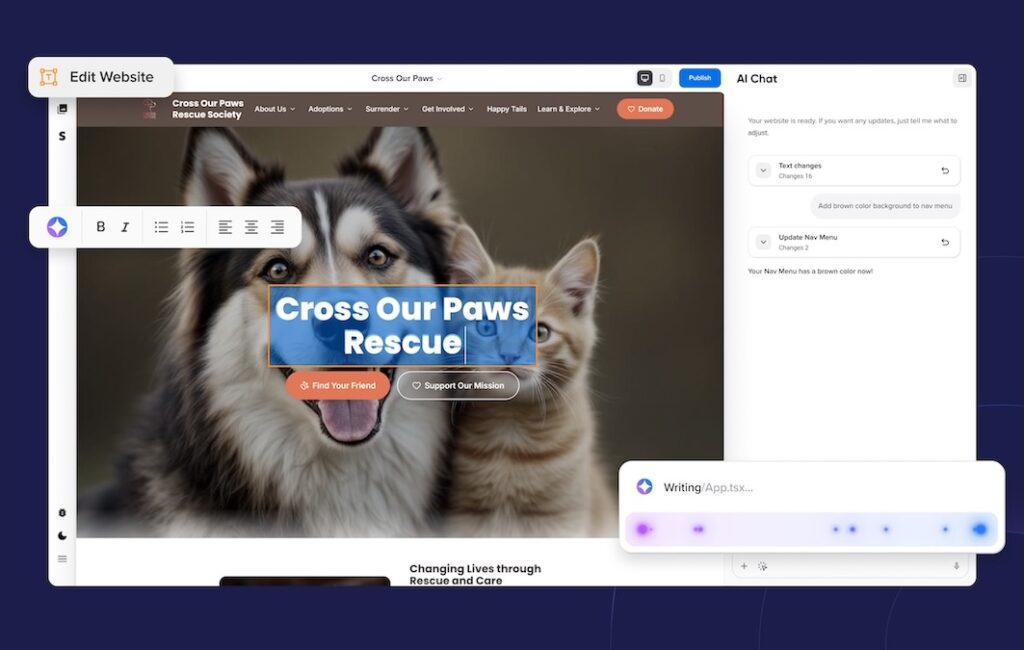
Building it Herself (For Real This Time)
What started as a task turned into something more hands-on.
“I would just try things,” she says.
Colors, layouts, images. If she could picture it, she could test it. Sometimes it worked and sometimes it didn’t. Either way, she kept going. And for the first time, she wasn’t explaining her vision to someone else and hoping it came back right.
“With this, it’s your version, your vision,” Jamieson says. “Not somebody else’s interpretation of what you want.”
That changed everything including how she saw what she could still learn.
“I Was Having a Blast”
That’s not something you hear every day from someone building their first website at 63.
“I didn’t think I would have that much fun,” she says. “I was having a blast.”
Part of that came from the freedom to experiment. To try something, break it, fix it, and keep going. It wasn’t perfect, but it felt like real progress.
The Difference Real Support Makes
“They didn’t treat me like I didn’t know anything,” Jamieson says. “There was immense patience and it was like, ‘OK, let’s try this, we’ve got you.’”
The DreamHost Remixer team did more than answering questions. They got in there with her, walking through issues, troubleshooting, and figuring things out side by side.
“I could not have done it without them,” she says. “You don’t know what you don’t know.”
Because this wasn’t just a website.
“Your website is your face to the world. It’s who you are in your community, it’s how adopters feel trust and how owners can call you when they need support.”
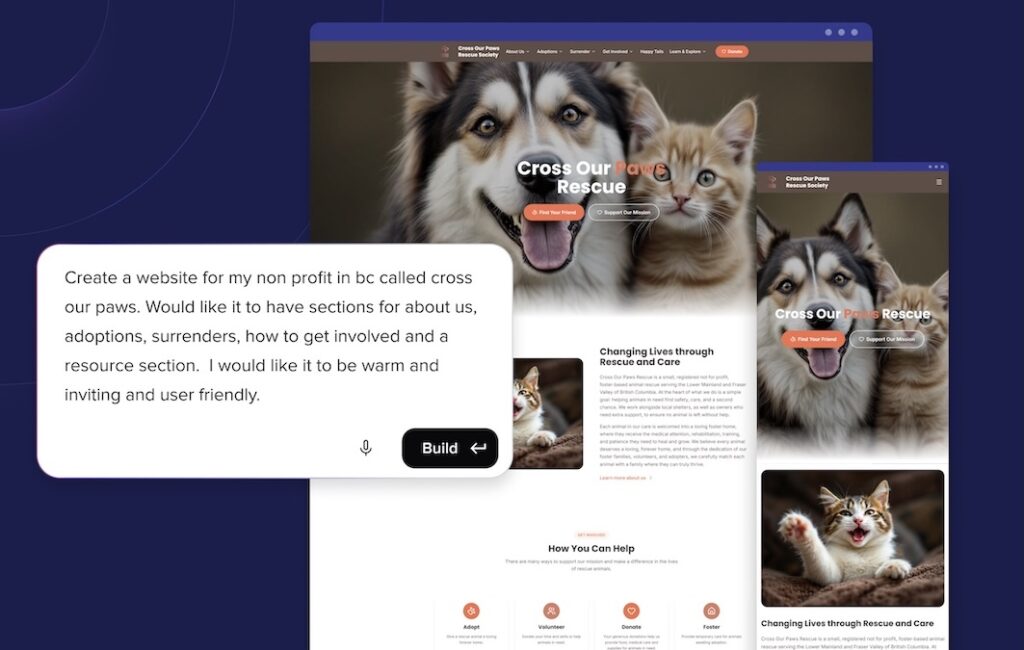
A Site That Actually Works
When the site went live, the feeling went beyond relief. It stuck.
“I was so proud of it. It really represents Cross Our Paws Rescue,” she says. “It’s so interactive.”
It works the way she needed it to. There’s a learning section with trusted resources, a legacy page honoring Bonnie, and a space for stories, supporters, and the people behind the work.
Jamieson also saw it as a chance to show what Cross Our Paws Rescue stands for through the photos and stories that reflect care that’s patient, intentional, and built around what each animal actually needs.
And then there are the fillable on-line forms—which changed everything.
“I felt like I was coming out of the paper era and into something so much easier, for me and our adopters,” she says.
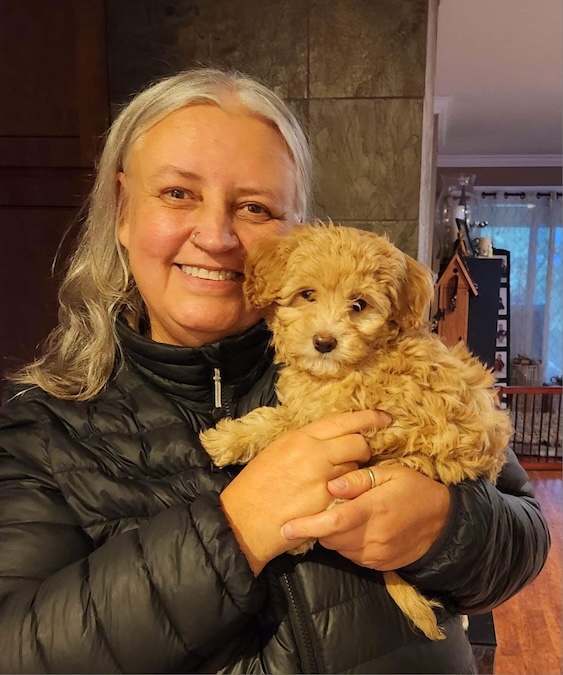
What Changed Day to Day
Before, everything was manual: back-and-forth emails, missing details, delays.
Now, when someone reaches out, the information is already there.
“I am able to act quicker and provide support right away,” she says.
In one case, a surrender request came through, and within days, the dog was in care. A week later, she was sleeping somewhere that wasn’t a crate. There was no chasing information. No waiting. Just faster decisions and better outcomes for animals that don’t have time to spare.
More Than a Website
Before, Cross Our Paws Rescue lived across social platforms.
Now it has a home.
A place where people can understand what the rescue stands for and how it works before they ever reach out. A place to show the side of rescue people don’t always see: the quieter moments where animals settle in, feel safe, and start to trust again.
“Through your website, you have the ability to really tell your story,” Jamieson says. “To showcase who you are.”
And in rescue work, that matters. Trust comes first.
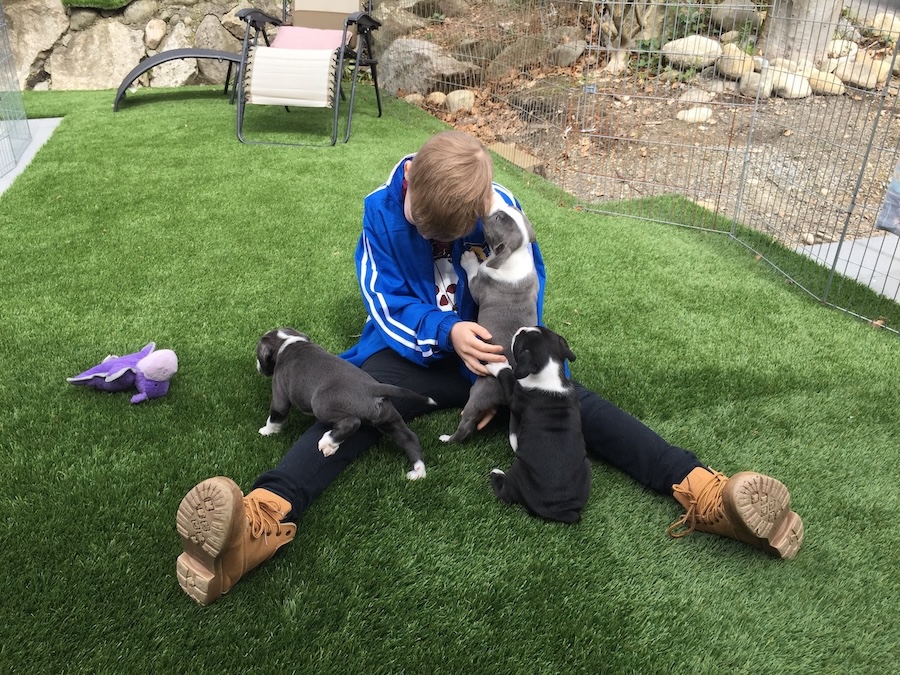
What Comes Next
Jamieson is focused on growing with intention.
Her current priorities include education, community building, and helping people better understand positive training, nutrition, and care.
“Just opening people up to learning and new ideas,” she says. “Bringing people together to start to have more in-depth conversations about how we better support our animals. I hope they can see that through our website.”
Growing the right way takes time.
Build What Matters (Without the Extra Friction)
Turns out, building a website doesn’t have to feel like applying for a second job you didn’t ask for.
Not every organization starts with a plan, a budget, or technical experience. Sometimes it starts with a loss you didn’t expect and a problem you can’t ignore.
For Jamieson, building a website felt like one more thing to figure out.
Until it became something she owned.
“I am so proud of this website,” she says. “It’s everything I wanted. I even emailed everybody on our Cross Our Paws pages to take a look and provide input ‘it’s live and it’s so cool.’”
New to DreamHost? Start building with Remixer and turn what’s in your head into something real.
Already a DreamHost customer? Try Remixer and reshape your site into something that actually reflects your work.
Because whether you’re running a rescue or something entirely different, being seen shouldn’t be the hardest part. Especially when there are animals still waiting.