
You’re scrolling on TikTok, avoiding whatever responsibility you’re procrastinating on, when suddenly, the thing appears. Maybe it’s an iPhone in a new color you’ve never seen before, maybe a cool vegan leather jacket. Your thumb hovers over the buy button, but a very annoying (albeit reasonable) voice in the back of your mind asks, “Is this legit, or am I about to have regrets?”
Ah, the joys of TikTok Shop: it looks and feels like any other e-commerce experience, complete with checkout flows, buyer protections, refunds, the whole shebang. But something about buying products based on videos anyone can post feels riskier than buying from an Amazon listing or store website.
On one hand, TikTok Shop moves real money. The analytics firm EchoTik estimates it sold $19 billion worth of products globally from July through September 2025, which puts it on the same scale as eBay ($20.1 billion in sales that quarter, per Wired). On the other hand, consumers are still rightly split on whether social commerce is fully trustworthy, particularly for purchases that cost more than an impulse buy.
So, is it actually safe to buy from TikTok Shop? And if you run a small business, is it smart to sell there? Is it risky to rely on it too much?
Let’s break this down from both sides of the checkout button to look at what TikTok Shop does well, and where it still falls short.
Part 1: For shoppers — is TikTok Shop actually safe?
Let’s put your mind at ease about your own shopping first.
The short answer: TikTok Shop isn’t unsafe…it’s uneven
TikTok Shop isn’t inherently unsafe, but the experience can vary wildly depending on what you buy and who you buy it from. The platform has real infrastructure behind it: secure in-app checkout, published return policies, and a dispute process. The shopping experience itself, though, works differently from a traditional online store.
And that difference does matter.
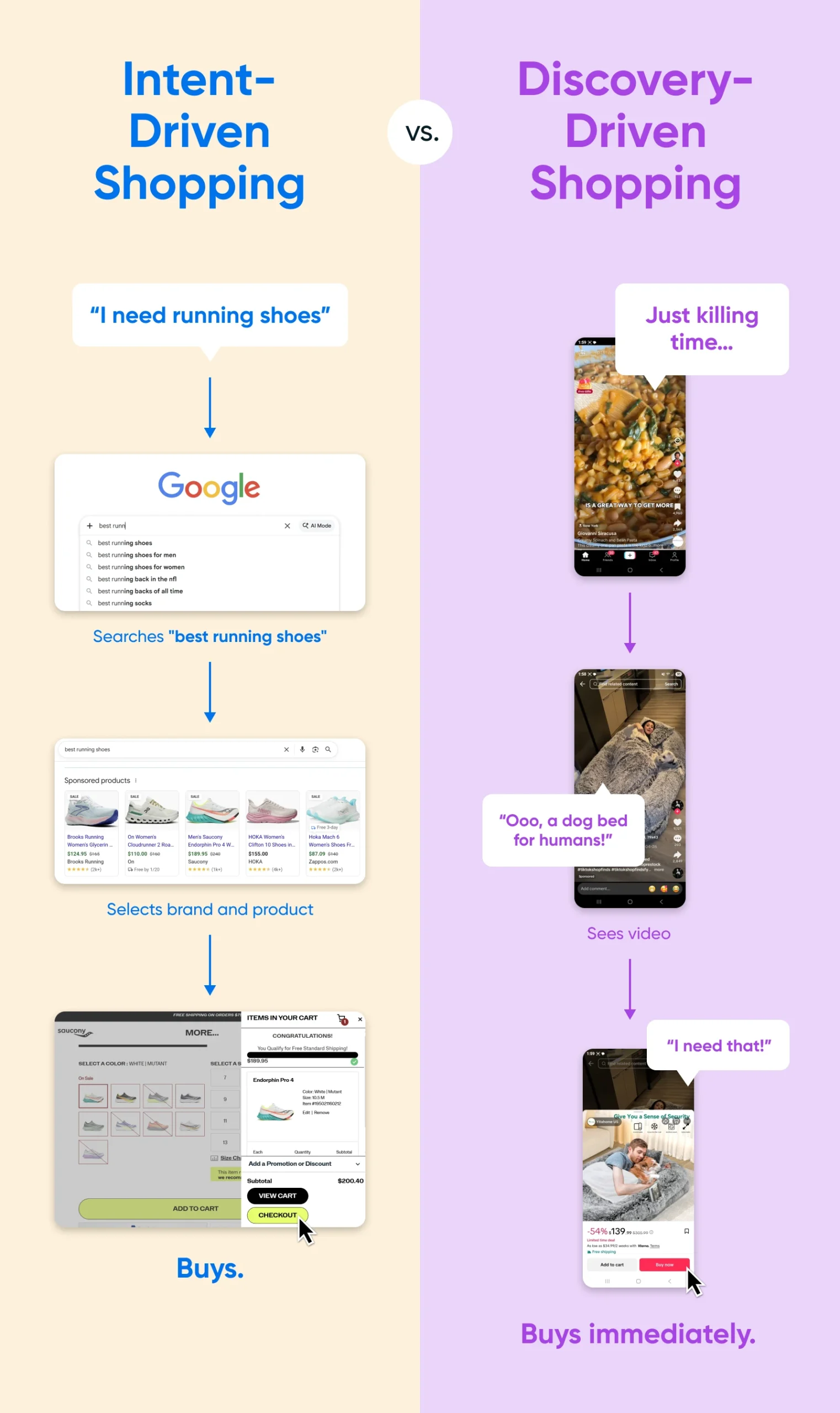
TikTok Shop lives inside an entertainment feed that’s designed for speed and impulse, not careful comparison between products. While security exists, consistency often doesn’t, and that’s where disappointment tends to come from.
Is TikTok Shop secure for payments?
Yes, payment processing on TikTok Shop is generally secure. TikTok Shop uses in-app checkout with buyer protection features like a published return window, refund pathways, and an appeals process (more on those below).
Per TikTok’s US seller documentation (updated September 2025), TikTok Shop checkout accepts credit and debit cards from Visa, Mastercard, American Express, and Discover, plus PayPal, Apple Pay on iOS, Google Pay on Android, and installment plans through Klarna and Affirm. The exact lineup you see can differ, so tap “view all” in the payment section at checkout for your full list of options.
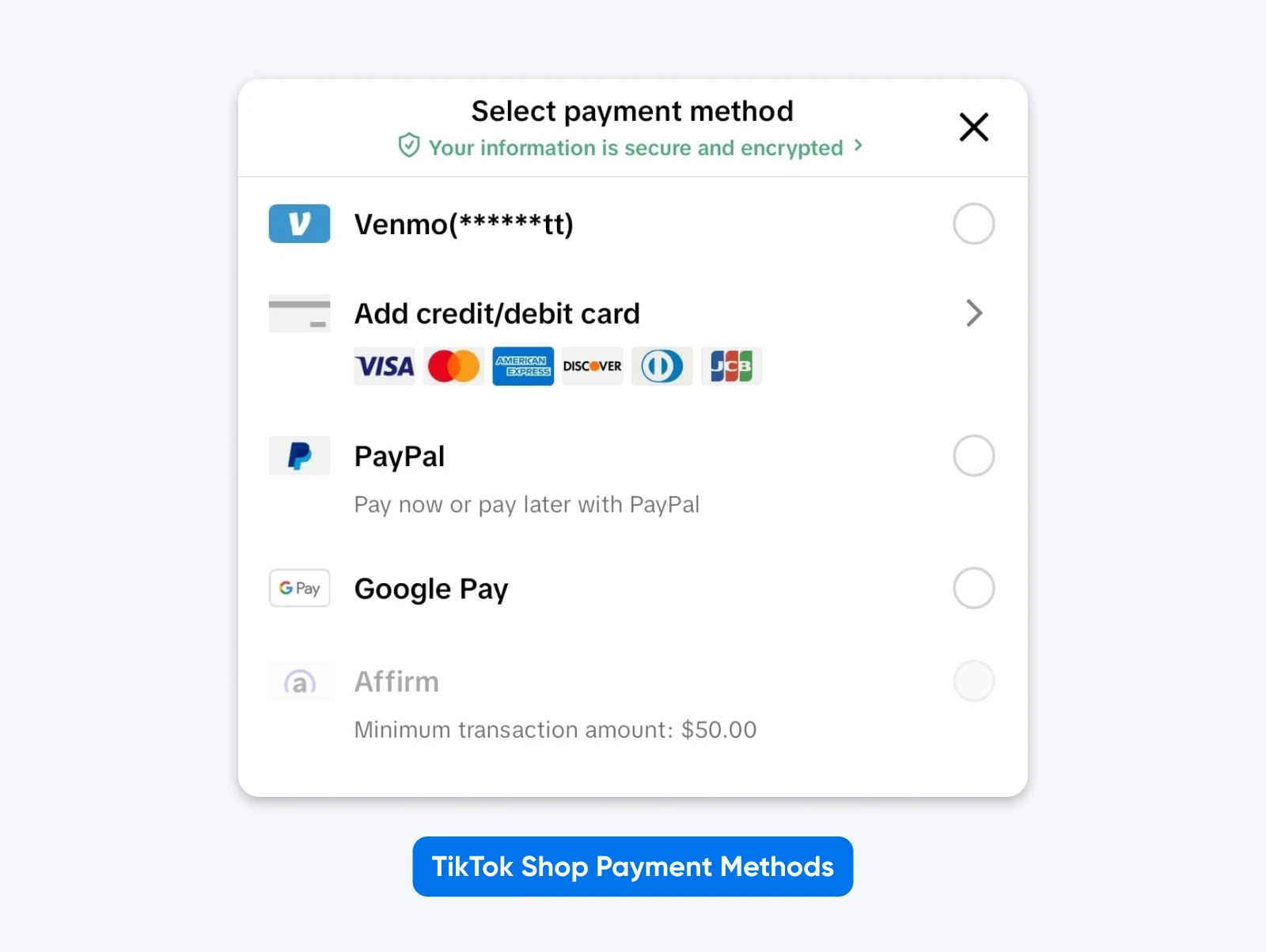
But while those protections are important, it’s crucial to recognize their limitations. Namely, secure checkout doesn’t guarantee product quality, authenticity, or an easy return, and those are things many shoppers often confuse with “safety.”
If you’re buying on TikTok Shop, there are a few steps you can take to help reduce your risk from a payment perspective:
- Use a credit card, not a debit card, so a bad charge isn’t cash already gone from your checking account.
- Keep confirmation emails and screenshots of the listing.
- Act quickly if anything seems off. For credit card billing errors, the Consumer Financial Protection Bureau’s guidance is to call your card company right away and send a written billing-error notice within 60 days of the charge appearing on your statement.
Payment security is the floor, not the ceiling. The bigger risks on TikTok Shop are unmet expectations: products that underdeliver, sellers that vanish, and returns that drag. We’ll cover those next.
How to tell if a TikTok Shop seller is legit
TikTok Shop doesn’t work like Amazon, because the “product page” is often a video, and content can be staged far more easily than a listing.
Before you buy, look for trust signals, such as:
- Seller consistency: The account posts regularly, not just during one viral moment.
- Repeat exposure: The same product appears across multiple videos over time.
- Video reviews: Especially from repeat buyers, showing the item in real use.
- Live selling sessions: Sellers answer questions live, show fit or function, and discuss returns openly.
- Verified or brand-run shops: These tend to have clearer policies and accountability.
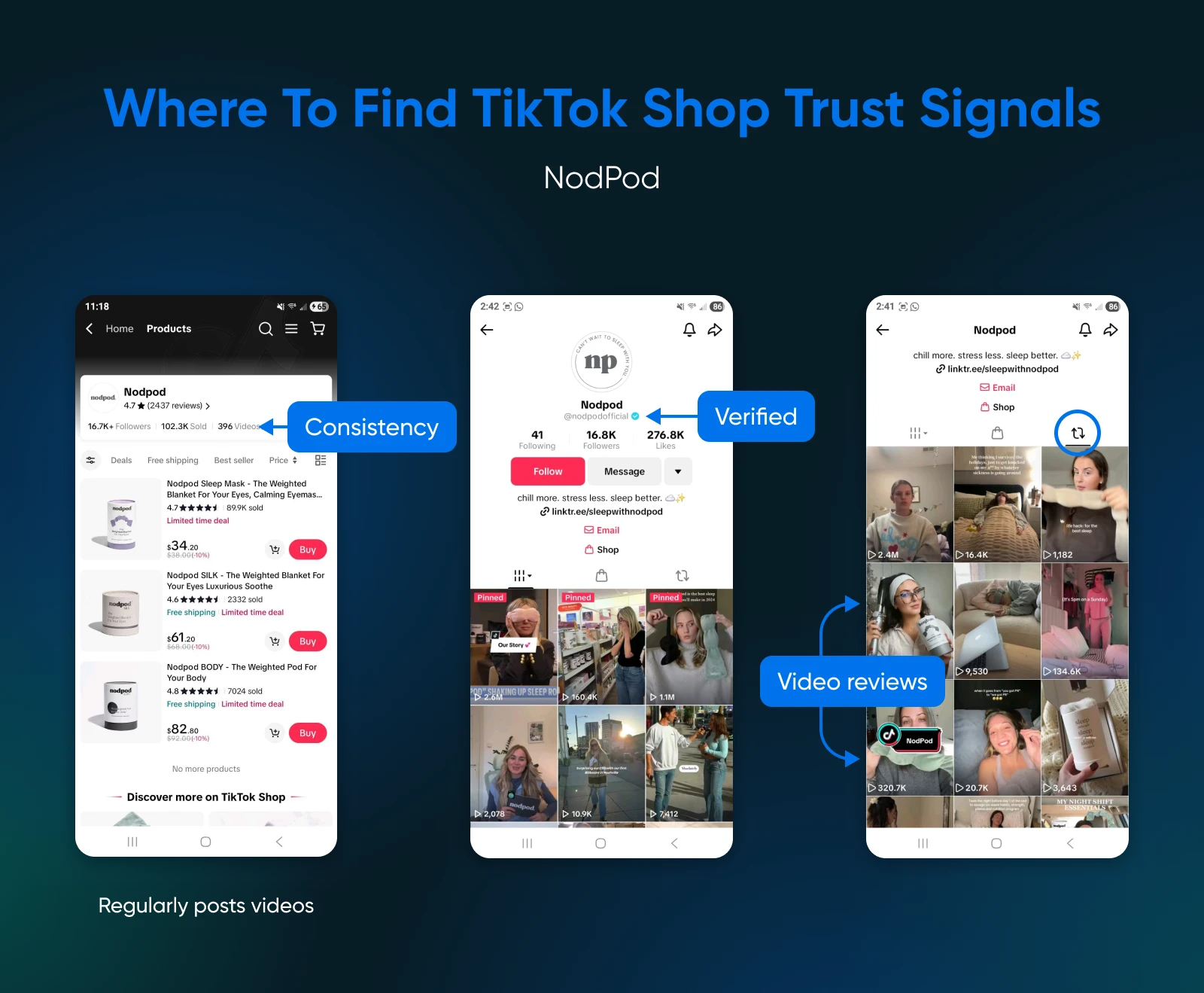
On the other hand, these red flags should make you hesitate before buying:
- Prices that seem too good to be true on commonly counterfeited brands.
- Vague descriptions or missing details (like materials, sizing, compatibility, etc.).
- Comment sections full of unanswered questions or complaints.
- Heavy urgency language designed to rush you into buying.
TikTok does screen sellers at the gate: the company told Wired it declined 1.4 million new seller applications in the first half of 2025. That number shows TikTok rejects seller applications, but it doesn’t establish the quality or reliability of every seller that is approved, so you should still check the signals above.
Remember, on TikTok, trust is built through repetition and transparency.
What’s actually safe (and risky) to buy on TikTok Shop?
Not all products carry the same downsides. When choosing whether to purchase something on TikTok Shop, the calculation needs to factor in price as well as potential consequences if something goes wrong.
Use this risk spectrum when evaluating products:
| Risk Level | Examples | Why? | Better Alternative |
| Lower risk | Accessories, decor, items under ~$50 | Annoying if it goes bad, but ultimately low stakes | Brand site if you want support |
| Higher risk | Skincare, cosmetics, supplements | Health impact if it turns out they’re counterfeit | Buy direct from the brand |
| Highest risk | Luxury goods, electronics | High counterfeit risk, difficult to return | Authorized retailer or company site |
👉Here’s a simple rule of thumb: If losing the money would genuinely annoy you, TikTok Shop isn’t the place to experiment. It’s a good platform for low-stakes, curiosity-driven purchases, not high-stakes buys.
Can you return items and get refunds?
Yes. TikTok Shop’s published US return and refund policy gives you 30 calendar days from delivery to request a return and refund on eligible purchases, for any reason. The specifics worth knowing before you buy:
- Most refunds are issued within 3 to 10 business days after the return is received and processed.
- Items that arrive damaged or defective are covered for 90 calendar days under TikTok Shop’s Money-Back Guarantee, even after the standard 30-day window closes.
- Some categories can’t be returned for change-of-mind reasons at all: food, beverages, and supplements; customized products; pre-owned items; trading cards and collectibles; virtual goods; and anything marked Final Sale. (Damaged, defective, or not-as-described items are still refund-eligible, even in those categories.)
- Returns have to be requested in the TikTok app. The website doesn’t currently support them.
Sellers and product pages can carry their own terms on top of that, so before clicking buy, check the product detail page for the item’s return policy, who handles disputes, and who pays return shipping. For inexpensive items, the time and effort of a return can outweigh the refund itself, which is how a disappointing $12 purchase ends up in a drawer instead of a return box.
TikTok Shop vs. Amazon vs. brand websites: where should you buy?
At a glance, TikTok Shop, Amazon, and a brand’s own website all let you do the same thing: add to cart and check out. But the difference is why you’re there in the first place.
On Amazon or a brand site, shopping is search-driven. You arrive with a problem to solve or a product in mind, and you compare options with intention.
On TikTok Shop, shopping is algorithm-driven. This is based on serendipity and discovery. You don’t find the product, the product finds you. And it happens while you’re winding down, distracted, and not actively planning to buy anything.
That context changes buyer behavior. A search box invites comparison; a feed rewards the quick tap. Neither is “wrong,” but they set different expectations, and expectations are what decide whether you’re delighted or disappointed when the box shows up.
So, armed with this knowledge, the goal isn’t to avoid TikTok Shop entirely. Instead, we should aim to decide where a purchase makes the most sense based on risk, price, and how much trust you need in your merchant before spending.
Here’s a quick decision matrix you can use:
| Ask yourself… | If the answer is yes | If the answer is no |
| Would you be ok if the item is just “fine”? | TikTok Shop can work | Go to the brand’s website |
| Is it going in or on your body? | Still consider the brand site | TikTok Shop may be OK |
| Is it commonly counterfeited? | Avoid TikTok Shop | Verify the seller carefully, but TikTok Shop may be OK |
| Are you OK losing the money? | TikTok Shop is probably OK | The website is safer |
DreamHost’s 2026 Local Business Trust Index, a survey of 1,201 US consumers conducted in November 2025, supports this rule of thumb. On average, consumers said they’re comfortable spending just $36 on Instagram or TikTok shops, compared to $177 on a company’s own website. That’s not a small gap, and it reflects how much trust people assign to each e-commerce environment.
The difference gets even sharper at higher price points:
- 33% of consumers say they wouldn’t spend money on social platforms at all, versus just 6% who say the same about websites.
- Consumers report a 7x difference in spending comfort for purchases over $100 on a website versus social media.
- They’re 14x more likely to spend $500 or more on a website (14% vs. 1%).
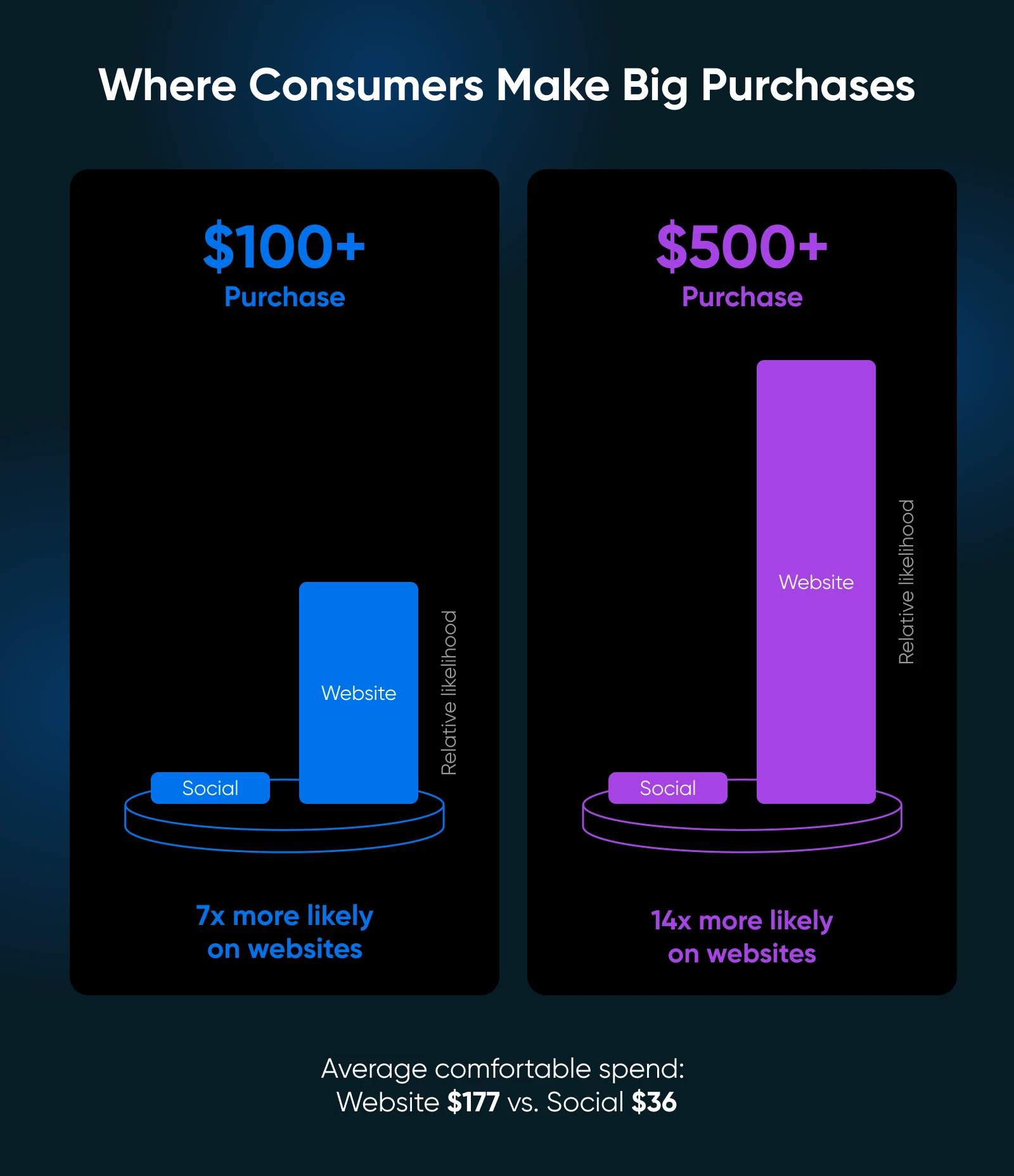
In other words, many people already treat TikTok Shop as a channel for low-risk, low-commitment purchases, even if they might not consciously articulate it that way.
Part 2: For businesses — should you sell on TikTok Shop?
Now, the other side of the coin.
TikTok Shop is loud; your website is where trust compounds
Every small business feels the pressure to be everywhere customers are shopping. As TikTok Shop success stories pop up everywhere, they’re often being framed as proof that traditional e-commerce is falling by the wayside. Even becoming optional, perhaps?
But we see it differently. TikTok Shop isn’t replacing your website. In fact, our research shows that TikTok Shop is actually highlighting why your website still matters.
TikTok Shop is optimized for discovery and speed, so it’s excellent at putting products in front of people who weren’t looking for them. Your website, on the other hand, is optimized for trust, with clear policies, consistent branding, and a buying environment where customers feel confident about exactly what they’re getting.
The spending-comfort numbers above tell the same story: $36 on social storefronts, $177 on a business website.
But click through to their Linktree, and you’ll find their website front and center: full brand story, press features, detailed shipping policies, and hundreds more reviews.
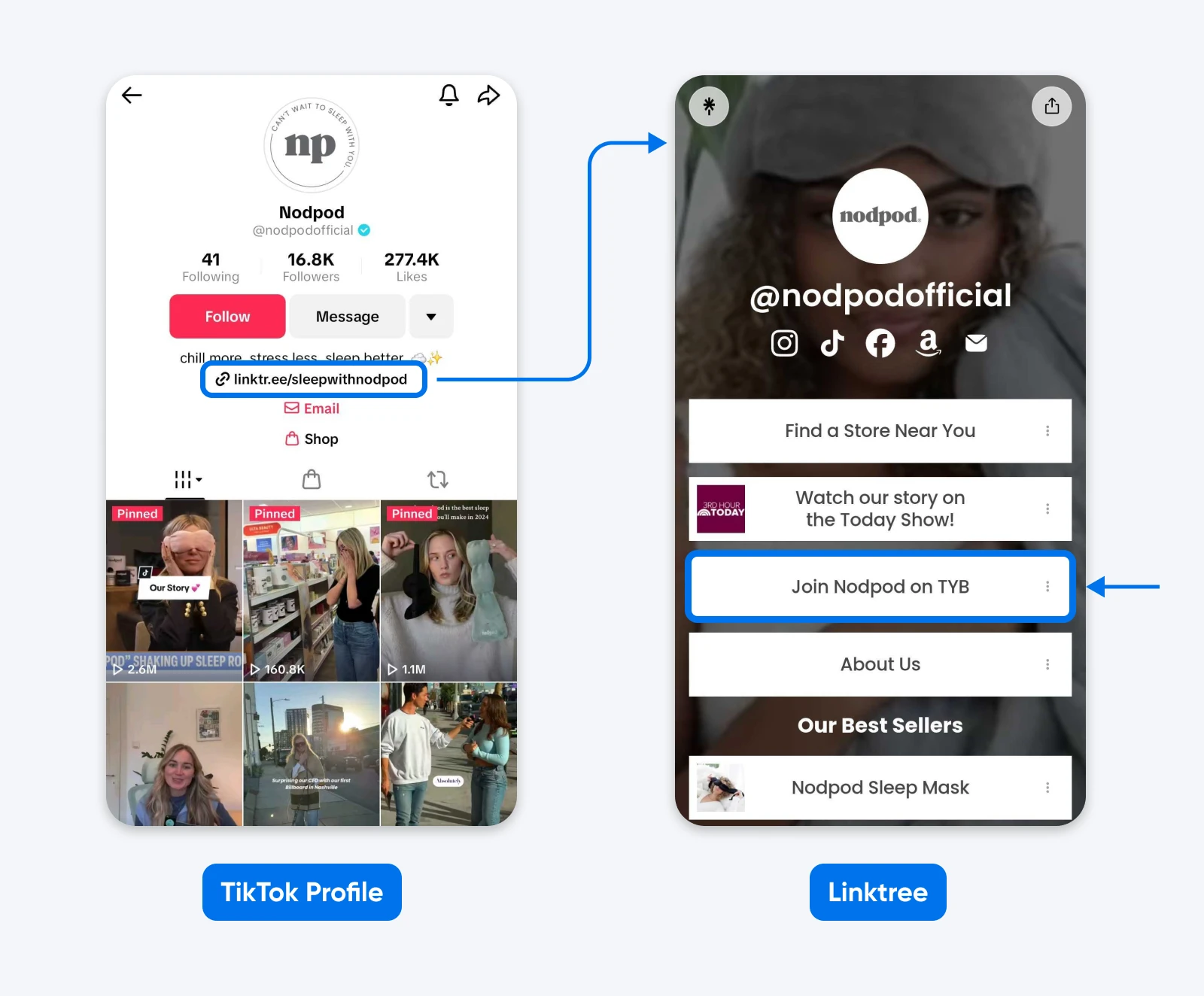
Their TikTok Shop presence gets attention, while the website closes the deal and builds the relationship. That’s the division of labor working as it should.

This doesn’t make TikTok Shop a bad channel, but it makes it a top-of-funnel channel, not a foundation.
So yes, you should absolutely experiment with TikTok Shop, because your customers are almost certainly scrolling there, and they may be buying there.
But building your entire business on TikTok would be a mistake because it’s a platform you don’t control.
Instead of asking “Should we sell on TikTok Shop?” businesses should be asking, “What role should TikTok Shop play, and where does our website do the heavy lifting?”
At a glance: what is TikTok Shop actually good for?
| TikTok Shop is best for… | TikTok Shop is not built for… |
| Product discovery and reach, especially for new or lesser-known brands Impulse purchases, typically under $50, where expectations are modest Trend-driven products that benefit from visual demonstration Fast product testing, where you want quick feedback before investing deeper Live selling formats, where consistent sellers build familiarity and accountability over time | High-value purchases, where buyers need time, reassurance, and comparison Premium brand positioning, which relies on controlled presentation Long-term customer relationships, since you don’t own the data Predictable revenue, because virality isn’t a repeatable system Building business equity, which depends on trust and retention |
Should businesses sell on TikTok Shop?
We’ve already established that the answer is yes. To make your business as resilient as possible, don’t treat channels like they’re “good” or “bad.” Instead, figure out the best role for them to play in your overarching strategy.
TikTok Shop has no setup fee, but it charges a commission on every sale. Its US seller program charges a 6% commission on each sale, with payouts landing in your linked bank account after orders are completed and the applicable return and refund windows pass.
It might be helpful to think of TikTok Shop like a front door that shoppers stumble into by accident. You should use it deliberately for discovery and low-risk impulse purchases: products that are easy to understand in a short video and priced low. Meanwhile, your website becomes the destination for higher-value decisions.
A smart hybrid approach looks like this:
- Use TikTok Shop for discovery and low-risk impulse purchases.
- Use your website for high-value products, bundles, and repeat buyers.
- Let TikTok content introduce the brand, not carry the entire sale.
- Capture customer relationships on channels you own — think email addresses, accounts, and post-purchase follow-ups.
- Measure success differently on different channels:
- For TikTok Shop, measure reach, engagement, and conversions.
- On your website, watch average order value, repeat purchase rate, and customer lifetime value.
This way, TikTok feeds the funnel, and your website compounds trust and revenue over time. That division of labor is what makes growth long-term and sustainable instead of feeling like a hamster wheel.
A clearer way to think about TikTok Shop
TikTok is built to entertain first and sell second.
When you understand why TikTok Shop works, where it breaks down, and how consumers actually behave, the strategy becomes clear: use entertainment-driven platforms for discovery, and use your website for trust.
And don’t build your business on momentum you don’t control.
TikTok Shop safety FAQs
Is TikTok Shop legit, or is it a scam?
TikTok Shop is legit: it’s TikTok’s own built-in marketplace, launched in the US in September 2023, with real checkout infrastructure, published return policies, and seller vetting. The analytics firm EchoTik estimates TikTok Shop sold $19 billion worth of products globally from July through September 2025. The platform is real; individual sellers range from established brands to one-viral-video operations, so judge the seller, not just the platform.
Is it safe to use a credit card on TikTok Shop?
Generally, yes. TikTok Shop’s in-app checkout accepts Visa, Mastercard, American Express, and Discover, and a credit card is the better pick over a debit card because a disputed charge isn’t cash already missing from your checking account. If a charge does go wrong, the Consumer Financial Protection Bureau’s guidance is to call your card company right away and send a written billing-error notice within 60 days of the charge appearing on your statement.
Does TikTok Shop take Apple Pay, and is it safe to use?
Yes, TikTok Shop supports Apple Pay on iOS devices, alongside Google Pay on Android, PayPal, major credit and debit cards, and Klarna and Affirm installment plans, per TikTok’s US seller documentation. The payment methods aren’t the risky part of TikTok Shop; product quality and seller reliability are where problems actually show up.
Can you get your money back on TikTok Shop?
Usually, yes. TikTok Shop’s US policy allows return and refund requests for any reason within 30 calendar days of delivery on eligible items, with most refunds processed within 3 to 10 business days after the return is received. Items that arrive damaged or defective are covered for 90 days under the Money-Back Guarantee. Food, supplements, customized items, pre-owned goods, collectibles, virtual goods, and Final Sale items can’t be returned for change-of-mind reasons.
What should you do if a TikTok Shop order never arrives or isn’t as described?
Request a return or refund in the TikTok app. Items that arrive damaged, defective, or not as described remain refund-eligible even in otherwise non-returnable categories. If your request is rejected and you disagree, you can appeal to TikTok Shop Customer Service from the order-details page.
How much does it cost to sell on TikTok Shop?
There’s no setup fee to join TikTok Shop as a US seller, and TikTok Shop charges a 6% commission on each sale, with payouts sent to your linked bank account after orders are completed and return windows pass. The bigger cost is strategic: the audience, the customer data, and the algorithm all belong to TikTok, which is why pairing TikTok Shop with a website you own is the durable play.